On August 10, 1793 — 233 years ago today — the Louvre opened its doors to the public for the first time. The former royal palace, stripped of its Bourbon occupants by the French Revolution, became the Musée Central des Arts: the first public art museum in the Western world.
The anniversary matters for a reason that gets buried under all the celebratory language about access and democratization. The Louvre changed who could see the naked human body.
Before 1793, the most important nudes in Western art were private property. Titian’s Venus of Urbino hung in the Duke of Urbino’s bedroom. Botticelli’s Birth of Venus adorned a Medici villa. The classical sculptures that defined the Western ideal of the nude body — the Apollo Belvedere, the Laocoön, the Belvedere Torso — sat in the Vatican’s private cortile, accessible only to those with the right connections and, usually, the right gender.
The nude was a privilege of rank. To look at a naked body in art, you needed to be someone.
The Louvre changed that calculus overnight. On that August day in 1793, a Parisian merchant, a seamstress, a student — anyone who could walk through the doors — could stand before the same bodies that had been reserved for aristocrats and clergy. The nude became public inheritance.
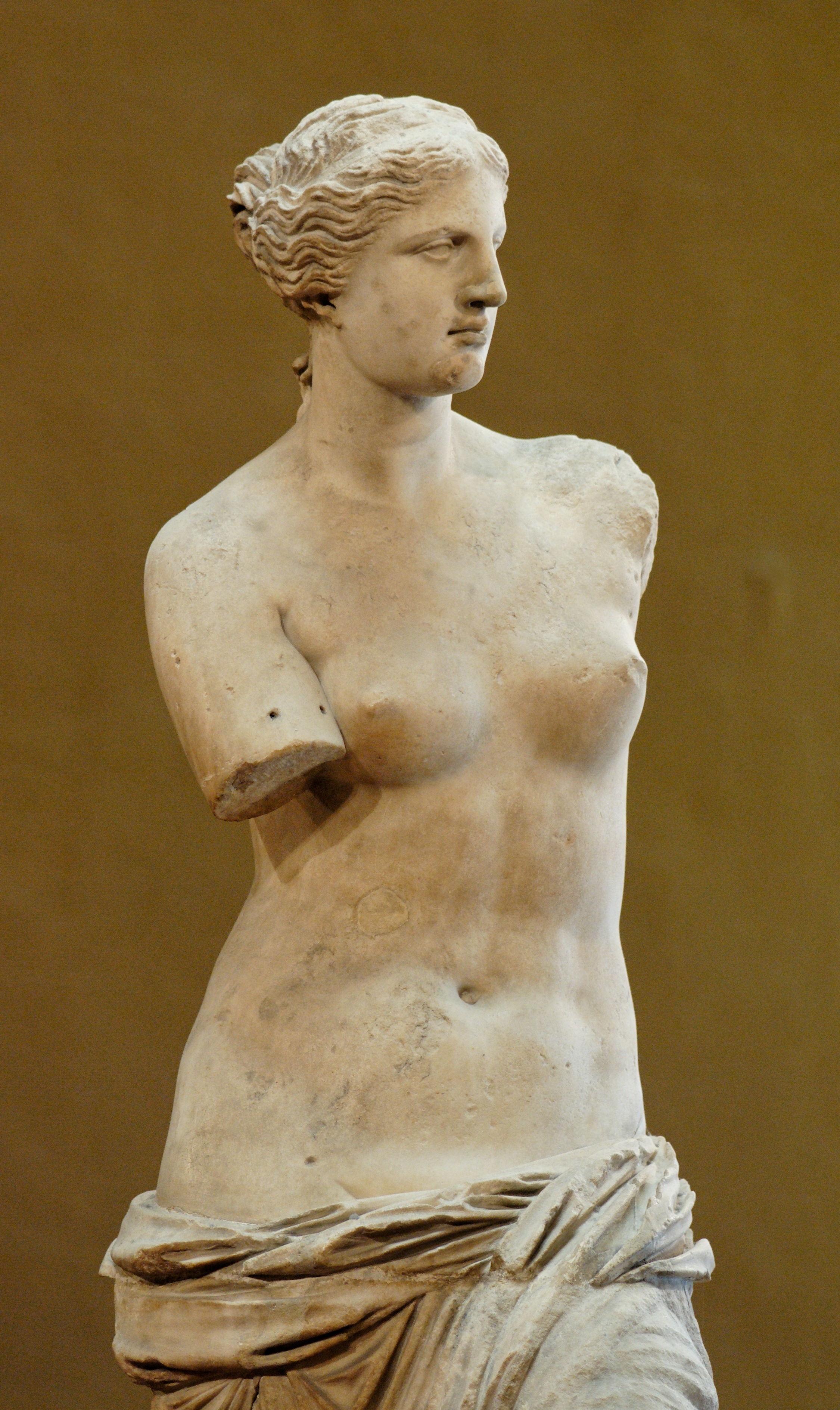
The Venus de Milo arrived at the Louvre in 1821, nearly three decades after opening day, but she became the museum’s most famous resident for a reason. Here was a nude body — broken, armless, ancient — that belonged to no patron, no collector, no king. She was unearthed on the island of Milos by a farmer, acquired by the French state, and installed in a public gallery where anyone could look at her. The Venus de Milo is the embodiment of the Louvre’s founding promise: that the most intimate representation of the human body — the nude — is public property, not private luxury.
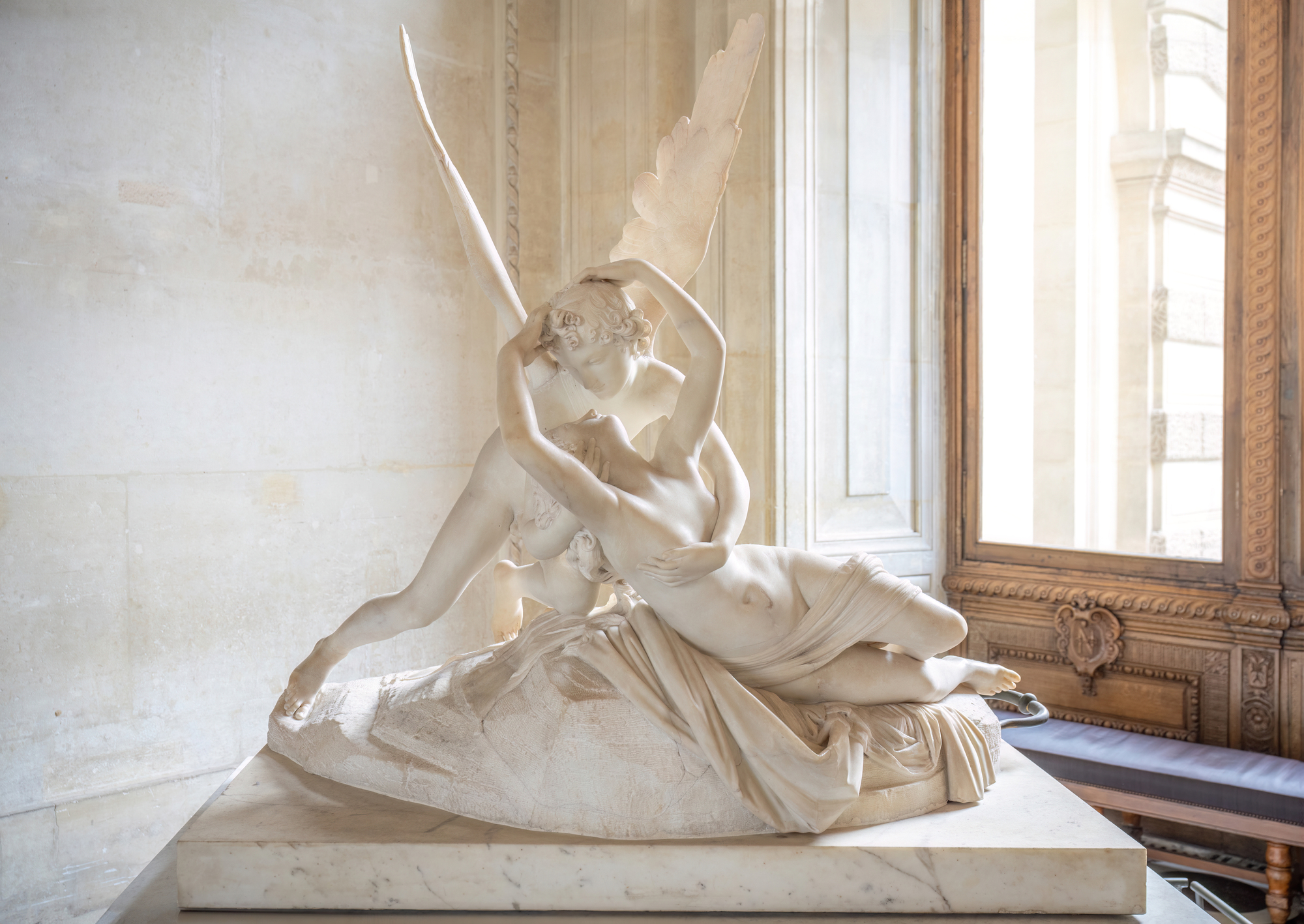
Antonio Canova’s Psyche Revived by Cupid’s Kiss, completed in 1793 — the same year the Louvre opened — represents the other side of this transformation. Here was a Neoclassical sculptor at the peak of his powers, working in the same tradition that had produced the Venus de Milo, creating a new nude for a new public. Canova’s Psyche — her body arched in that impossibly graceful curve, Cupid’s hand barely touching her breast and waist — is a nude designed to be seen by strangers. No patron’s private study. No bedroom cabinet. This body was made for the public gallery, for the anonymous gaze of citizens who owed the artist nothing and the subject no deference.
The Louvre’s collection grew through the 19th century with acquisitions that tested the boundaries of this new public right to look. Ingres’ Grande Odalisque (1814), The Turkish Bath (1862), and the numerous Orientalist nudes that filled the Salon and eventually the museum’s walls raised questions the Revolution had not anticipated. If the nude body belongs to the public, what happens when the public includes women? Children? People who find the body disturbing rather than beautiful? People who see not art but exploitation?
These are not academic questions. They are live ones. In 2026, the debate over who gets to see the naked body — and where, and how, and under what framing — is fought on Instagram’s content moderation algorithms, in school board meetings about art curriculum, and in museum deaccessioning controversies. The Louvre’s opening in 1793 set the terms of a debate we are still having: when you take the nude out of the palace and put it in the public square, you do not just democratize beauty. You democratize the conflict over it.
The Venus de Milo does not belong to a Medici, a Bourbon, or a pope. She belongs to anyone who buys a ticket, or studies her image online, or encounters her in an art history textbook. That was the radical proposition of August 10, 1793 — and it remains radical today, in an era when algorithms decide which bodies are acceptable for public viewing and which are not.
The Louvre’s founding promise was that art belongs to everyone. The nude body, its most intimate and contested subject, belongs to everyone too. That is not a settled fact. It is an ongoing argument. And it started 233 years ago today.