George Wesley Bellows was born in Columbus, Ohio, on August 12, 1882. He died of a ruptured appendix in January 1925, three weeks short of forty-three. In the two decades between, he painted the American body with a candor that still feels modern: kids skinny-dipping off a pier, prizefighters colliding under electric light, and a red-haired woman sitting for a nude in a studio.
Bellows reached New York in 1904 to study with Robert Henri, the teacher who told his students to stop copying the classical ideal and paint the city around them. Henri’s rule was simple: a subject did not have to be beautiful to deserve paint. For a young painter raised on plaster casts of Greek gods, that was a liberation. The nude did not have to be Venus. It could be a boy on a river dock, a fighter in a cellar club, or a woman who happened to have red hair.
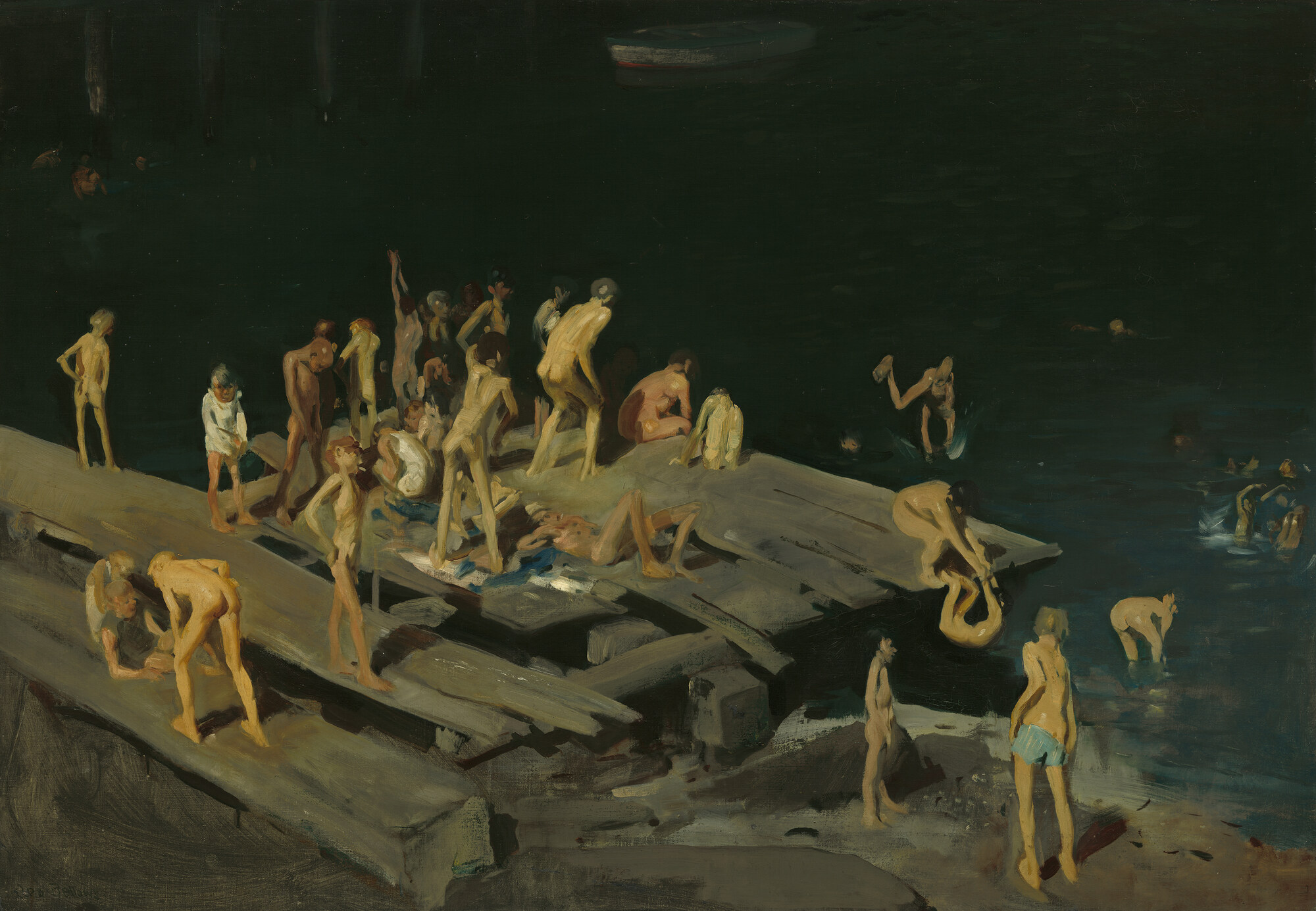
The painting that made his name, Forty-two Kids (1907), is nakedness without mythology. Forty-two boys clamber over a rickety pier on the East River, most of them stripped to the skin, one mid-dive, others sunning themselves on the planks. There is no allegory, no bathing nymphs, no classical pretext. These are real children in a real river, watched and painted by a twenty-five-year-old from the riverbank. Bellows did not idealize the bodies. He recorded them.
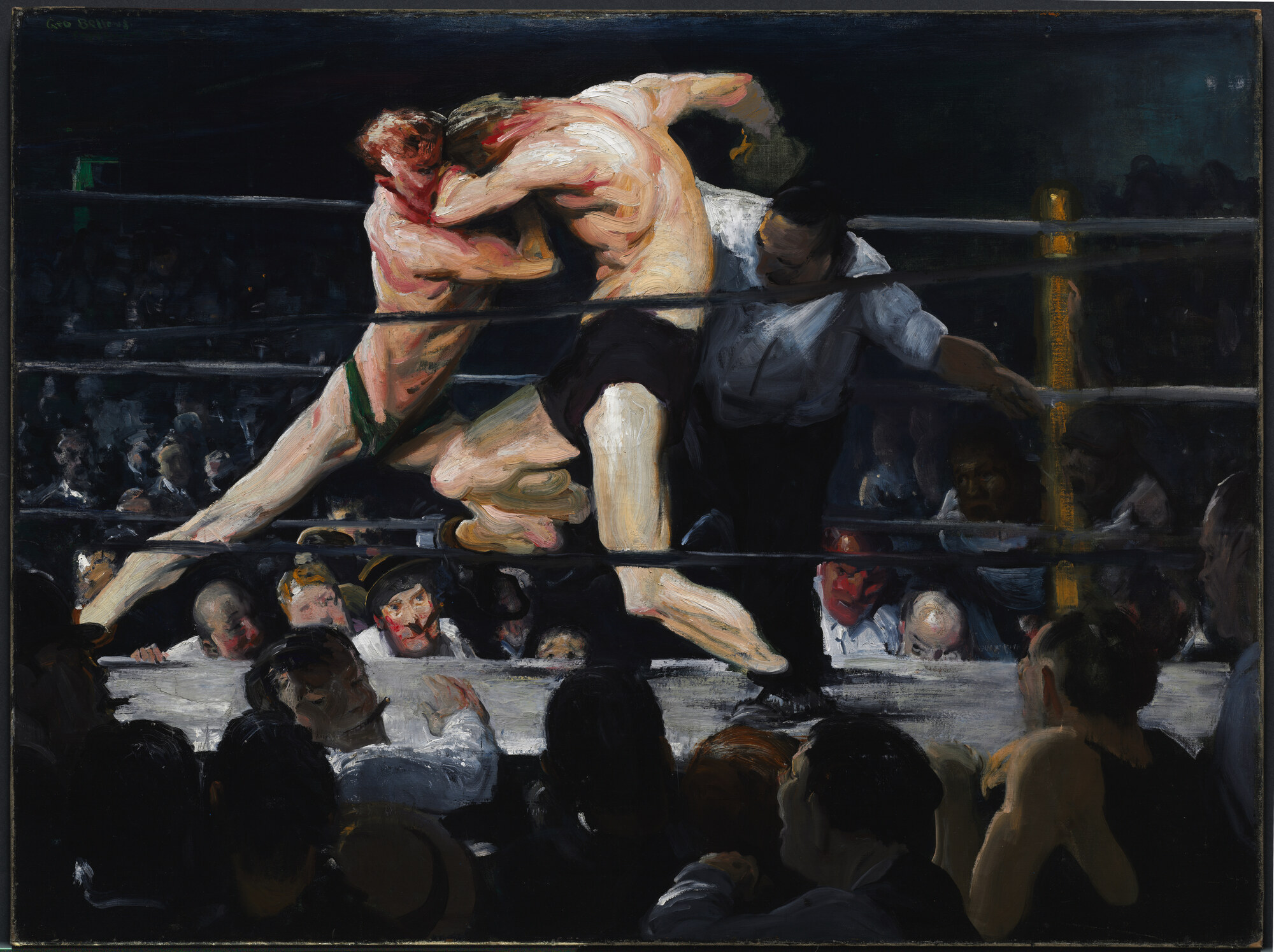
The same honesty runs through his boxing pictures. In Stag at Sharkey’s (1909), two fighters lunge at each other while a crowd presses against the ropes. The male body here is a body at work: weight on the back foot, shoulder dropped, the whole torso twisted into a blow. Bellows painted the prizefight the way the academic tradition painted the gladiator, except his gladiators were working men in a smoke-filled club. For Bellows, the body was a fact to be recorded.
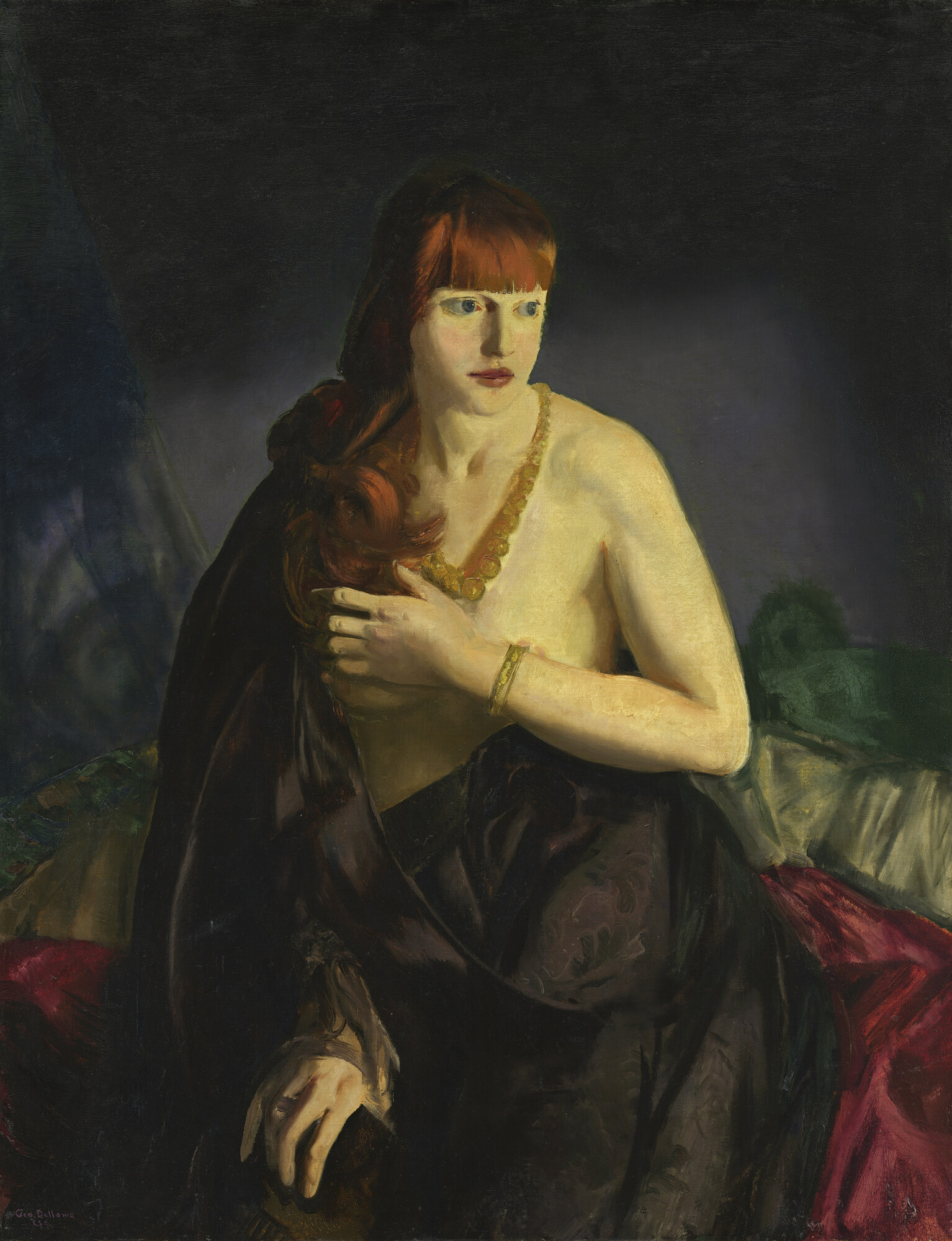
His studio nudes carry the same conviction. Nude with Red Hair (1920) is a portrait of a specific woman, painted as herself. Her skin is pale, her pose unposed, her red hair the only flourish in a plain room. Bellows painted dozens of these figures, in oil and in the lithographs he made by the hundreds. None of them flatter, and none of them apologize. They are bodies, seen clearly.
That clarity cost him time, though he did not know how little he had. Bellows packed a full career into two decades: the excavation of Pennsylvania Station, the crowds of New York, the Maine coast, and the war atrocities reported from Belgium. When he died in 1925, American art lost its most vital recorder of the body in motion and the body at rest.
What Bellows handed American painting was permission to look at the body without the alibi of antiquity. The European academy had long insisted that the nude earn its frame through myth, through Venus and Diana and the classical past. Bellows, with Henri and the other Ashcan painters, dropped the pretext. In his hands, the American body did not need to be Greek to deserve a frame. It only needed to be seen.