For two and a half thousand years, artists painted the female nude in almost every position a body can hold. Standing, seated, reclining, bathing, turning away, looking back. They painted every kind of woman except one. Walk the galleries of the great museums and you will find almost no pregnant body in the whole Western tradition.
The omission was deliberate. The nude existed to be looked at, and a pregnant woman carried the wrong kind of look. She held evidence of sex and the future at once, and neither suited the role the nude was built to play. The ideal nude was available and eternal. The pregnant body was claimed, temporary, already on its way to becoming someone’s mother. Pregnancy also carried a threat the Venus could never be allowed to show: childbirth killed women in staggering numbers until the twentieth century. The goddess could not be permitted to die in labour.
The only pregnancy art allowed
There was one sanctioned version: the Madonna. Christian art did show the pregnant body, but always draped, sanctified, sealed away. Piero della Francesca painted the pregnant Virgin in the Madonna del Parto, a body present but unseeable beneath heavy robes. Ghirlandaio’s Visitation renders the swelling belly only as a modest curve under cloth. The woman was not allowed to own the body. The body belonged to the doctrine.
That is the quiet fact at the heart of the missing pregnant nude. The tradition painted desire, violence, death, the body in every extreme. What it refused was the body as a woman’s own changing fact, carrying a future that had nothing to do with the viewer.
Two painters broke the rule
Paula Modersohn-Becker painted herself pregnant in 1906 and called the result Self-Portrait on Her 6th Wedding Anniversary. Bare to the waist, one hand on her belly, she looks out with no allegory to hide behind, no goddess, no drapery. She did not flatter the body or disguise it. She recorded it the way every painter before her had recorded a Venus, and in doing so she claimed the one body the nude had refused. She died the next year, three weeks after giving birth, at thirty-one. The painting now reads as a prophecy and a refusal: a woman deciding her own changed body was worth keeping.
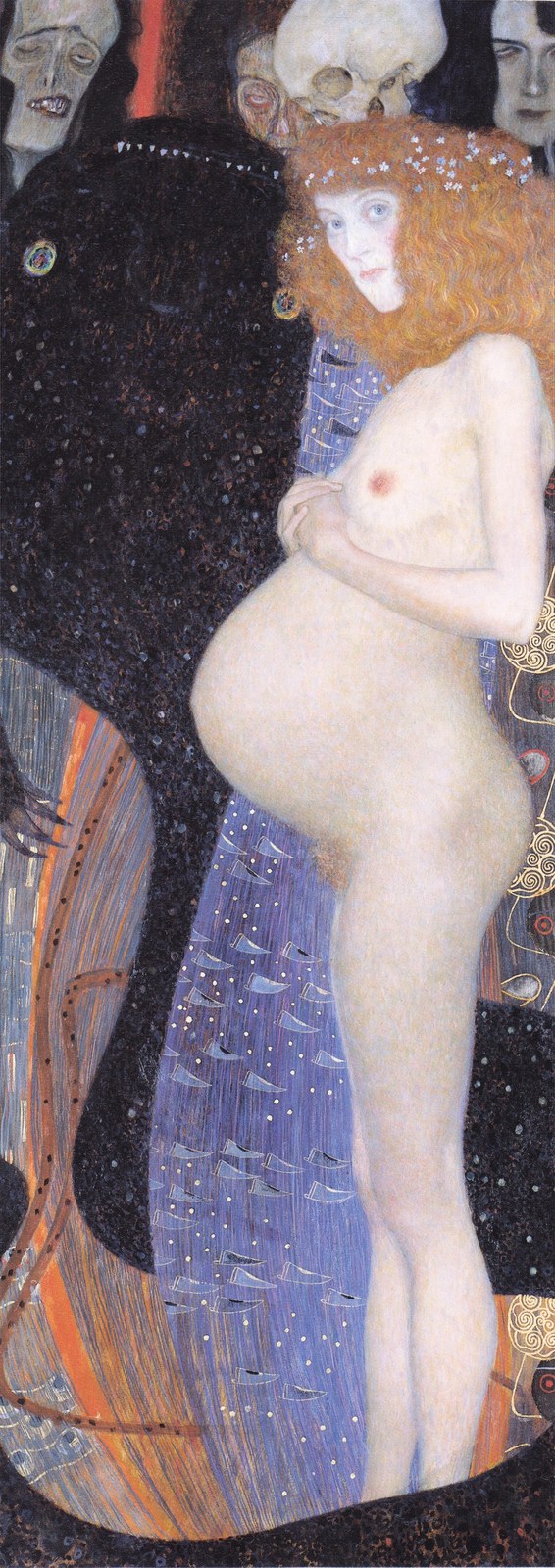
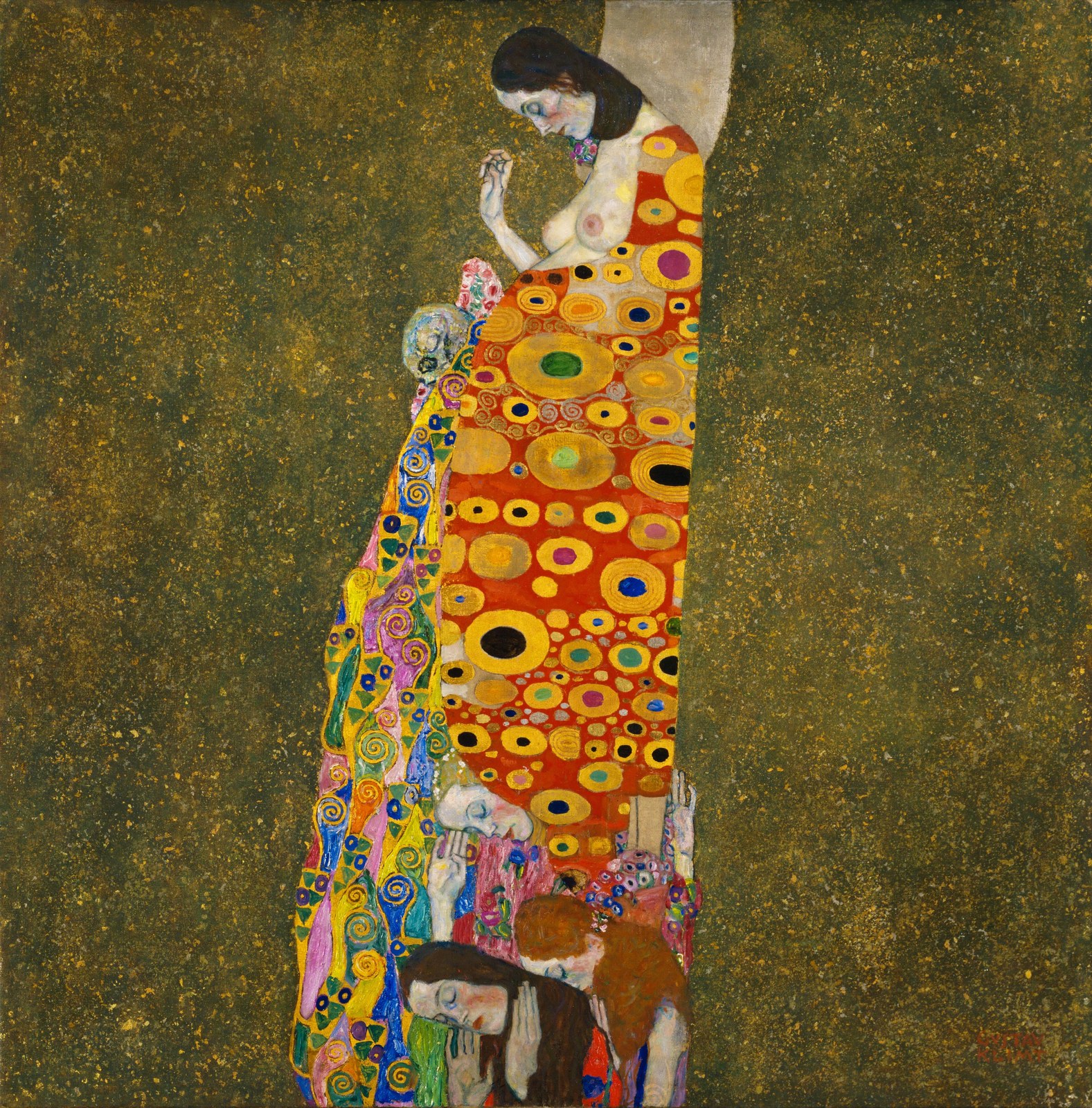
Gustav Klimt painted the pregnant figure twice, and he could not do it without the skull. In Hope I the naked woman glows against the gold while a death’s-head peers over her shoulder. Hope II repeats the image, the belly swelled against a robe, the death-figures crowded behind her. Klimt was not afraid of the body. He was honest about what it carried. Pregnancy, for him, was desire and mortality wound into one image, the very thing the tradition had spent centuries refusing to admit.
What the missing body tells us
The nude was always a record of what a given society allowed itself to want. For centuries the answer was a woman without consequence, without history, without a future that changed her. Making the pregnant body visible was a claim that the body most central to human life deserved a place in the image of human life. Two painters made that claim a century ago. The tradition is still catching up.