
Edmonia Lewis died in London on September 17, 1907, and the art world spent the next century forgetting her. She was the first Black and Native American sculptor to win international fame, a woman who claimed the marble nude at a moment when white men dominated that tradition.
Her masterpiece, The Death of Cleopatra, carved for the 1876 Centennial Exposition in Philadelphia, shows the Egyptian queen in the instant after the asp’s bite. Cleopatra slumps on her throne, head thrown back, chest bare, one arm fallen loose. Lewis refused to make the dead queen beautiful. A critic at the Centennial called the figure repulsive. That verdict was the point: Lewis carved mortality itself, a body at the exact moment its power left it.
Lewis was born around 1844 in upstate New York to a free Black father and a Mississauga Ojibwe mother, who named her Wildfire. Her parents died young, and her mother’s family raised her among the Ojibwe near Niagara Falls. At Oberlin College, the first American college to admit women and Black students, she walked into a scandal that never let go of her. In 1862 a white classmate accused her of poisoning two fellow students. A mob dragged her from her boardinghouse and beat her. A court acquitted her for lack of evidence, and a second accusation, this one of stealing art supplies, ended the same way. She left Oberlin without a degree.
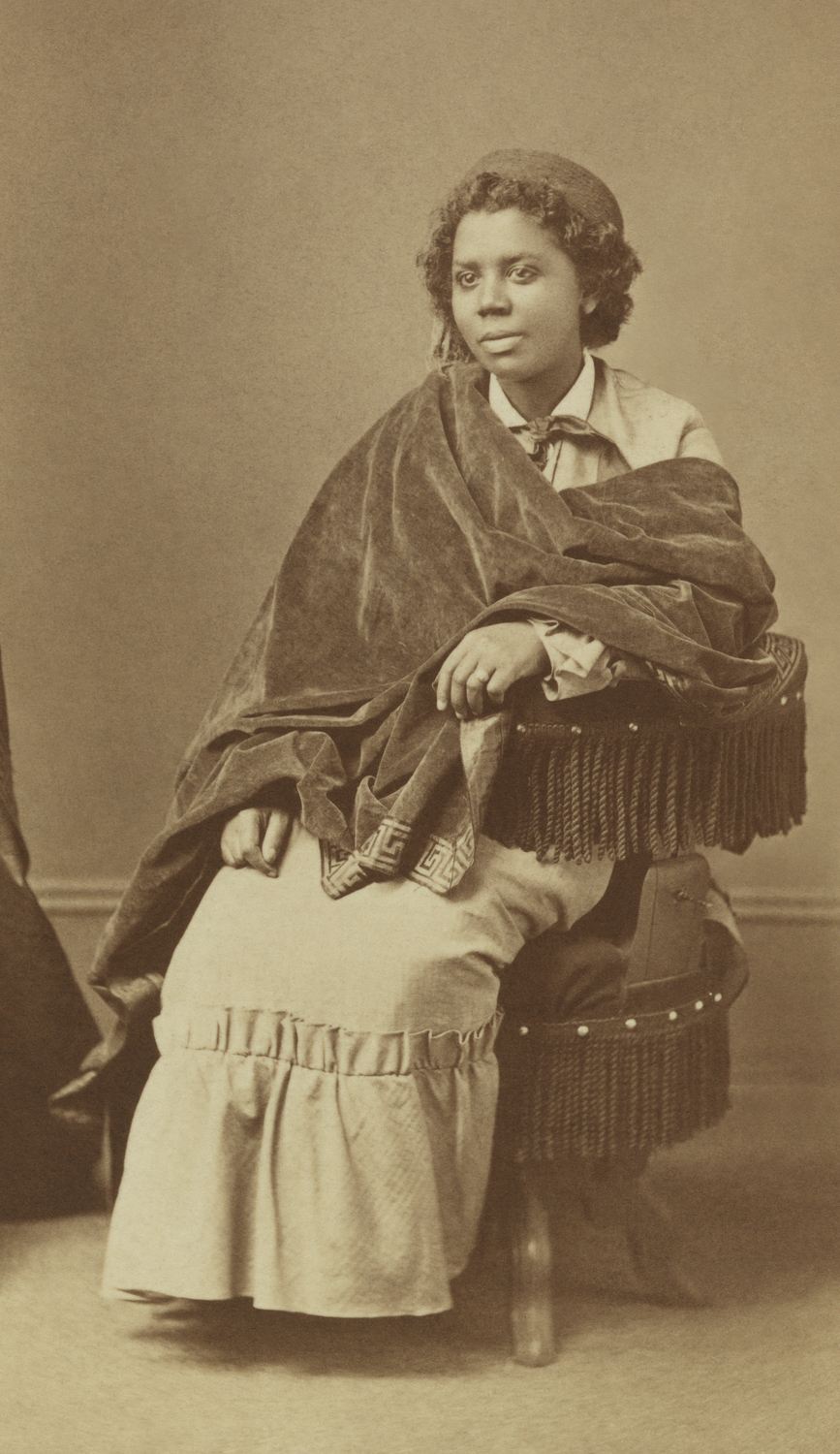
Boston gave her a second start. She apprenticed under the sculptor Edward Brackett and paid for her training by selling portrait busts of abolitionist heroes: John Brown, Robert Gould Shaw, William Lloyd Garrison. In 1866 she sailed for Rome and joined the expatriate women sculptors whom Henry James later called the white marmorean flock. Rome gave her marble, skilled studio hands, and a distance from American racism that let the work happen.
The classical nude was a language of whiteness. Neoclassicism mined Greek and Roman antiquity, and its ideal bodies were carved to read as white marble, untouched by living flesh. Lewis took that inherited form and placed an African-descended queen at its center. Cleopatra, ruler of Egypt and enemy of Rome, made a perfect subject for a sculptor whose own body her era read as outside the canon.
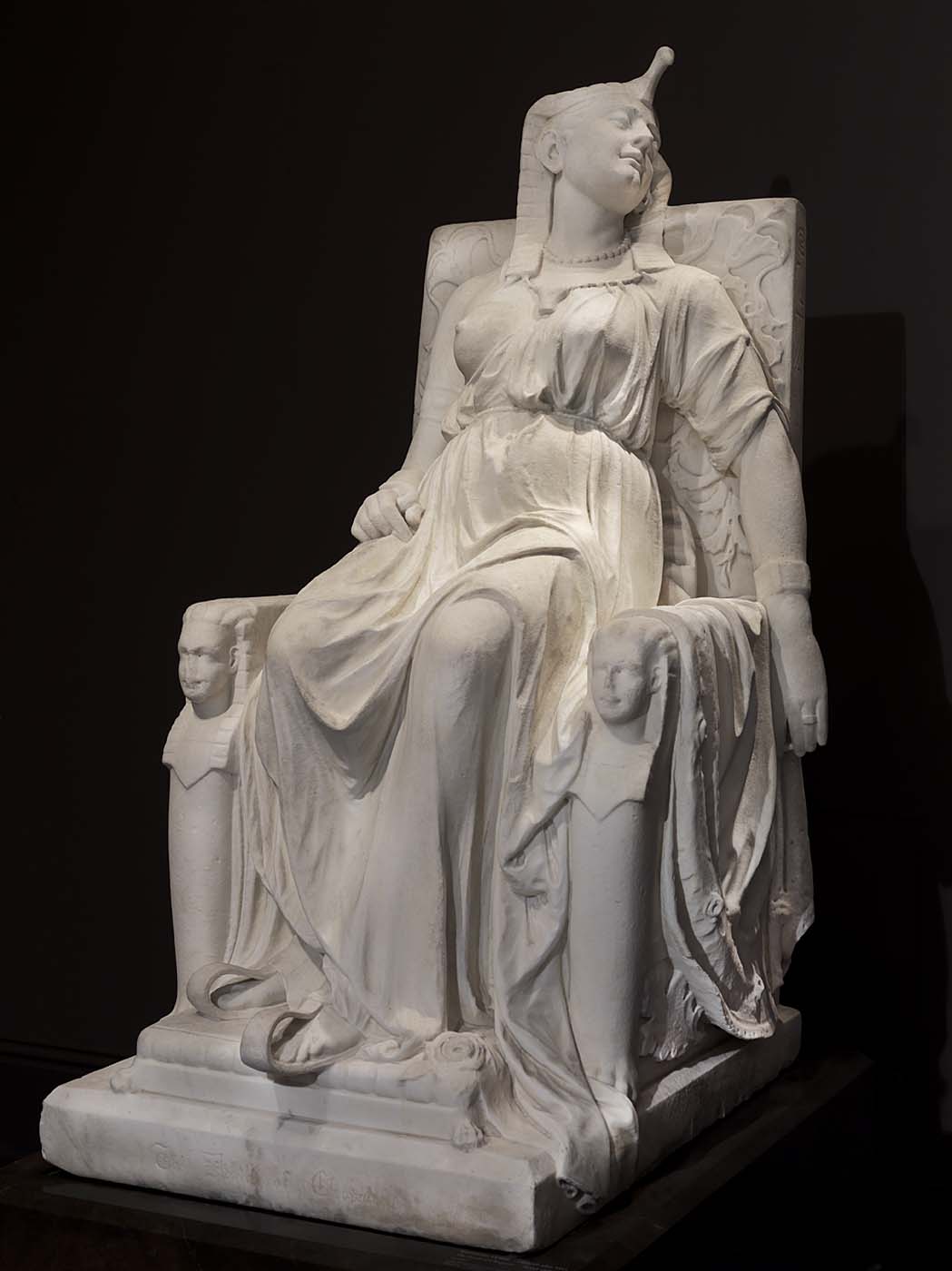
The Death of Cleopatra also reversed the usual power of the female nude. The reclining Venus offered herself to the viewer’s gaze. Cleopatra, dead, refuses it. Her bare chest reads at once as vulnerability and authority. Lewis refused to flatter the body, and she refused to apologize for it. One Philadelphia critic complained the queen looked dead rather than idealized, which was the honesty Lewis wanted.
After the Centennial the sculpture passed through a string of owners and then disappeared. For decades it sat lost. A collector rediscovered it in a Chicago suburb in the 1980s, and in 1994 the Smithsonian American Art Museum acquired it, where it now anchors the story of American sculpture.
Lewis died poor and forgotten. The art world has spent the years since catching up with her. Today The Death of Cleopatra belongs in every argument about who gets to sculpt the body and whose bodies get carved in marble. A canon built by white men carving white goddesses has room for her, because she carved her way in.