Every nude in the canon has two authors, and art history remembered only one. We know who held the brush. We rarely know who stood there, naked and still, for the hours it took to make the painting. The model is the invisible body behind the nude, the real person whose labor, patience, and sometimes whose own artistry made the masterpiece possible.
The baker’s daughter who became a legend
Raphael’s La Fornarina (c. 1518-1519) shows a young woman, bare to the waist, wearing a ribbon on her arm inscribed with the painter’s name, RAPHAEL URBINAS. Tradition identifies her as Margherita Luti, the daughter of a Sienese baker, Raphael’s model and his lover. Her face became one of the most reproduced images of the Renaissance, and her life survives only as legend. She is the model reduced to a single name, frozen forever inside someone else’s composition.
The woman who paid for Rembrandt’s vision
Hendrickje Stoffels posed for some of Rembrandt’s most intimate nudes, including Bathsheba at Her Bath (1654). She was his partner after Saskia’s death, the woman who kept his household running through his bankruptcy. The Reformed Church summoned her and barred her from communion for living with Rembrandt out of wedlock while pregnant. The nude on the canvas rested on a real woman’s body and a real woman’s sacrifice. Rembrandt’s name sits on the frame. Hendrickje’s survives in church records and in footnotes.
The model who was an artist herself
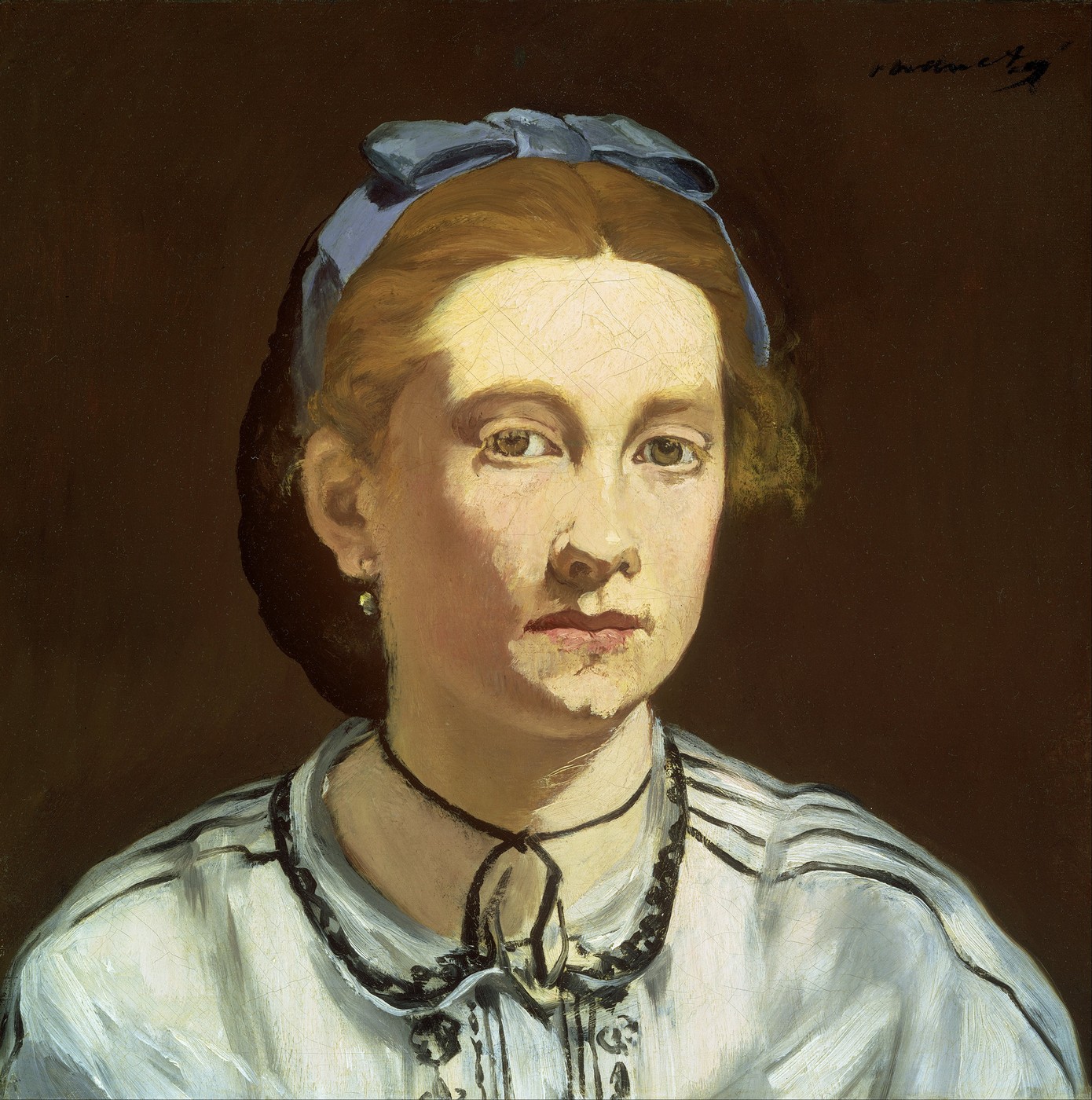
Victorine Meurent is the body of Olympia (1863) and Le Déjeuner sur l’herbe (1863), the two nudes that scandalized Paris and helped launch modern art. The scandal belonged to Manet. The body belonged to her. Meurent was a working-class Parisian who posed to support herself, and she was a painter in her own right. In 1876 the Salon accepted her self-portrait in the same year it rejected Manet’s submission. The model who had scandalized Paris with her body walked into the establishment with a brush in her hand. Her career is the sharpest answer to anyone who imagines the model as a passive prop.
The labor nobody named
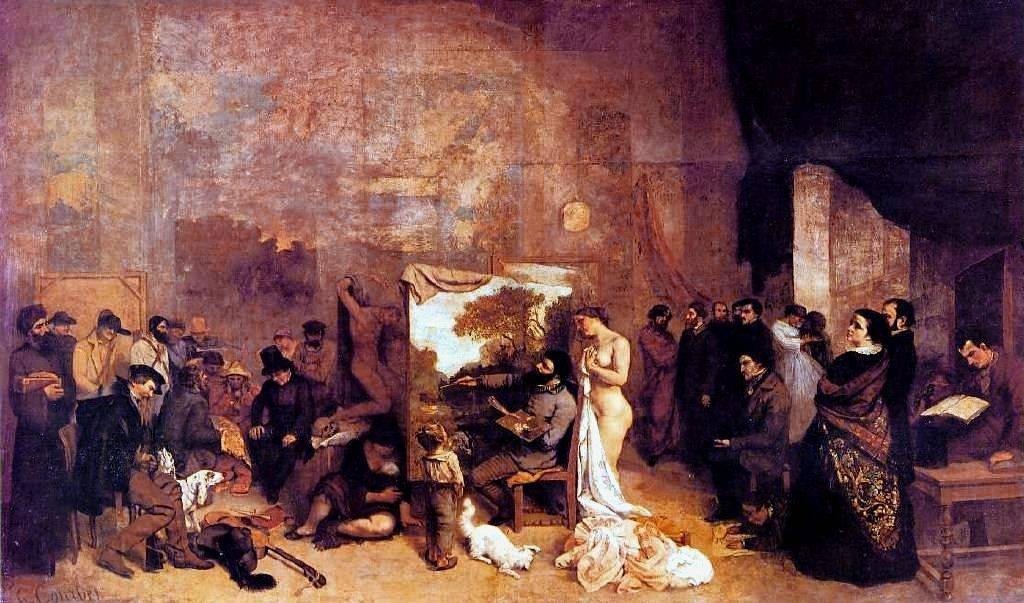
Modeling was, and remains, real work: holding a pose for hours in a cold studio, for wages that bought little more than anonymity. It was gendered work. Women’s bodies were the raw material of the nude tradition, and the women who supplied those bodies were paid, then forgotten, their names dissolving into the paintings they made possible. Courbet put the transaction on canvas in The Painter’s Studio (1855), where a nude model stands behind the painter as he works, her body present, her face turned from the viewer. It is the honest image of the relationship at the heart of the whole tradition.
The next time you stand before a famous nude, look past the signature. Somebody stood there first. The model’s body, labor, and life are half the picture. Art history forgot to write that half down.