Antoine-Louis Barye is remembered as the man who sculpted lions. His Lion Crushing a Serpent made his name in 1832, and critics have filed him under one word, animalier, ever since. His most ambitious work, though, was a naked man standing over the body of a slain monster.
Barye was born in Paris on September 24, 1796 (a handful of sources give 1795), 230 years ago today. He trained as a goldsmith before entering the École des Beaux-Arts, and he spent his working life at an angle to the official art world. He went to the Jardin des Plantes and drew animals from life.
The secret of Barye’s nudes hides in those hours at the menagerie. He dissected animals, sketched them in motion, and studied how muscle sits on bone and how a body shifts its weight before it strikes. It was a lesson in living anatomy, and he carried it straight into his human figures.
His masterpiece, Theseus Slaying the Minotaur, shows the payoff. The Greek hero stands over the dead bull-headed monster, sword in hand, torso twisted, muscles straining with the effort of the blow. The bronze reached the Salon in 1850 and became one of the most reproduced sculptures of its century.
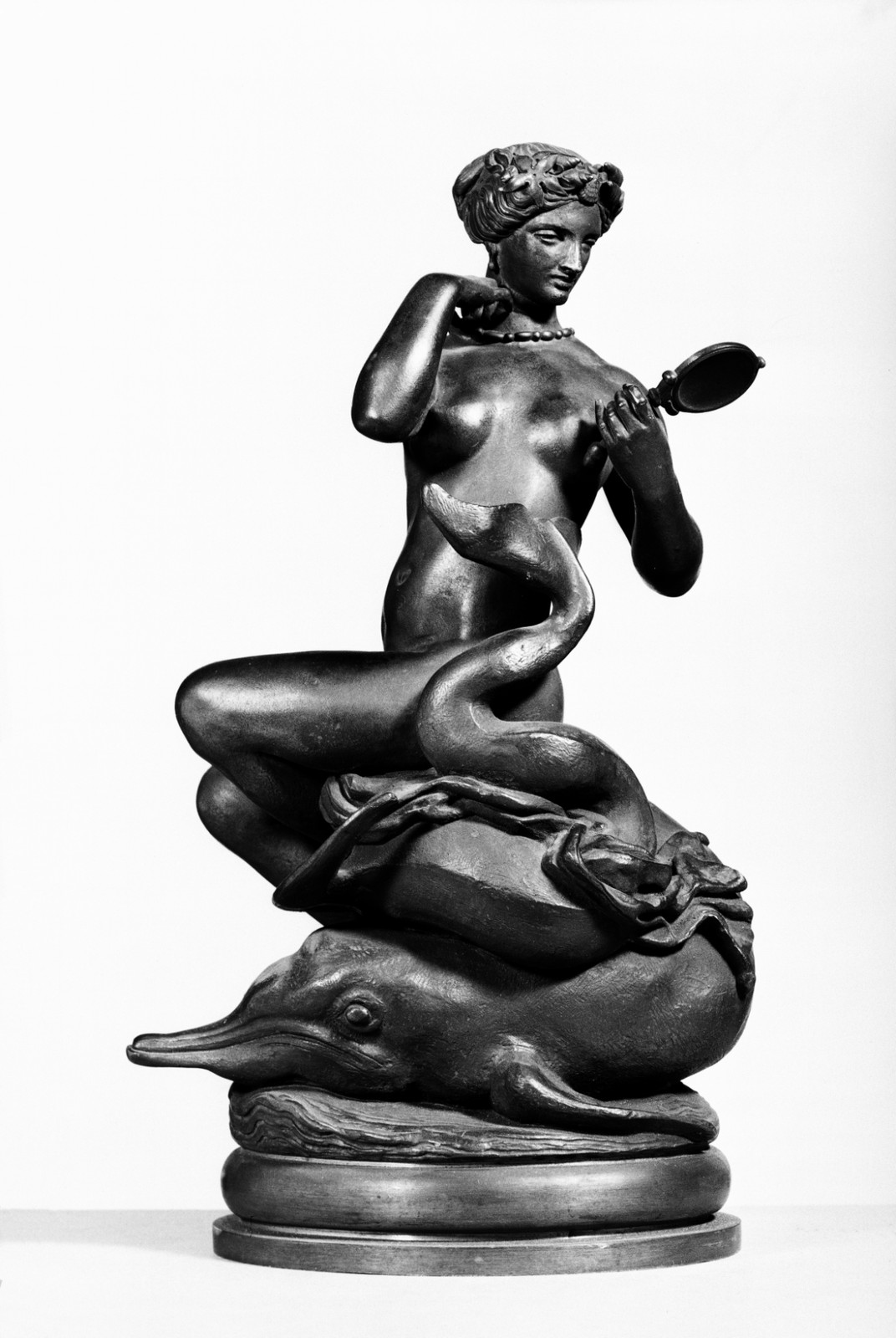
Barye’s range reached the female body as well. His Nereid folds a sea nymph into unguarded grace, the quiet counterpart to Theseus’s violence.
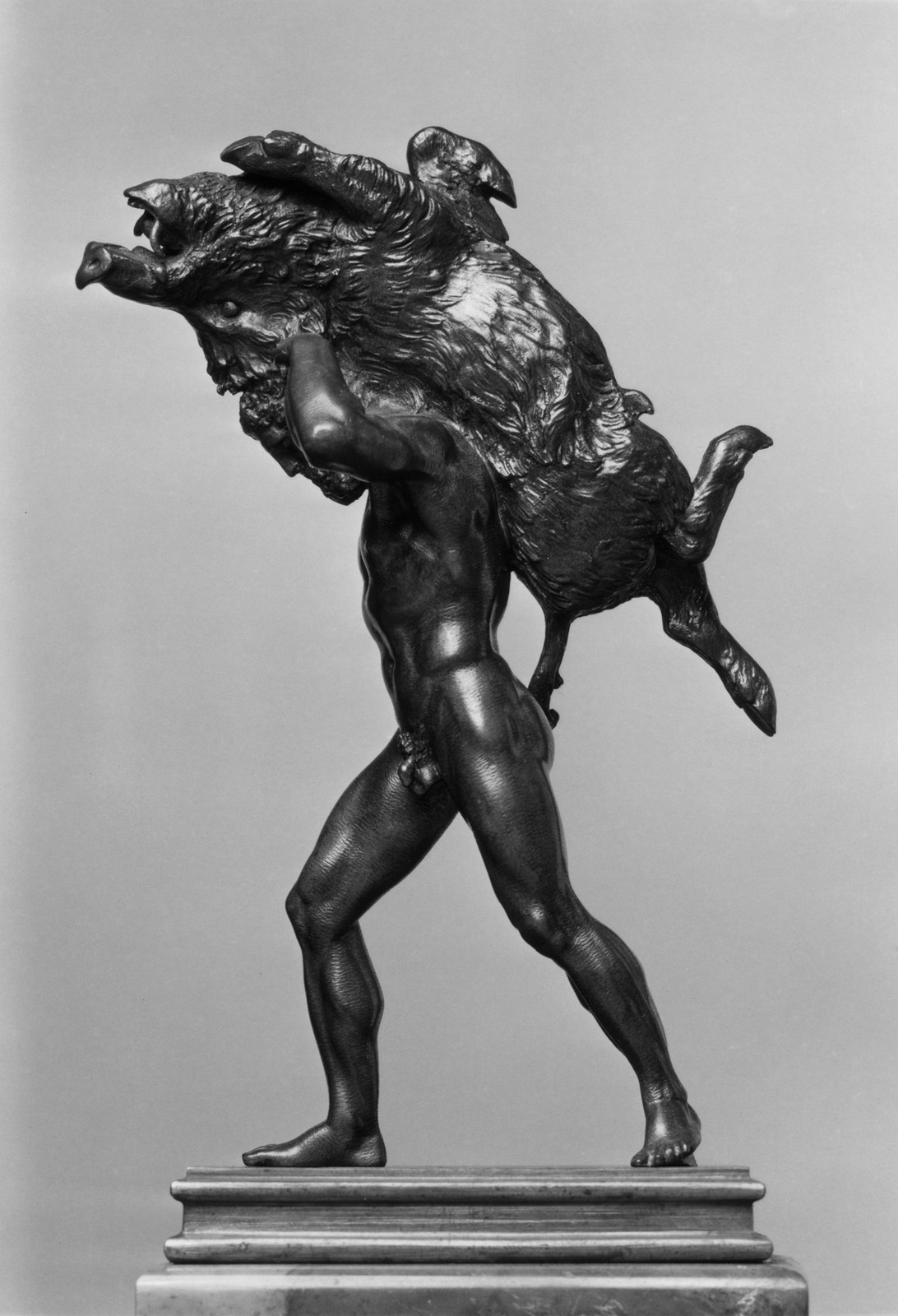
The same understanding of strain runs through Hercules and the Erymanthian Boar, a model Barye exhibited at the Salon as early as 1823. He caught the hero mid-struggle with the beast and put the drama in the locked strain of two bodies.
Barye taught zoological drawing at the Jardin des Plantes, and among the students who passed through his course was a young Auguste Rodin. Rodin, who would drag the nude into the modern age, learned from the animalier how to read a body as a system of forces instead of a frozen ideal.
The lesson of Barye runs counter to his reputation. The man who sculpted animals understood the human body better than most figure sculptors of his time, because he studied it as a living, moving thing. To Barye a nude was a body caught in the middle of an action, and he spent a lifetime proving it.
Two centuries on, the lions still get the attention. The naked man is the real achievement.