Rembrandt van Rijn died in Amsterdam on October 4, 1669, at sixty-three, bankrupt and abandoned by the fashions of his time. The painter who would later be called the greatest of the Dutch Golden Age left behind a quiet revolution in the way the West looks at the human body. The Renaissance had polished the nude into a smooth, timeless ideal. Rembrandt painted flesh as he found it: soft, heavy, imperfect, and mortal.
The Danaë That Welcomed the Light
His Danaë (1636-1643), held in the Hermitage, stages the Greek myth of the princess visited by Zeus as a shower of gold. Rembrandt set the myth’s grandeur aside and handed the scene to an ordinary woman. Her body lies unposed across the bed, belly soft, one arm raised toward the light as if waking. No divine perfection. A person, mid-breath, turning toward what comes next.
A Nude of Fear
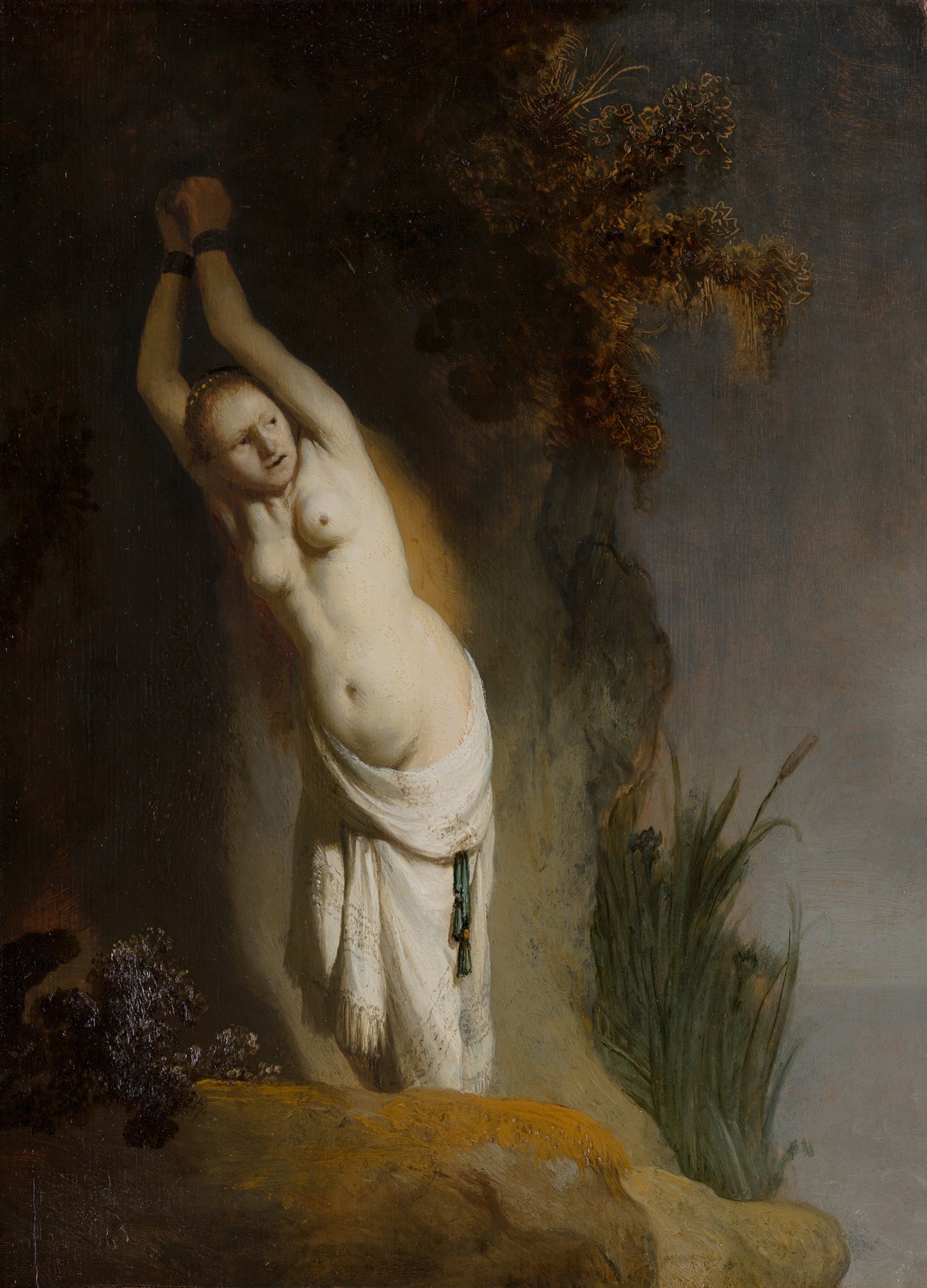
Andromeda Chained to the Rocks (c. 1631) may be the most honest nude Rembrandt ever painted. Earlier painters made Andromeda a beautiful captive awaiting rescue. Rembrandt made her a frightened young woman alone on a cliff, her body exposed and shrinking, with no hero anywhere in the frame. The picture refuses the female nude’s oldest promise, pleasure for the viewer. It offers vulnerability instead.
The Unguarded Body
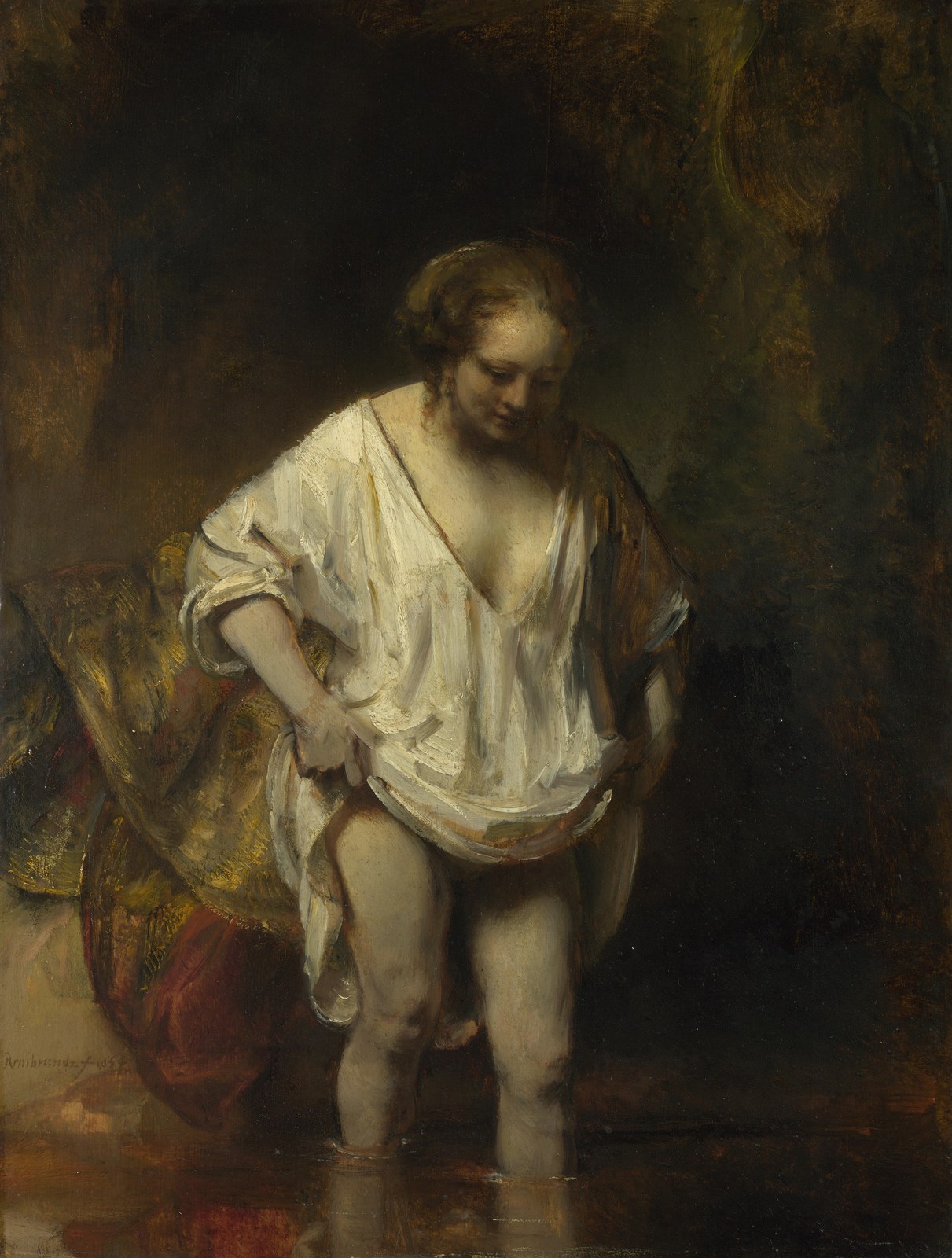
A Woman Bathing in a Stream (1654) belongs to a quieter register. The model, likely Rembrandt’s companion Hendrickje Stoffels, lifts her shift as she steps into shallow water, absorbed in the task and unaware of any watcher. Rembrandt painted the unguarded body, the body alone with itself, generations before artists made privacy a subject.
The Body as a Record of Time
Rembrandt’s nudes and his self-portraits speak the same language. Across some eighty painted self-portraits he charted his own body’s decline, from the ambitious young man to the tired face of 1669. The nude and the self-portrait form two halves of a single conviction: the body tells the truth about a life. Flesh sags, skin folds, time leaves its mark, and none of it lessens the subject’s dignity.
Why It Still Matters
His lesson reaches past the seventeenth century. A culture that still polishes bodies into digital ideals could learn from these canvases. Rembrandt insisted that a body earns its beauty through honesty, through being exactly what it is. In his hands the nude became a portrait of mortality, and mortality is the reason any of it matters.
The painter who died 357 years ago today gave the body back to itself. That remains his gift, and it has not aged a day.