Simeon Solomon was born in London on 9 October 1840, and his family saw the gift early. By his teens he was the Pre-Raphaelite Brotherhood’s youngest star, a painter whom Dante Gabriel Rossetti and Edward Burne-Jones both championed. He spent his working life drawing and painting the human figure. The figure he returned to again and again was one the Victorian age had no word for: a beautiful, androgynous youth, suspended somewhere between the heroic male nude and the ideal female nude.
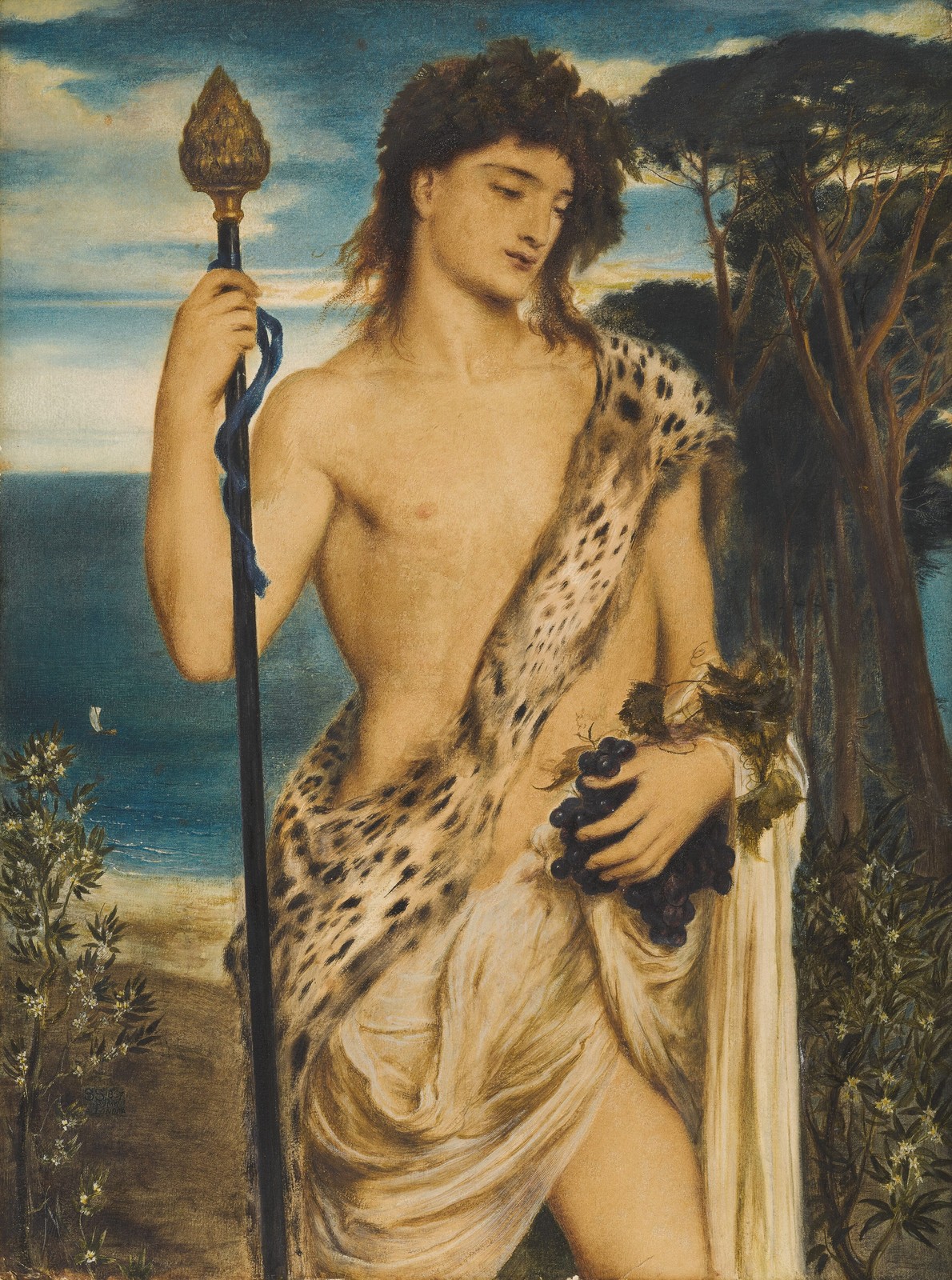
That figure is his real legacy. Long before the twentieth century made gender a subject for painting, Solomon built a third body. His Bacchus of 1867 shows the wine god as a soft-faced adolescent, hair curling against the neck, shoulders rounded, looking away from the viewer in a dream of his own. Solomon removed the muscled definition of the classical god and left a body that refuses to declare its sex.
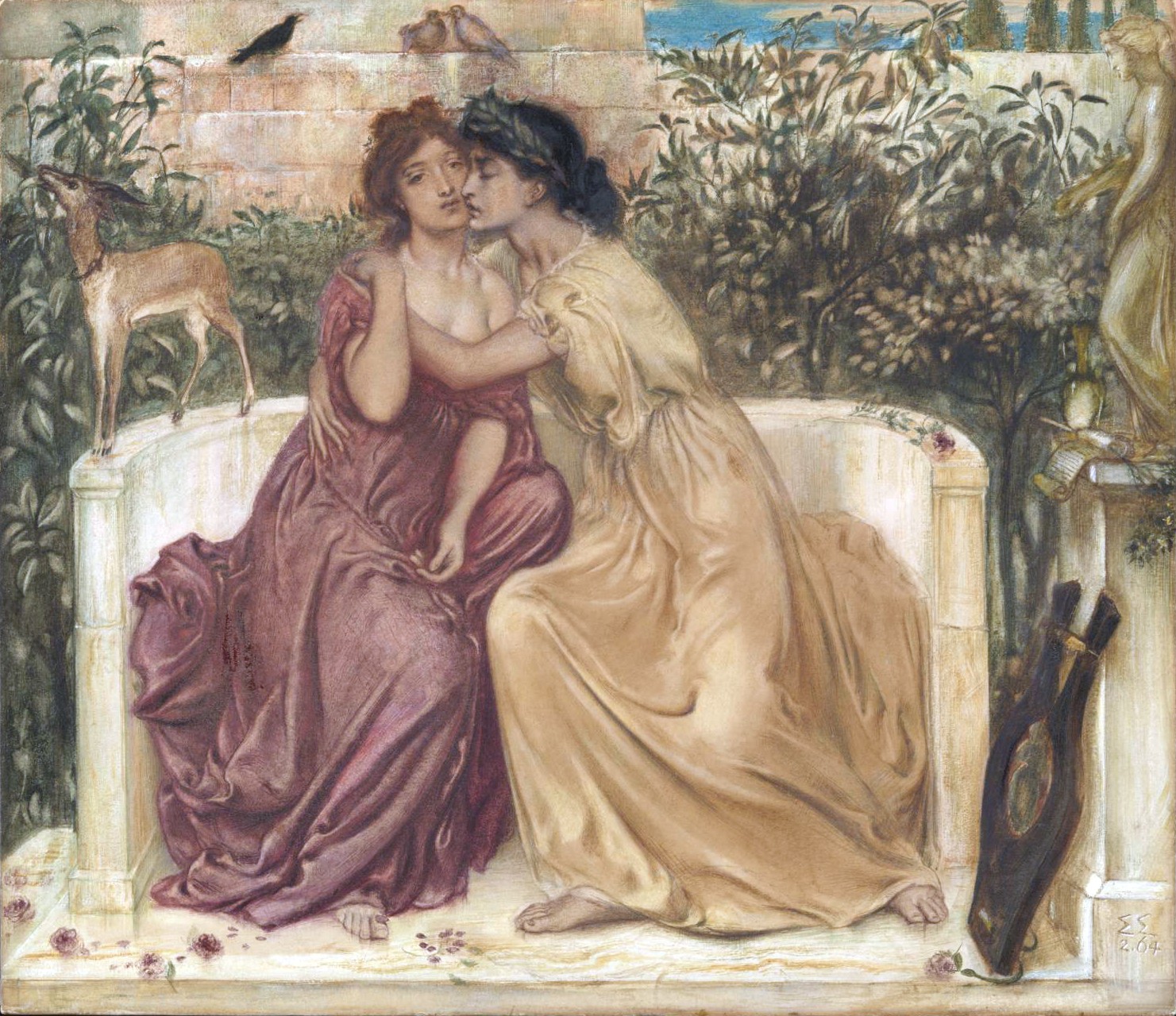
Solomon’s androgynous body grew out of a specific Pre-Raphaelite conviction: that beauty, like the soul, sits above the crude divisions of flesh. His Jewish upbringing steeped him in scripture, and his early biblical subjects, the young David or the mother of Moses, already softened the male form into something tender. When he turned to classical myth and to Sappho, the softening became a program. Sappho and Erinna in a Garden at Mytilene (1864) paints two women in an embrace so absorbed and so tender that the subject stops being scandal and becomes a study of love held between two equal, ungendered bodies.
The price of that tenderness is well documented. In February 1873 Solomon was arrested in a public lavatory with another man and charged with gross indecency. He was fined, and the circle that had made him closed ranks and shut him out. He drank, drifted, and died in a St. Giles’s workhouse in 1905. The same friends who had praised his androgynous nudes could not stomach the man who painted them.
The art outlived the man, and so did the idea. Solomon’s ungendered body flowed into the Aesthetic movement and into the generation of Oscar Wilde, who admired his work. In 2017 Tate Britain’s Queer British Art exhibition placed Solomon at the centre of the story, and curators now read him as a founding figure of a tradition the nineteenth century refused to name. The nude, he showed, does not have to declare a gender. It can be a body, held in the light, asking to be seen.