Critics have been writing the obituary of the nude for five hundred years, and the nude has outlived every one of them. The Counter-Reformation ordered drapery painted over the figures on Michelangelo’s Last Judgment. Victorian reviewers called Manet’s Olympia an insult to public decency. The twentieth-century avant-garde announced that the unclothed body was a relic of a dead academic past. Each verdict aged badly. The nude is still here, and it remains the place where art tests its boldest ideas.
The body endures because it needs no translation. Every viewer already owns one. A painting of a figure speaks to you through anatomy you have known since birth, through posture and gesture you read without being taught. A landscape can leave you unmoved if you have no feeling for that particular coastline. A still life can feel arbitrary. The figure cannot. It is the one image in all of art that looks back at you with the same equipment you carry around all day.
That is why each movement has proven itself on the body. Greek sculptors turned the nude into an argument about proportion and truth. Renaissance painters used it to test perspective, anatomy, and the recovered ideals of antiquity. Manet borrowed the pose of Titian’s Venus, dropped a modern woman into it, and watched the scandal become the founding moment of modern painting. Picasso shattered the figure in Les Demoiselles d’Avignon. Matisse rebuilt the body as pure line and color. The names change. The subject does not.
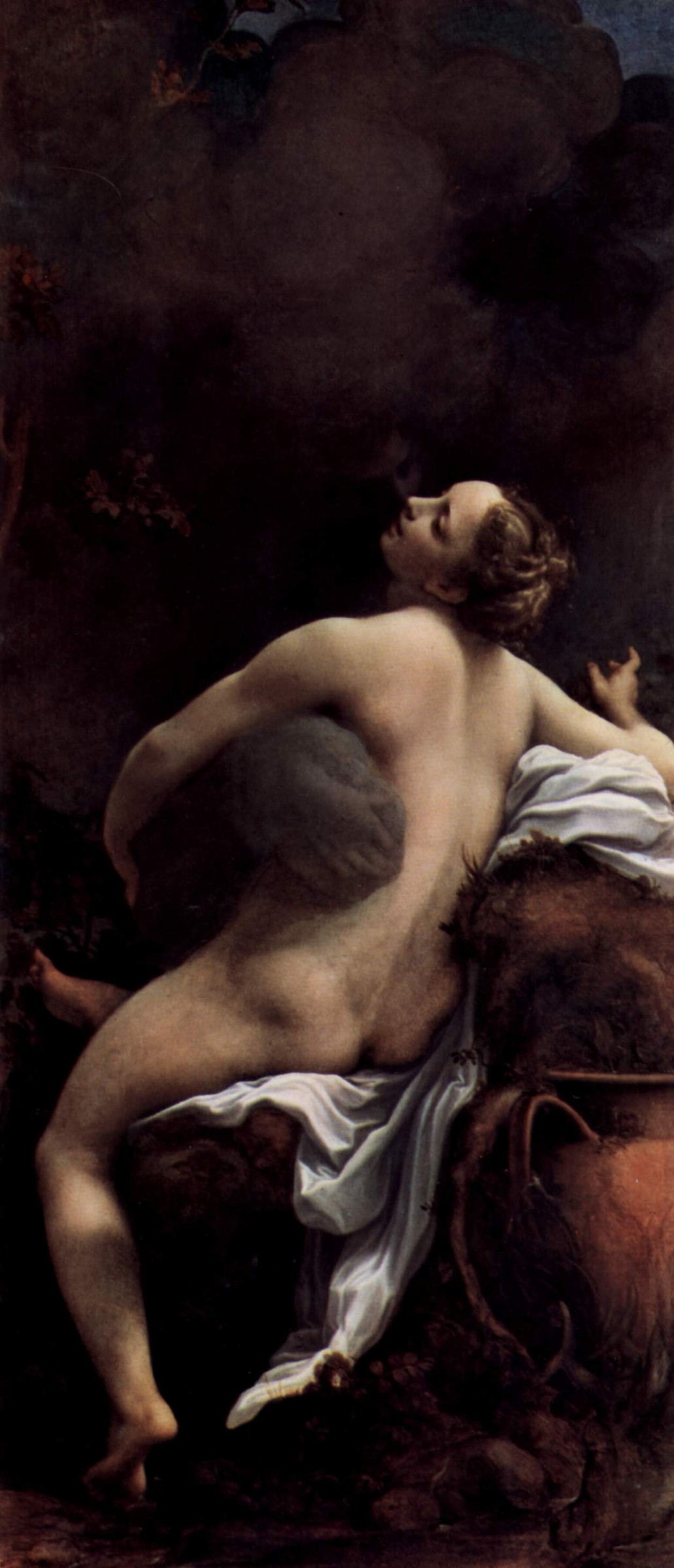
Correggio’s Jupiter and Io shows how far one generation could push the same old subject. He wrapped the naked Io in the embrace of a cloud and dissolved her skin into soft light, two centuries after the nude had already been painted a thousand times. François Boucher did the same thing again in 1752, when he laid a young woman across a divan in The Blonde Odalisque and gave the Rococo its defining body. Neither artist had to invent the nude. Each proved it still had somewhere new to go.
So the next time you hear that the nude is finished, killed off by photography or fashion or some fresh moral panic, read the claim for what it is: a description of the speaker’s own moment. The nude has survived puritans, academies, wars, and a hundred manifestos. It will survive the next hundred too, because as long as human beings have bodies, they will want to see what art can make of the one they already have.