Andrea Appiani died in Milan on 8 November 1817, two hundred and nine years ago today. The Kingdom of Italy had named him its first painter, a title Napoleon invented for the artist he trusted to make a regime look eternal. Appiani answered with a body of work built around a single, obsessive subject: the nude, polished until it gleamed.
His contemporaries called him il pittore delle Grazie, the painter of the Graces. The nickname stuck because he returned again and again to three nude goddesses, Aglaea, Euphrosyne, and Thalia, the personifications of splendor, joy, and bloom. Where the Baroque had loaded the body with muscle, fat, and strain, Appiani sanded it smooth. His figures carry no weight, no age, no appetite. They stand as if lit from inside a glaze of porcelain.
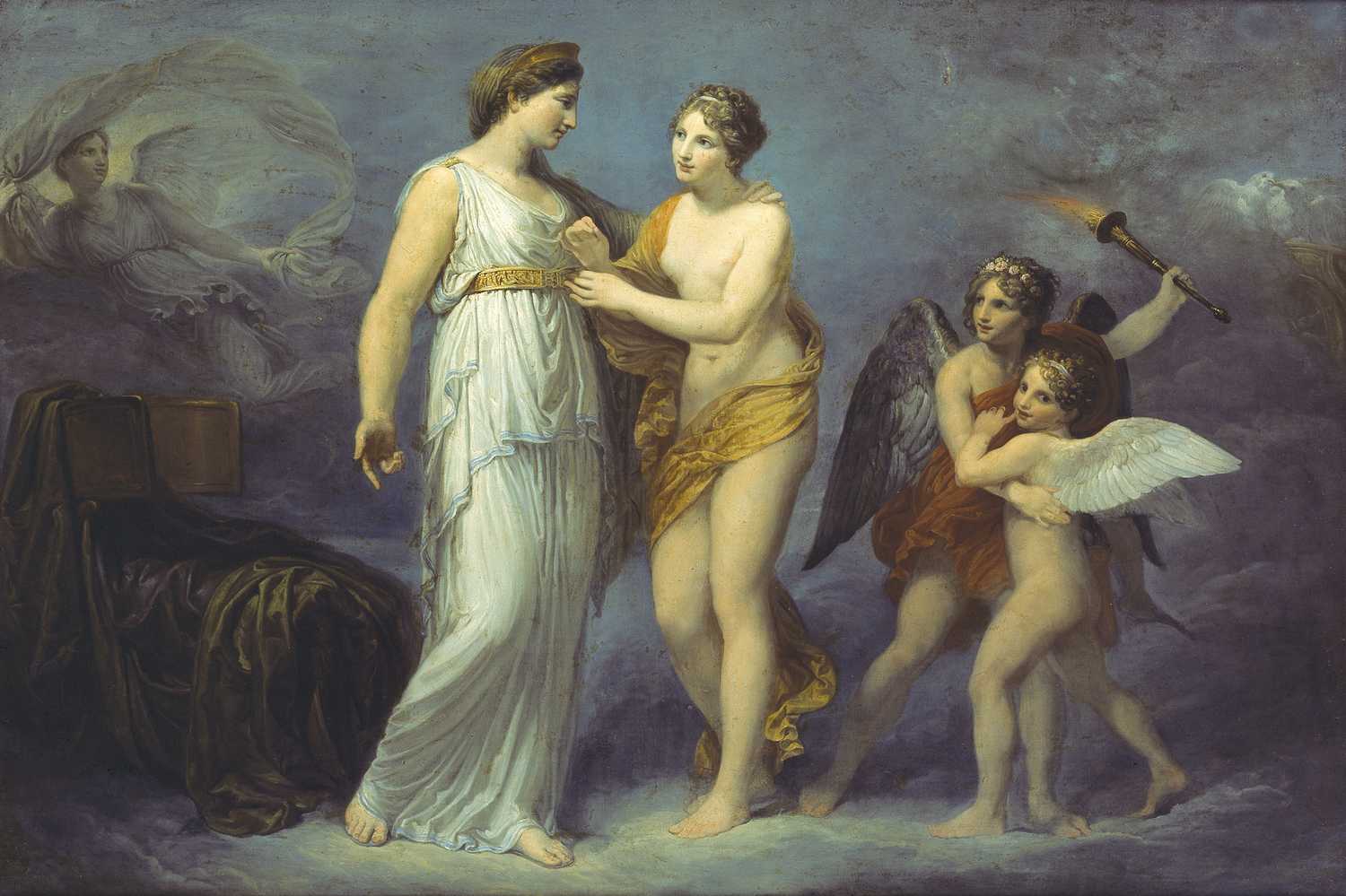
That smoothness was the point. Neoclassicism arrived in the late eighteenth century as a correction to the Rococo, a return to the calm of antique sculpture, and Appiani pushed the ideal further than almost anyone of his generation. In Juno Dressed by the Graces and Venus Lacing Juno’s Girdle, both painted in 1811, the goddesses perform a silent ritual of adornment. No muscle strains. No fold of skin. No evidence that any of these bodies ever drew breath.
Appiani made the nude into a compliment. He served a court that wanted its gods to resemble its own aristocracy and its aristocracy to resemble gods. He painted Napoleon as a Roman emperor and Josephine as Venus. The mythological body turned into a mirror held up to power: the more ideal the goddess, the more divine the court that paid for her.
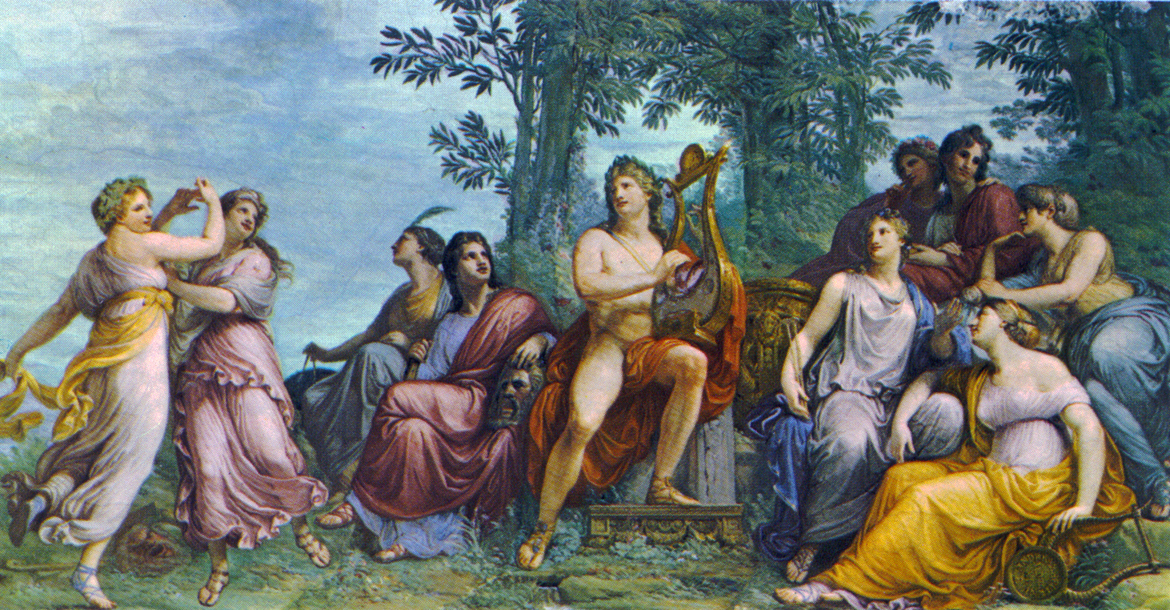
His masterpiece sits on a ceiling. The Parnassus fresco, completed in 1811 for the Villa Reale in Milan, places Apollo at the center of a calm assembly of Muses. Apollo presides. The Muses pose in measured ranks. The whole ceiling reads as a lesson in how the nude, disciplined into symmetry, could also teach a lesson in how to behave.
That is Appiani’s quiet legacy. He did not set out to shock. He took the most unruly subject in art and taught it manners. Two centuries on, his name has faded beside his rivals, but the phrase they coined for him still names a real idea: the body could be refined into grace, polished until it gleamed, and offered up as the highest flattery a painter could pay.