Angelica Kauffman died in Rome on this day in 1807, the most celebrated woman painter of her age. She was a founding member of the Royal Academy, one of only two women admitted in 1768. Yet the most revealing thing about her career is the one door the Academy kept closed to her: the life room, where the live naked model stood, and where her male rivals learned to paint the body.
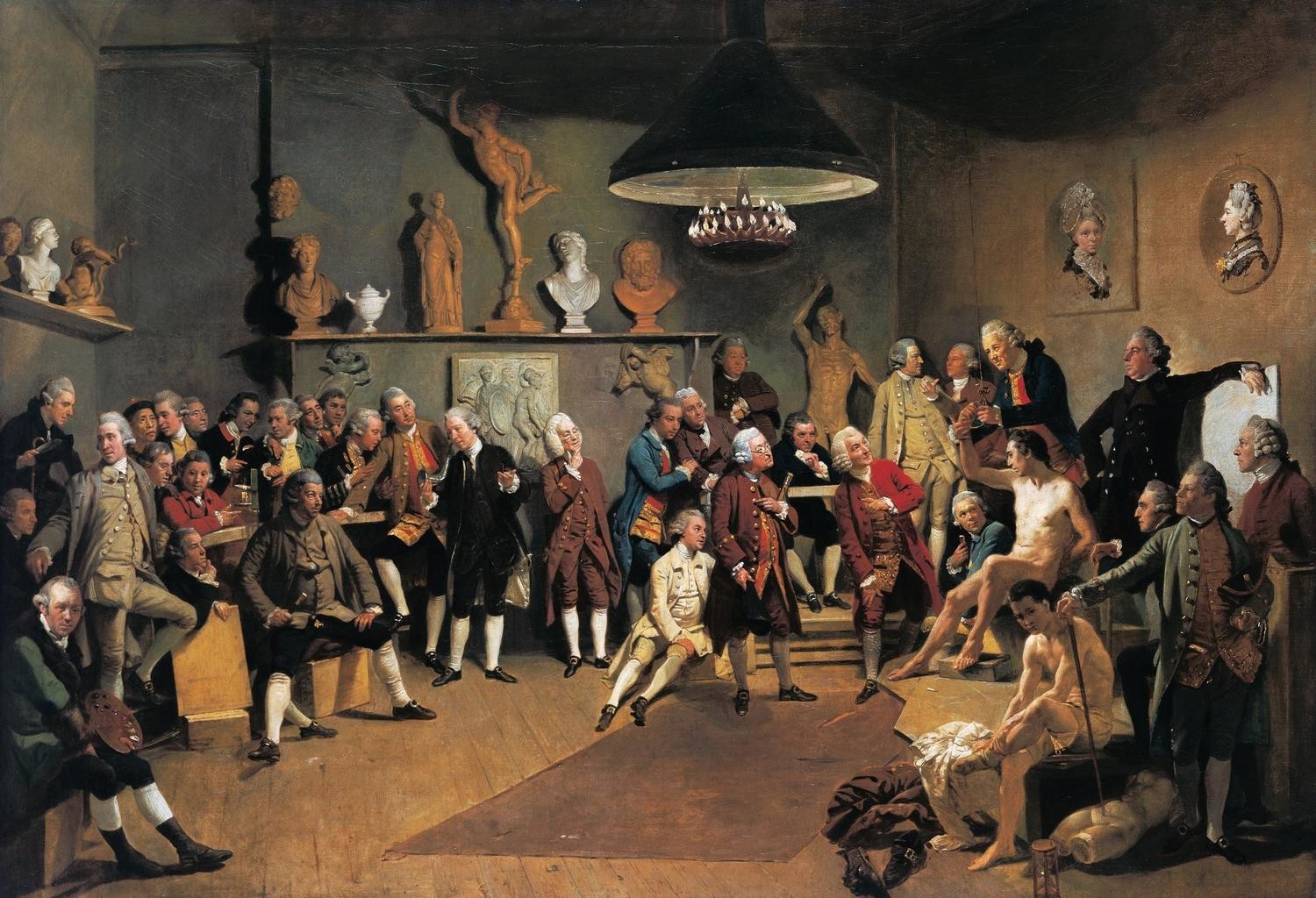
When Johann Zoffany painted the Academy’s members in 1772, he put Kauffman and her fellow member Mary Moser into the picture only as two portraits hanging on the back wall. The women could not stand in the room with the nude model, so they appeared as pictures of pictures, present by proxy.
The Academy judged the naked body unfit for female eyes, then asked those same women to paint history, the highest genre of all, which was built on the nude. Kauffman assembled her nudes the only way she could: from plaster casts of antique sculpture and from engravings. Her Ariadne and her Venus are bodies remembered from stone rather than observed from flesh.
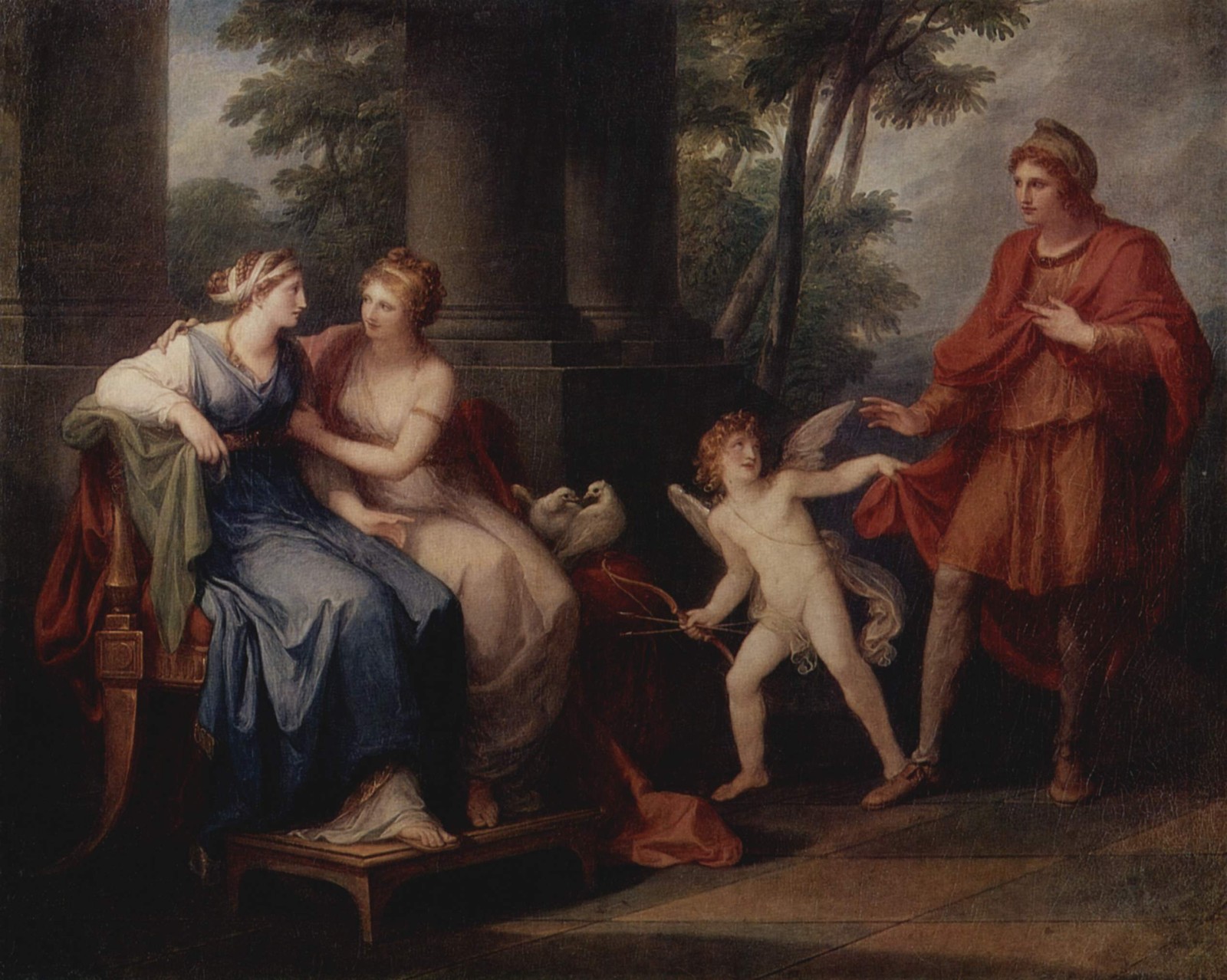
That is why her nudes look the way they do. Ariadne reclines on the shore of Naxos with a composure no living sleeper ever held, her drapery arranged like a classical relief. Venus leans toward Helen with the smooth, unbothered grace of a statue. There is no weight of breath in them, no imperfect inch of skin. What she painted was the nude as an idea, a memory of the antique, purified by the exclusion that was meant to keep her from the subject.
The ban worked in reverse. Shut out of the life room, she could not record a real body, so she painted the ideal body more completely than many men who had the model in front of them every day. The exclusion did not stop her from painting the nude. It decided which nude she would paint.
Look at the two figures together: a reclining woman abandoned by her lover, and a goddess persuading another woman toward love. Both turn on the female body as fate, as the thing that happens to women, told by a woman who had never been allowed to study that body up close. Kauffman spent a lifetime painting the subject the Academy said she was too delicate to see.
That is the thought worth keeping from her anniversary. The nude has always been a kind of knowledge, and knowledge has always been gated. For two centuries the life room was where artists learned the body, and the Academy kept women outside it, then praised them for painting the nude without ever having seen one. Kauffman turned a restriction into a style. Her nudes are cool, distant, and perfect because she had to imagine them.
She died with every honor the age could give a woman, and without the one thing a history painter was supposed to need. The nude she painted was never in the room with her. Most of the nudes painted in that room have been forgotten.