In 1602 the banker Vincenzo Giustiniani commissioned a painting of Cupid and then hid it. The canvas hung behind a green silk curtain, revealed only after visitors had seen every other work in his collection. Giustiniani swore the naked boy would eclipse them all, and he was right. The painting, Amor Vincit Omnia, shows a grinning adolescent with vast dark wings, seated on scattered armor, a lute, a violin, a crown, a compass, and an open manuscript. Everything a human being builds, studies, and fights for lies trampled under his bare feet.
Caravaggio was born 455 years ago today, on 29 September 1571. He painted the human body the way Rome had never permitted: as flesh with weight, shadow, and dirt beneath the fingernails. His models came from the street. His nudes slouched, grinned, and stared straight back at the viewer. The model for the Cupid was a boy named Cecco, Caravaggio’s servant and companion, and his face lights the canvas with a laugh that unsettles anyone who prefers their nudes to behave.
A Nude That Answers Back
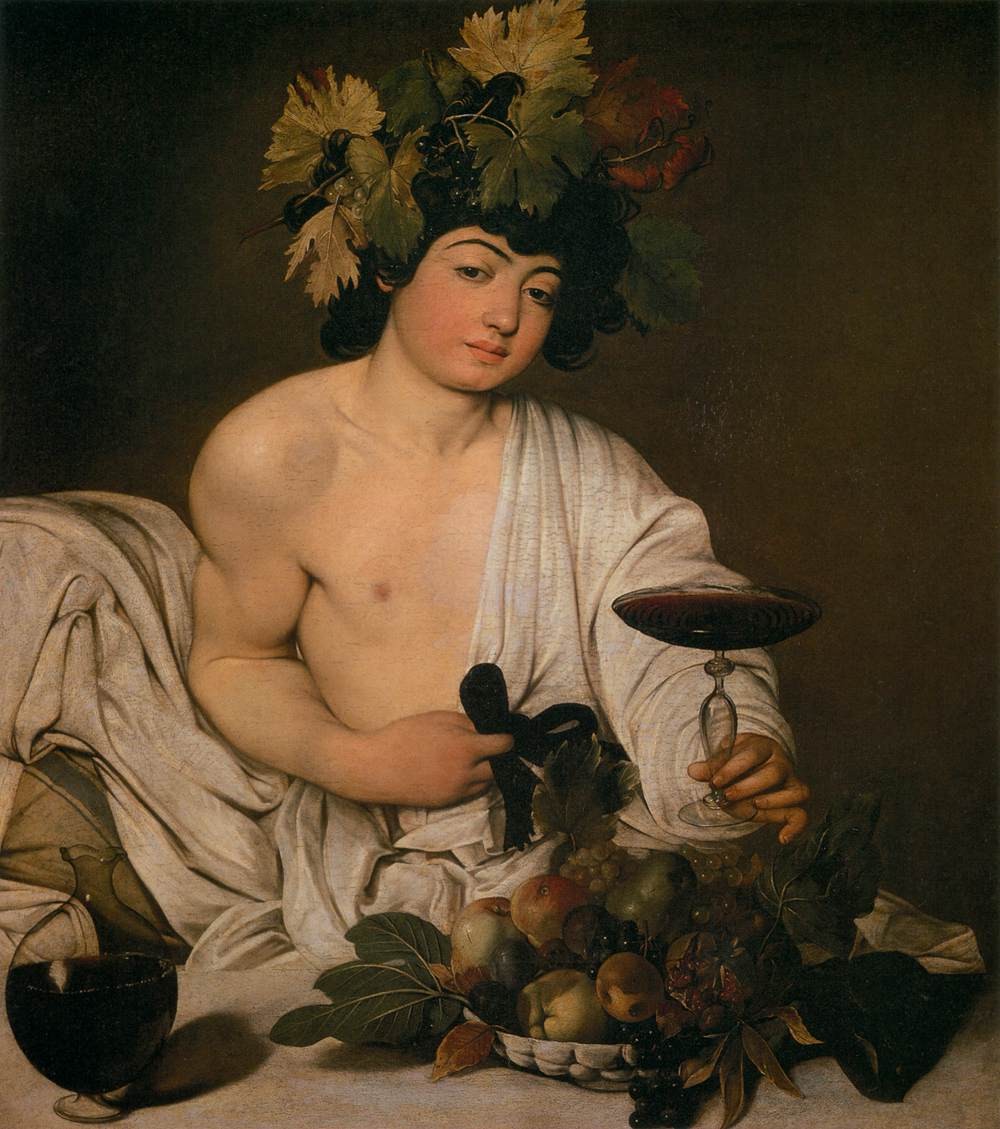
Painters before Caravaggio gave the naked body an alibi. Venus was a goddess. David was a hero. A figure earned its right to appear by pointing at a myth or a moral. Caravaggio removed that excuse. His Bacchus is a bored young man with dirty nails and a flushed face, holding out a glass of wine. His Saint John the Baptist is a Roman street youth. The bodies are real because the models were real, hired off the street and paid to stand still.
The Curtain That Made It Famous
Giustiniani’s curtain was the first review. By hiding the painting and revealing it last, he announced that one canvas outranked a room full of masterpieces. The anecdote survives through the seventeenth-century writer Joachim von Sandrart, who recorded that Giustiniani showed the work only at the end of a viewing because it dimmed every picture that came before it. The curtain turned the nude into an event. Visitors arrived expecting a climax, and Caravaggio delivered one: a naked boy, unapologetic, trampling the emblems of power underfoot.
Four hundred and fifty-five years after his birth, Caravaggio’s naked figures still do what Giustiniani promised. They refuse to be decorous. They look back. They insist that the most radical thing a painter can do with the human body is show it without apology. The curtain fell long ago. The shock has not.