
On October 12, 1875, Jean-Baptiste Carpeaux died at a château outside Paris, aged 48. Six years earlier he had given the city a gift it did not know how to receive: a ring of naked women dancing across the façade of its newest opera house.
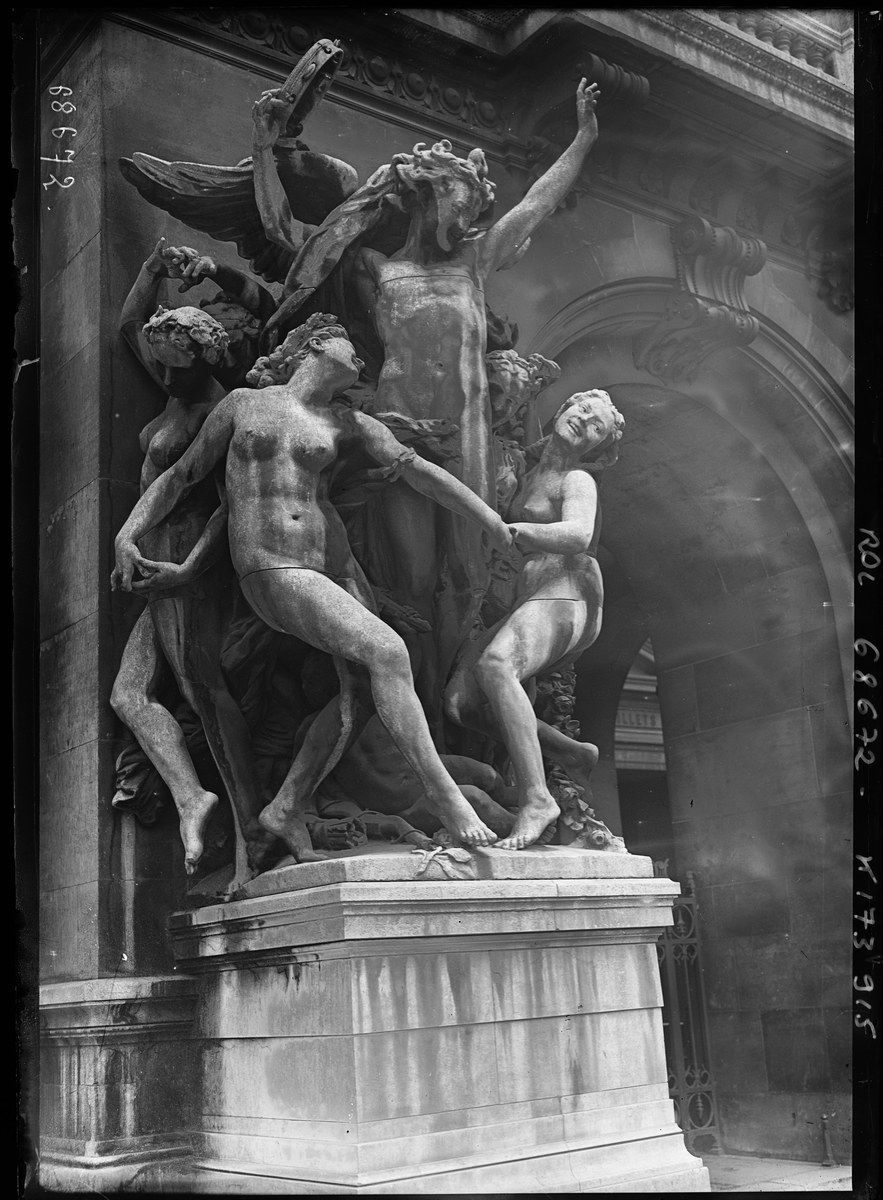
Charles Garnier’s Opéra was the showcase of the Second Empire, and its façade called for four stone groups. Carpeaux, the son of a mason from Valenciennes and a Prix de Rome winner who had studied Michelangelo and Donatello, took the commission and made something nobody expected. His La Danse, carved from Echaillon marble and installed in 1869, gathered six women around a central male spirit. The Genius of the Dance leaps at the center; the women whirl around him, arms joined, hair loose, bodies bare.
Paris had seen nudes before, always indoors, framed as myth or allegory. A Venus belonged in a gallery, above the mantel, behind a gilded frame. Carpeaux set his dancers on a public street, at eye level, where anyone could stop and look. Critics called it obscene. In August 1869 someone hurled a bottle of black ink at the group, and the stain spread across the marble.
The figures offended because they were unapologetic. The official nude asked permission, borrowed a classical name, and stood still for inspection. Carpeaux’s dancers asked for nothing and posed for nothing. They were in motion, caught mid-joy, bodies doing what bodies do when no one is arranging them. He broke with the classical tradition on purpose: in Rome he had walked the streets sketching real people in real movement, and he brought that life back to stone.
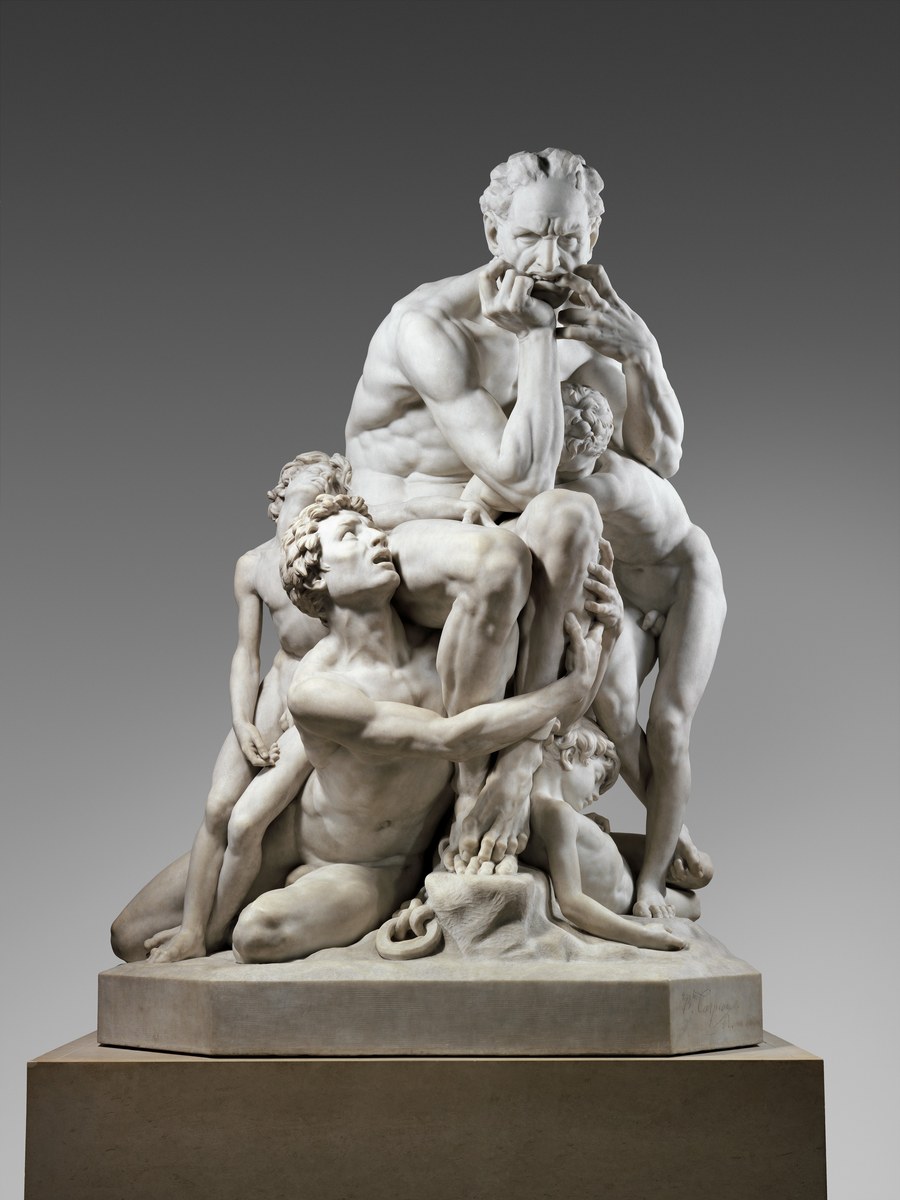
The same hands carved the opposite register. Ugolino and His Sons, drawn from Dante’s Inferno, shows the Count of Pisa gnawing his own fingers in the Tower of Hunger, his dying children clinging to him. Here the nude is extremity, the body at the edge of what flesh can bear. Carpeaux understood that the unclothed body is the most honest instrument an artist has, registering delight and despair with equal force.
The scandal faded with the Franco-Prussian War in 1870, and the group stayed on the façade for nearly a century before the original moved indoors for its own protection. A copy now dances in its place, and the ink washed off long ago. The lesson survives: a body scandalizes when it moves. Carpeaux gave the naked body to the street in motion, and the street, after a moment’s panic, decided it wanted it.