Marianne von Werefkin was born in Tula, Russia, on September 10, 1860, the daughter of a general in the Imperial Russian Army. She died in Ascona, Switzerland, in 1938, a stateless refugee who had helped invent German Expressionism. The conviction that ran through her entire career was simple: the human body is a mirror of the soul, and the painter’s task is to render what the soul feels rather than what the eye sees.
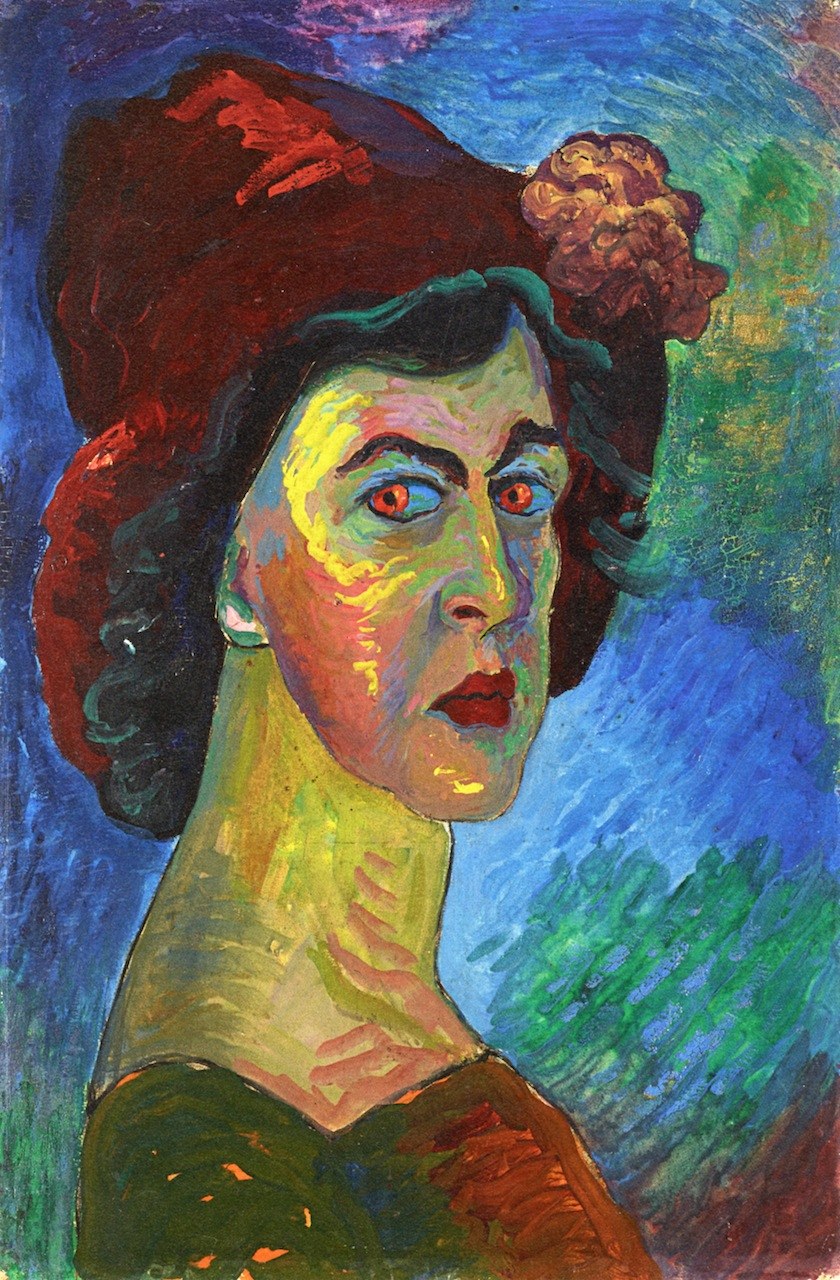
That conviction placed Werefkin outside both camps of her day. The academy demanded a figure that was idealized, proportioned, and draped in a classical alibi. The emerging abstractionists wanted the figure dissolved into pure form. Werefkin wanted a body that stayed recognizably human while carrying the full weight of an inner state. Her tempera paintings of women, dancers, skaters, and bathers are studies in feeling, with color doing the emotional work that anatomy once performed.
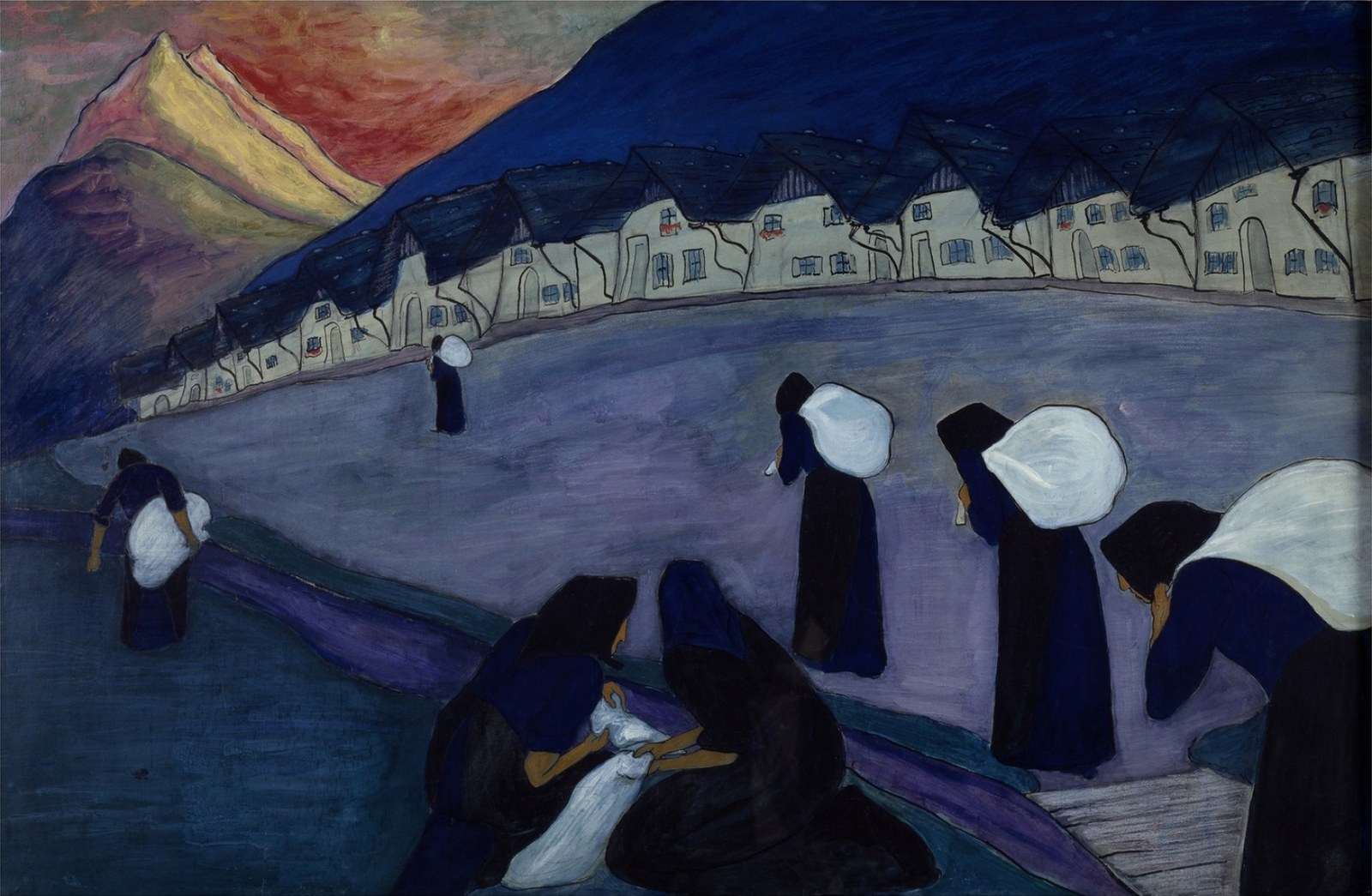
Her Bathhouse of 1911 is the clearest statement of the idea. The bather was already one of the oldest subjects in Western painting, a nude that the bath’s ancient ritual had long given permission to display. Werefkin took that scene and withdrew the permission. Her figures are absorbed in the private business of washing, rendered in hot, unstable color that makes the image read less like a tableau and more like a memory. The body stops performing for a viewer and settles into its own inwardness.
Werefkin reached this position the hard way. She became a private student of Ilya Repin in 1880, and in 1888 a hunting accident left her right hand, her painting hand, permanently damaged. Four years later she began a twenty-seven-year relationship with Alexej von Jawlensky, a penniless officer five years her junior. She was the stronger painter and she knew it, so she trained him, funded him, and set aside her own work for a decade to advance his. It was a familiar bargain for a woman in art, and she paid it in full. Only when she returned to painting with the fierce color of her maturity did she co-found, in 1909, the Neue Künstlervereinigung München alongside Jawlensky, Wassily Kandinsky, and others, the association from which the Blue Rider grew.
Her self-portraits state the case directly. In Self-Portrait I of 1910 she paints herself in a sailor’s blouse, her face simplified toward a mask, her eyes wide and unyielding. She does not flatter. She claims. A woman painting her own body on her own terms, inside a movement that mostly painted women as objects, was a quiet revolution, and Werefkin’s insistence that the figure belong to feeling rather than display anticipated arguments that feminist art would make explicit generations later.
For years Werefkin was remembered as a footnote to the men around her. The recovery has been slow and real. The Fondazione Marianne Werefkin in Ascona preserves her paintings and the notebooks she called Lettres à un inconnu, Letters to an Unknown, in which she worked out her theory of art as the language of the soul. On the 166th anniversary of her birth, her mask-faced women and her bathhouse bathers still insist that the body in art was never only flesh. It was a place where feeling could be seen.