On September 8, 1504, a seventeen-foot statue of a naked boy rolled through the streets of Florence on greased logs and rose onto a pedestal beside the entrance to the Palazzo Vecchio. It was Michelangelo’s David, and its unveiling that day achieved something no work of art had managed for a thousand years: it set the nude back at the center of public life.
A statue built for the sky, brought down to earth
The David was never meant to stand where Florence could look it in the eye. In 1464, the Opera del Duomo, the committee that oversaw the cathedral, ordered a colossal prophet figure for the roofline, high above the city. A block of Carrara marble was quarried and handed to Agostino di Duccio, who abandoned it. A second sculptor, Antonio Rossellino, tried and failed as well. For four decades the block sat in the cathedral workshop, damaged and written off as ruined. In 1501 the committee handed the problem to a twenty-six-year-old named Michelangelo Buonarroti.
He carved for three years, and when the figure emerged, everyone agreed it was too good for a rooftop. The David would not crown the Duomo. It would stand on the ground, at the very door of the republic’s seat of government.
Why a shepherd boy, and why naked?
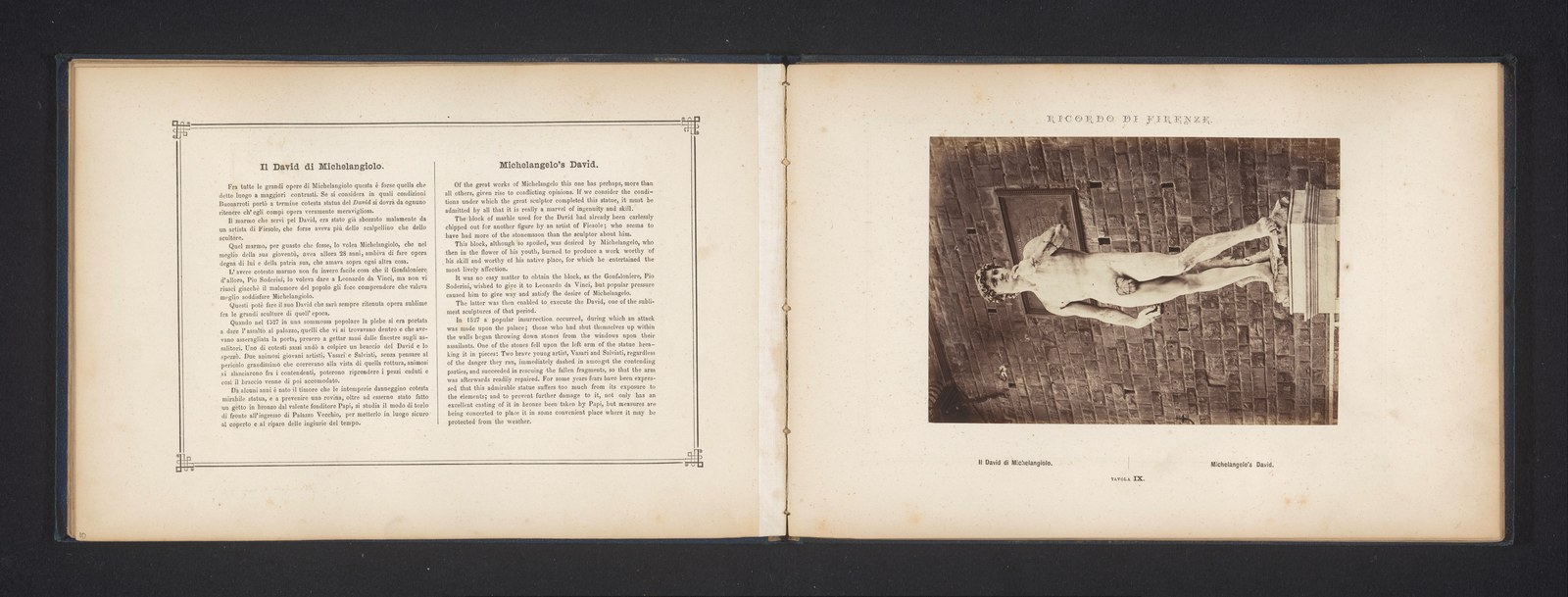
David was the biblical shepherd who felled the giant Goliath with a sling and a stone. To the Florentine republic, ringed by enemies and haunted by the exiled Medici, the story was a mirror: the small, outnumbered, righteous city against the towering powers around it. Michelangelo chose the moment before the fight rather than the triumph after. David stands tense, the sling resting over his shoulder, his brow furrowed, his whole body coiled with the decision he is about to make.
His nudity carries the argument. There is no armor, no crown, no drapery of office. He is a body, and the body is the claim: a citizen needs no ornament to be sovereign. Nakedness here reads as moral and civic, the raw material of virtue.
A body recovered from the past
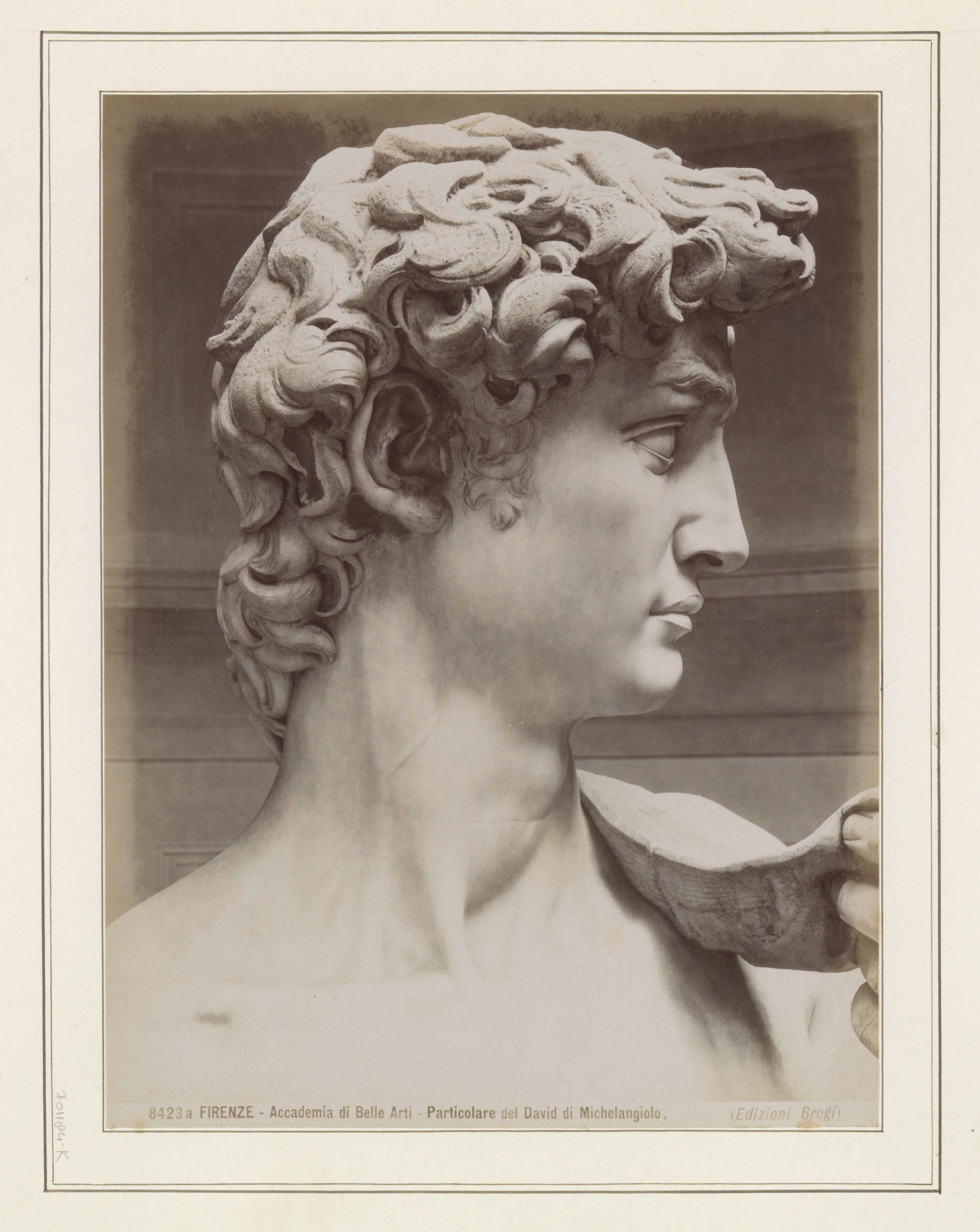
Michelangelo spent his formative years studying the classical nudes of Rome, and the David is a deliberate resurrection of antiquity’s contrapposto: the weight settled on one leg, the hips and shoulders tilting through a slow S-curve that makes stone seem to breathe. The head and hands are oversized on purpose, a correction for the statue’s intended perch high on the cathedral, where the proportions would read as true from far below. At ground level, the exaggeration lends David a heroic scale that no accuracy could.
A nude that made a city flinch, then a continent imitate
The nakedness was a provocation from the start. Soon after the unveiling, a gilded garland was ordered to cover the statue, the first of centuries of fig leaves, real and painted, hung on David. When Queen Victoria received a full-size plaster cast in the nineteenth century, the Grand Duke of Tuscany had a detachable fig leaf sculpted so the monarch would not have to regard the thing entire. That leaf now sits in the Victoria and Albert Museum, a museum piece of a museum piece, the most famous censor in the history of sculpture.
None of it mattered. The David became the most reproduced nude in Western art, the template for the idealized male body for five hundred years, and the emblem of the Renaissance itself.
From public square to glass case
In 1873, after centuries of weather and one violent episode in which the statue was struck and its arm broken, the city moved the original indoors to the Galleria dell’Accademia, and a replica took its place in the piazza in 1910. The David that once stood defiant in the open air now waits in a climate-controlled tribune under a dome, while millions file past each year, most with a phone in hand.
Something of the original provocation survives. A naked body still makes institutions nervous, still demands justification, still gets blurred by an algorithm. The question the David asked on September 8, 1504, remains open: who gets to be naked in public, and what is a body allowed to say about power?
The David began as a failed block of stone no one wanted. Michelangelo saw a citizen inside it. What he pulled out was the greatest male nude ever carved and an argument, five hundred and twenty-two years old and still unfinished, that the unadorned human body is enough.