
Théodore Géricault was born on September 26, 1791, in Rouen, and died at thirty-two, having painted one canvas that changed how the West looked at the human body. The Raft of the Medusa (1818-1819) is that canvas. It is a pile of bodies: the dead, the dying, and the desperate, stacked in a pyramid of flesh beneath a stormy sky.
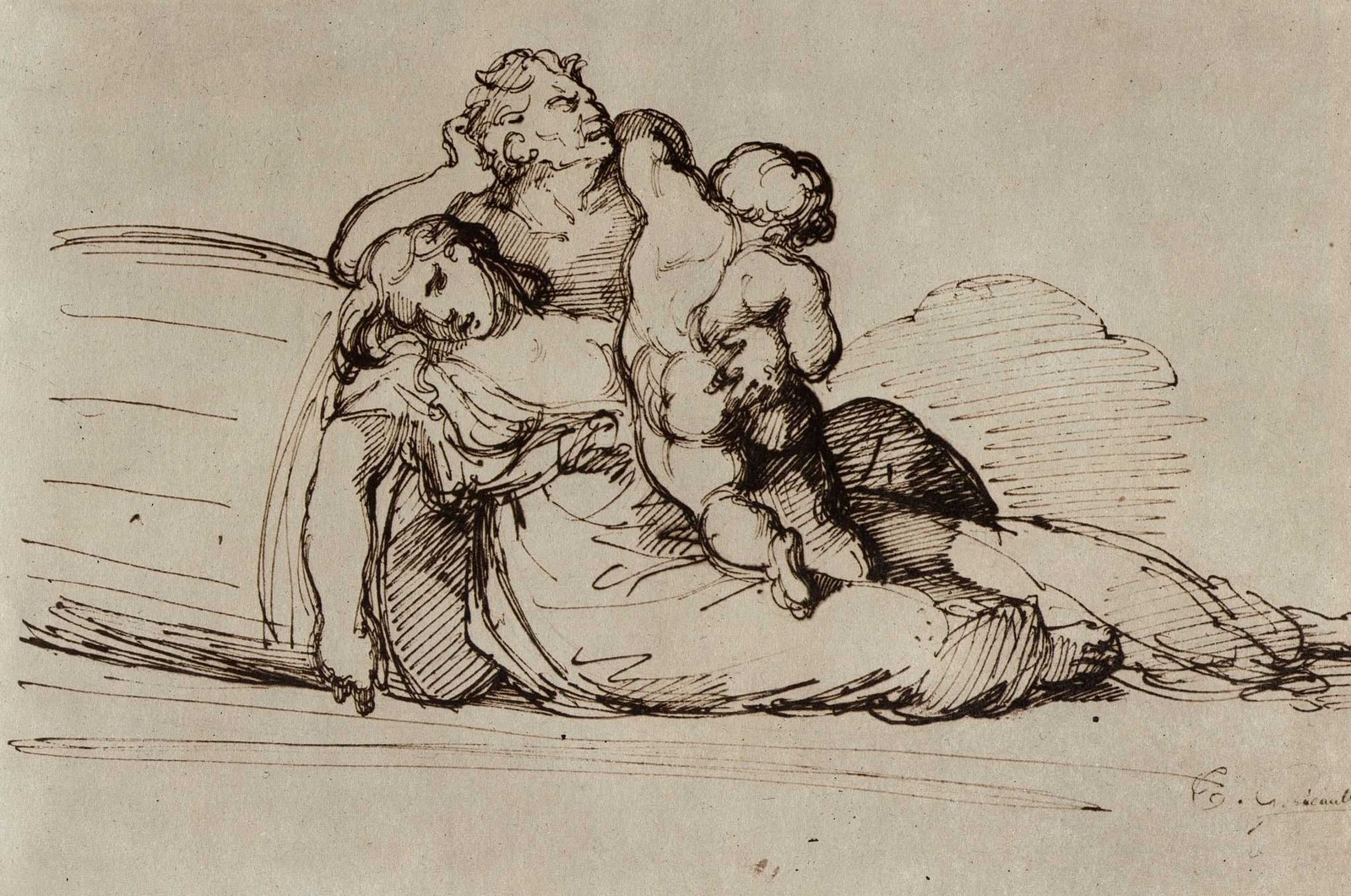
Géricault built the painting out of corpses. To prepare, he studied severed limbs in his studio and sketched the dead at the Beaujon hospital morgue. He interviewed the survivors of the Méduse shipwreck and had the raft’s carpenter rebuild the platform. This was a body of evidence before it was a body of paint. The result broke with the idealized academic nude that had governed French painting for two centuries.
Where David and Ingres had shown the human figure as a marble ideal, Géricault showed it as vulnerable, mortal, and subject to the sea. The man at the bottom of the composition trails one leg into the water. The old man at the center cradles his drowned son. A figure near the top waves a rag at a distant ship. Hope and horror share the same raft, and the body is the medium that carries both.
The Raft of the Medusa is the hinge between the Neoclassical nude and the modern figure. It keeps the grand scale of history painting and the muscular anatomy of the academic tradition, then submits both to a factual, unflinching realism. The nude no longer signified divine perfection or civic virtue. It signified a person who could drown.
That shift opened the door to Romanticism. Delacroix took the lesson and ran with it; the bodies in Liberty Leading the People and The Death of Sardanapalus owe their emotional weight to the Raft. Later realists, from Courbet to the early Manet, could paint the unidealized body because Géricault had already broken the ideal’s monopoly.
Géricault died in 1824, at thirty-two, after a riding accident and a wasting illness. His legacy is that single, enormous, exhausting painting, and the question it still asks. When the body stops being a symbol and starts being a person, what is art allowed to show? The Raft of the Medusa answered by showing everything.