Around 350 BCE, an Athenian sculptor named Praxiteles did something no Greek artist had dared. He carved a goddess, Aphrodite, completely naked, at full life size, and stood her in a temple for everyone to see.
The city of Kos had commissioned the statue first. When its citizens saw what Praxiteles had made, they were horrified and bought a draped version instead. The people of Knidos, a small city on the coast of Asia Minor, took the naked one. Within a generation, pilgrims were sailing across the Aegean to stand before it. The city struck coins with its image and refused to sell it, even to a king. A Roman writer recorded that the goddess herself once visited the shrine and asked, “Where did Praxiteles see me naked?”
The Aphrodite of Knidos became the most famous statue of the ancient world. The original is lost, melted down or broken long ago. We know it through Roman copies and through the pose it invented, a pose that has governed how the West pictures the female body for the two and a half millennia since.
The gesture that hides by showing
Praxiteles caught the goddess in the moment before a bath, one hand placed over her sex, the other arm folded across her breasts. Art historians call the pose the Venus Pudica, the modest Venus. She covers herself. That covering is the whole point.
The pose reads as modesty, but it is the least modest gesture ever invented. The hand that hides is the hand that directs. By pulling the eye toward the places it pretends to protect, the Venus Pudica turns the female nude into a loop of display and concealment, invitation and refusal. The first monumental female nude in Western art arrived already performing shame for a male viewer, and that performance has never stopped running.
Every famous nude is a reply
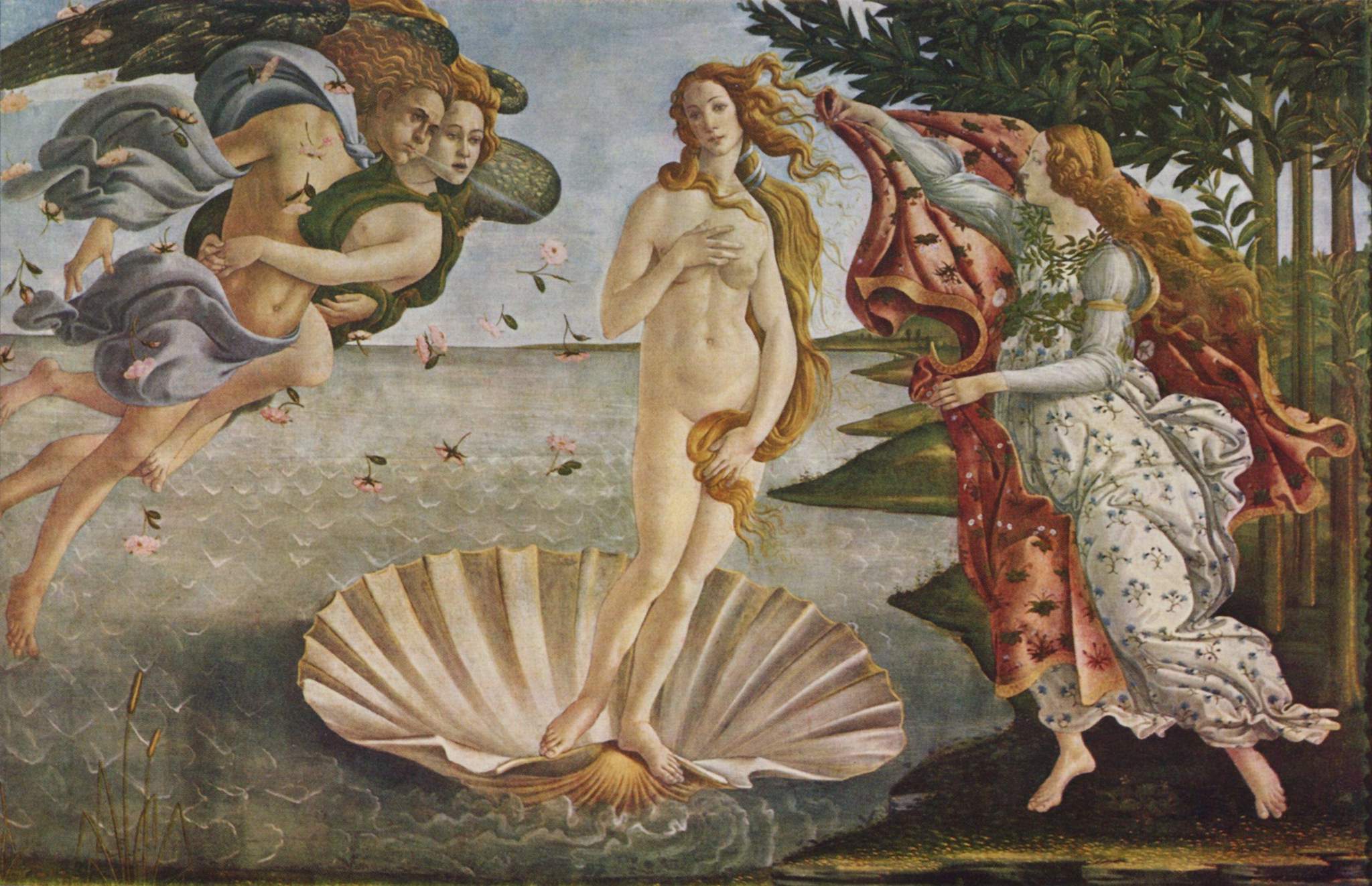
Every famous female nude since is an answer to Praxiteles. Botticelli borrows the gesture wholesale in The Birth of Venus, the goddess stepping off her shell with the same bent arm and the same covering hand.
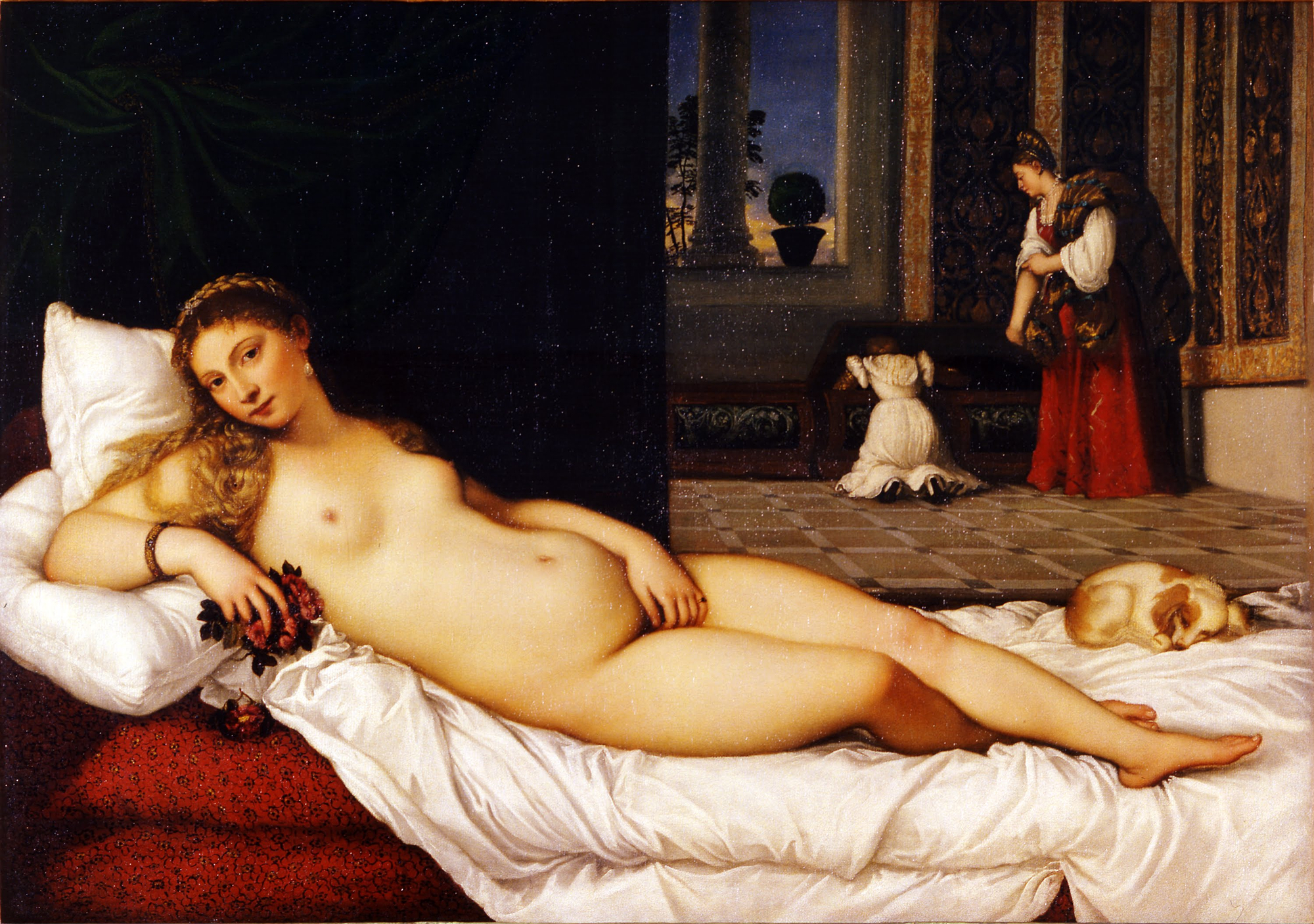
Titian keeps the reclining pose of the Venus of Urbino but lets the fingers relax, so the covering softens into something nearer an invitation. Manet’s Olympia stops covering and looks straight back at the viewer, which is why Paris rioted. Jenny Saville’s vast bodies refuse the pose altogether, sprawled and unapologetic, as if the era of the modest Venus is done.
A pose that outlived the statue
The gesture outgrew art. It moved into advertising, into film, into the posture women still learn to strike for a camera: one arm across the chest, one hand at the hip, the body turned slightly away. The pose of supposed modesty became the default pose of desirability. A Greek man imagined female shame 2,400 years ago, and the world has never stopped reproducing it.
This is what makes the Aphrodite of Knidos more than a museum footnote. It is the moment the female nude acquired its grammar. Every reclining Venus, every bather, every odalisque that followed is a sentence written in that grammar, whether it agrees with it or tries to break it. Praxiteles posed a question the West has spent millennia refusing to answer cleanly: who is the nude for, and whose gaze is it performing for? His answer stuck, and the modest Venus still stands at the head of the line, one hand covering what it cannot stop showing.