Thomas Eakins was born on July 25, 1844, in Philadelphia, and 182 years later, we still haven’t caught up to him. He is the most important American painter of the nude body — not by volume, not by sensationalism, but by moral seriousness. Eakins treated the nude not as decoration and not as provocation, but as evidence. The body, for Eakins, was a fact that demanded honesty. And honesty, as he discovered, was the one thing American culture was not ready for.
Most origin stories of the American nude begin in Europe. Eakins traveled to Paris in 1866 to study at the École des Beaux-Arts under Jean-Léon Gérôme — the French Academic master who turned the female nude into high spectacle. But while Gérôme trafficked in theatrical Orientalist fantasy, Eakins absorbed the underlying method: anatomy as the foundation of all figure painting. He dissected cadavers at Jefferson Medical College. He attended surgical demonstrations. By the time he returned to Philadelphia, he had concluded that the only way to paint the human figure truthfully was to know it from the inside out — literally.
This conviction produced The Gross Clinic (1875), a painting so unflinching in its depiction of a leg amputation that it was rejected by the 1876 Centennial Exhibition’s art gallery and relegated to the medical wing. It was not a nude — but it established the Eakins principle: the body is not a symbol of something else. The body is the thing itself. That principle would reach its fullest expression a decade later in The Swimming Hole.
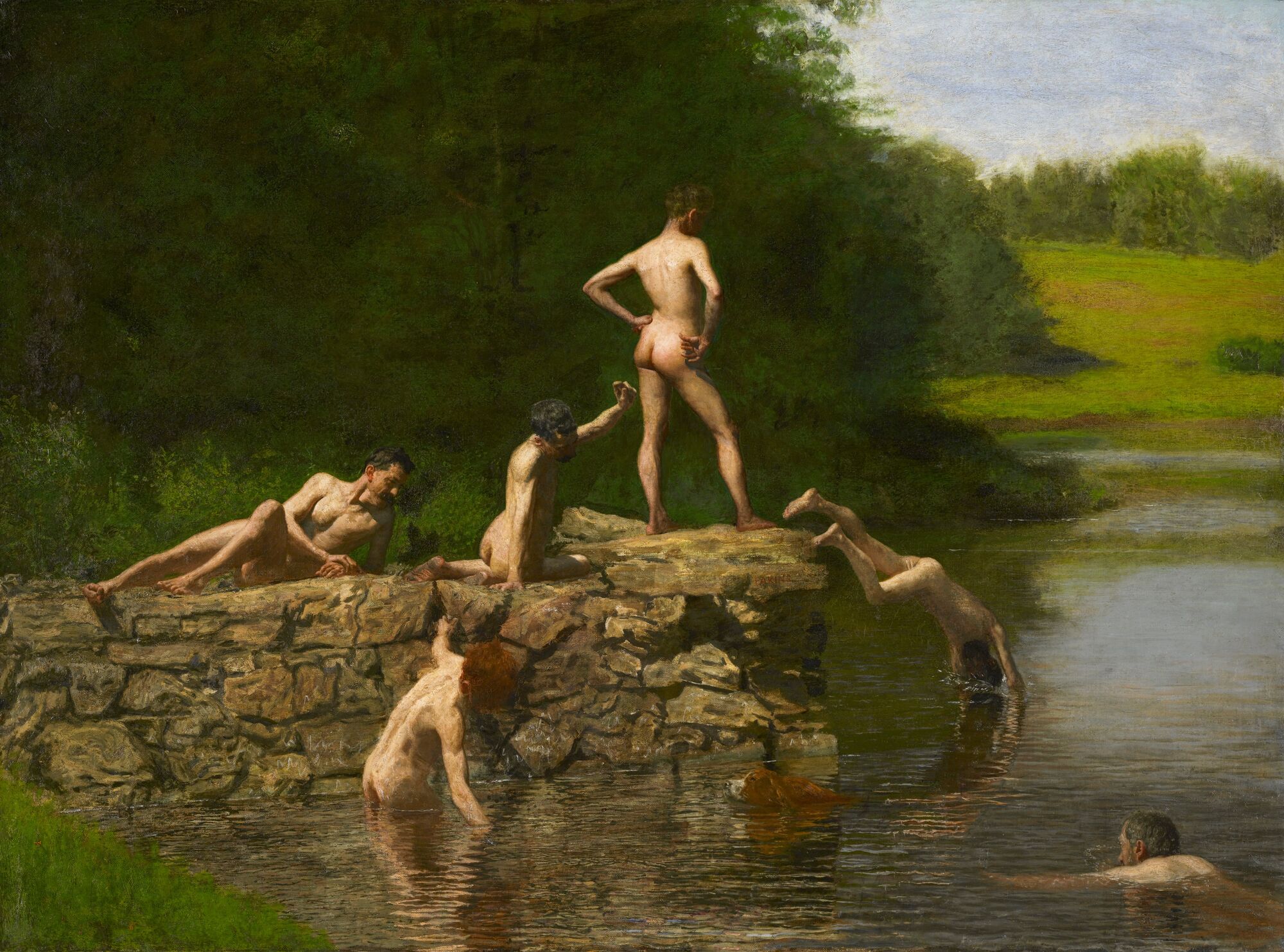
The Swimming Hole (1884–1885) is the American male nude’s Magna Carta. Six men — Eakins’s students and the artist himself — swim naked in a secluded Pennsylvania creek. There is no mythological pretext. No Neptune. No Triton. No classical alibi. These are not gods or heroes; they are real men, with real bodies, doing something real. The composition borrows from classical relief sculpture, but the content is radically democratic. Eakins placed himself in the painting — swimming toward the viewer in the lower right, a witness and a participant — collapsing the distance between artist, subject, and audience. For American art in the 1880s, this was an act of terrifying intimacy.
But Eakins did not stop at paint. Around the same time, he became one of the first artists in the world to use photography as a research tool for the nude figure. Working with a camera designed by his colleague Eadweard Muybridge, Eakins photographed nude models in motion — running, jumping, pole-vaulting, wrestling — long before motion pictures existed. These “chronophotographs” were never exhibited as art in his lifetime. They were private documents: tools for understanding how the body moves through space. But they represent something more radical than any painting could: the nude as a scientific question rather than an aesthetic one.
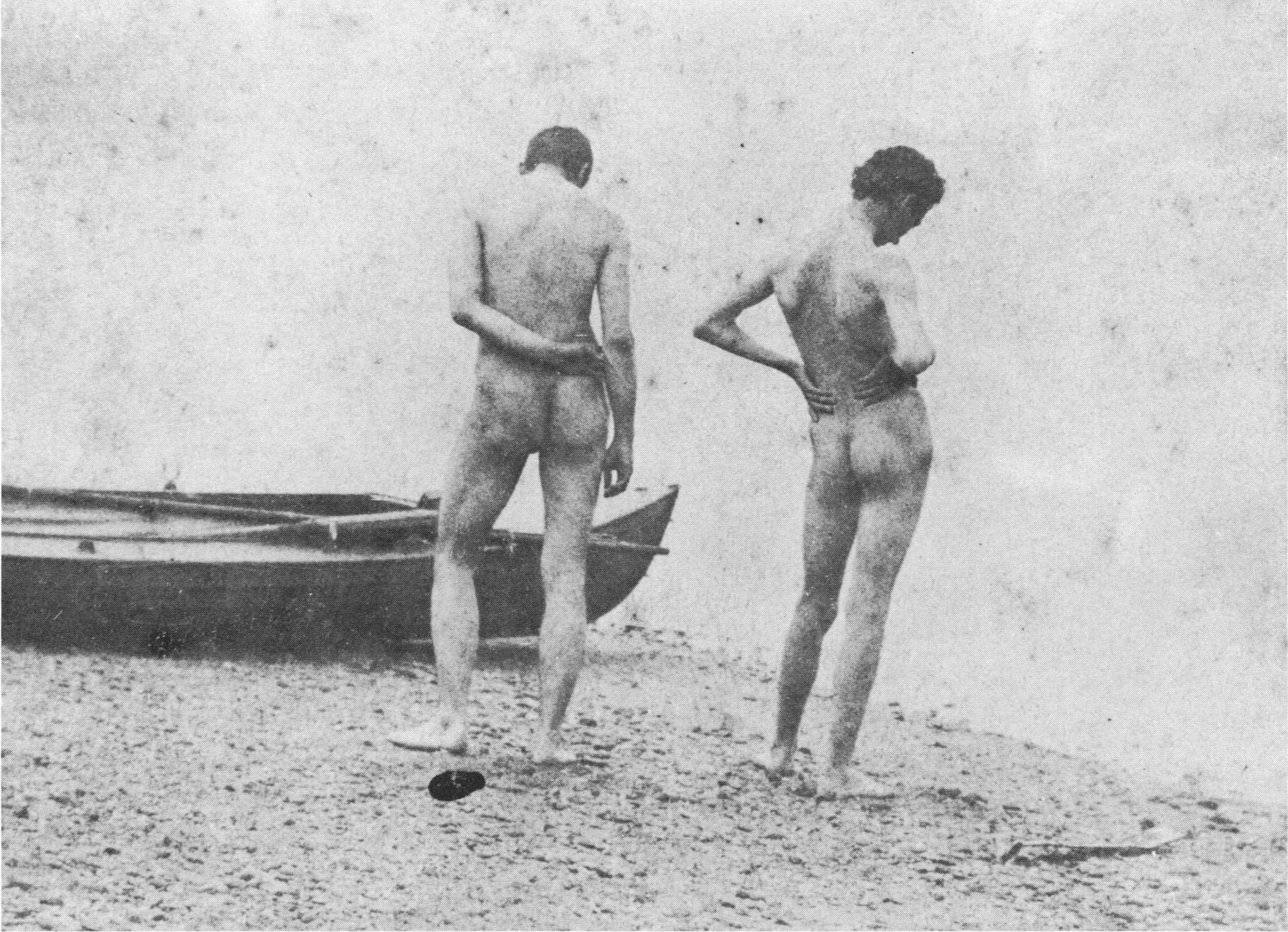
This photograph — Eakins himself in the act of photographing nude models — captures the paradox at the heart of his project. He believed in the nude as truth, as science, as a morally serious enterprise. But the culture around him could only see transgression. The reckoning came in 1886. Eakins, by then director of the Pennsylvania Academy of the Fine Arts, removed the loincloth from a male model during a mixed-gender life drawing class. A female student complained to her parents. Within weeks, Eakins was forced to resign — his career as a teacher destroyed by the very principle he had devoted his life to: that looking at the naked body honestly was the foundation of all art.
The scandal seems almost absurd to us now. A life drawing class with a nude model is the most ordinary thing in the world — the first-year foundation of every serious art school. But in 1886 Philadelphia, it was an unforgivable breach of Victorian propriety. The irony, of course, is that Eakins was not a libertine. He was a puritan of the eye. His insistence on the nude was not about titillation; it was about refusing to lie. And American culture, then as now, has often preferred the lie.
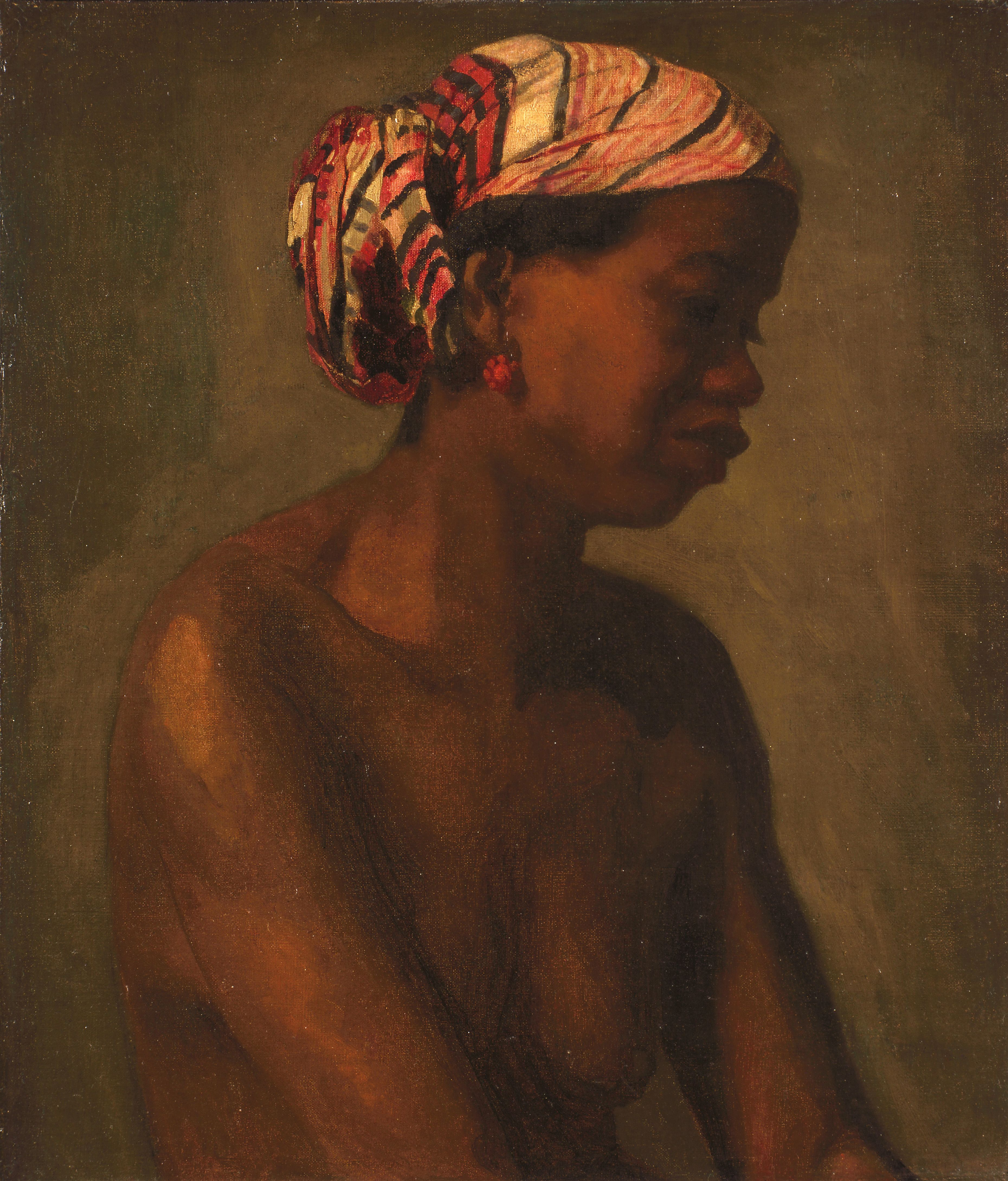
In the years after the PAFA scandal, Eakins withdrew from public life but never stopped painting the nude. His female nudes from the 1890s — like the one above — are studies in gravity. No coyness, no idealization, no Venus-on-a-half-shell. Just the weight of a real body in real light. This was a quiet radicalism, but it was radical nonetheless. At a time when the female nude in American art meant either allegory (Liberty leading the people) or genteel erasure (the “American girl” fully clothed), Eakins gave us women who simply were — unposed, unperformed, anatomically present.
Eakins died in 1916, largely forgotten by the art world that had once celebrated The Gross Clinic. It took decades for his reputation to recover — the 1917 Metropolitan Museum memorial show was panned, and it wasn’t until the 1930s that critics began to call him, as one did, “the greatest American painter.” Today, The Swimming Hole hangs in the Amon Carter Museum. His motion studies are prized by historians of photography. His insistence on the nude model as the core of art education is taken for granted in every art school in the country. The man who was fired for showing a naked body to his students ended up proving that showing the naked body is the education.
The question Eakins asked — can we look at the body and tell the truth? — is not settled. Every generation rediscovers it. Every Instagram content moderator wrestles with it. Every art student who draws from a live model for the first time feels the shock of it. Eakins didn’t answer the question. He just refused to look away. And 182 years after his birth, that refusal still feels like an act of courage.
Have thoughts on Eakins and the American nude tradition? We’d love to hear from you. Get involved with NALA and join the conversation.