On July 28, 1887 — 139 years ago today — Henri-Robert-Marcel Duchamp was born in Blainville-Crevon, Normandy. He would grow up to become the single most consequential conceptual artist of the 20th century. And he did it, in large part, by taking the most traditional subject in Western painting — the nude — and dismantling it so completely that the genre has never recovered. Before Duchamp, the nude was a body. After Duchamp, the nude was a question.
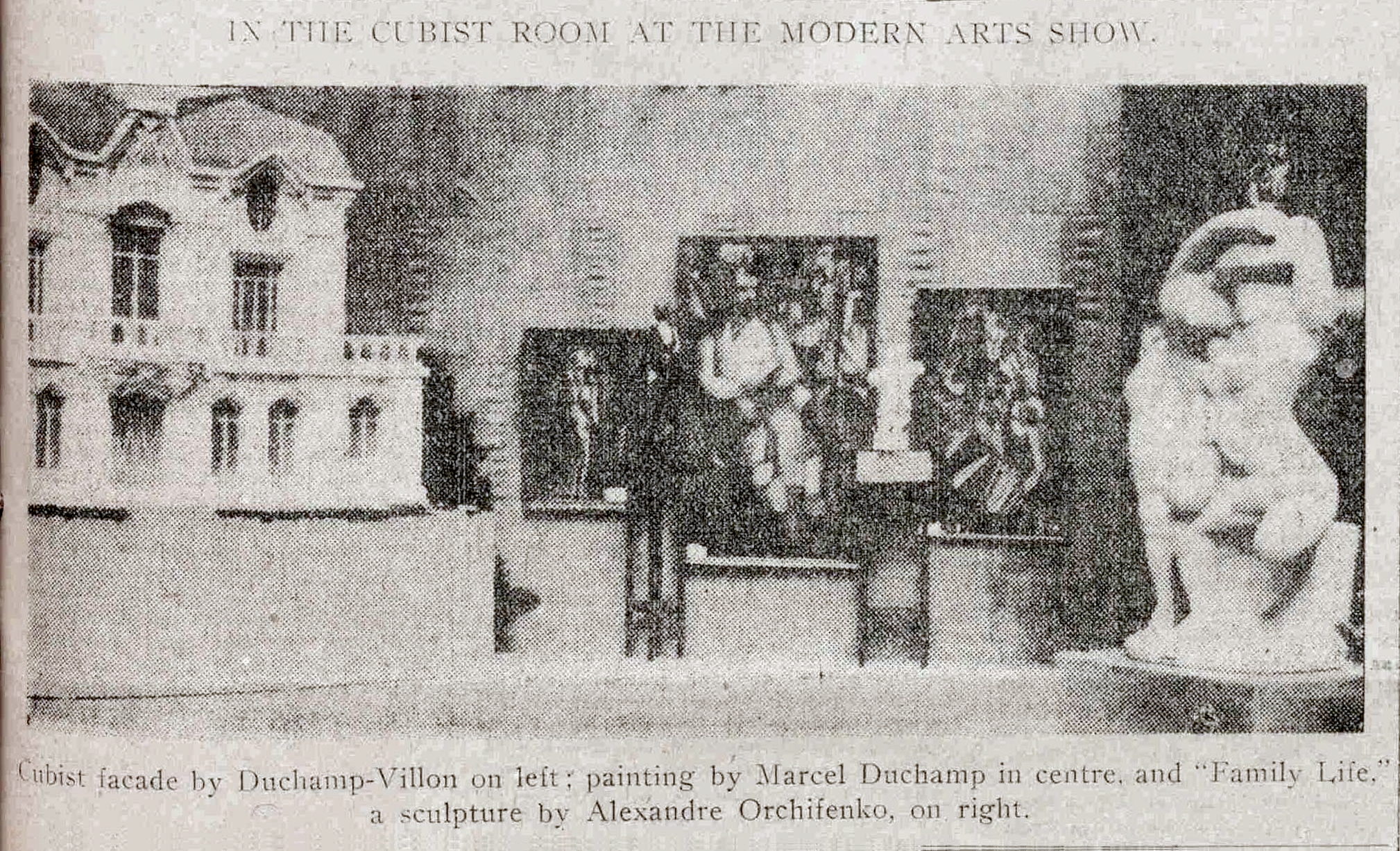
That question arrived in New York on February 17, 1913, when the International Exhibition of Modern Art — better known as the Armory Show — opened at the 69th Regiment Armory on Lexington Avenue. Americans had seen Impressionism. They had not seen this. Among the 1,300 works by European and American avant-garde artists, one painting attracted more visitors, more ridicule, and more raw fury than any other: Nude Descending a Staircase, No. 2. The New York Times called it “an explosion in a shingle factory.” A cartoon in the Evening Sun retitled it “The Rude Descending a Staircase (Rush Hour at the Subway).” Theodore Roosevelt reportedly said his Navajo rug looked more like a human figure. The painting became a national punchline — and also the most-seen modern artwork in American history up to that point.
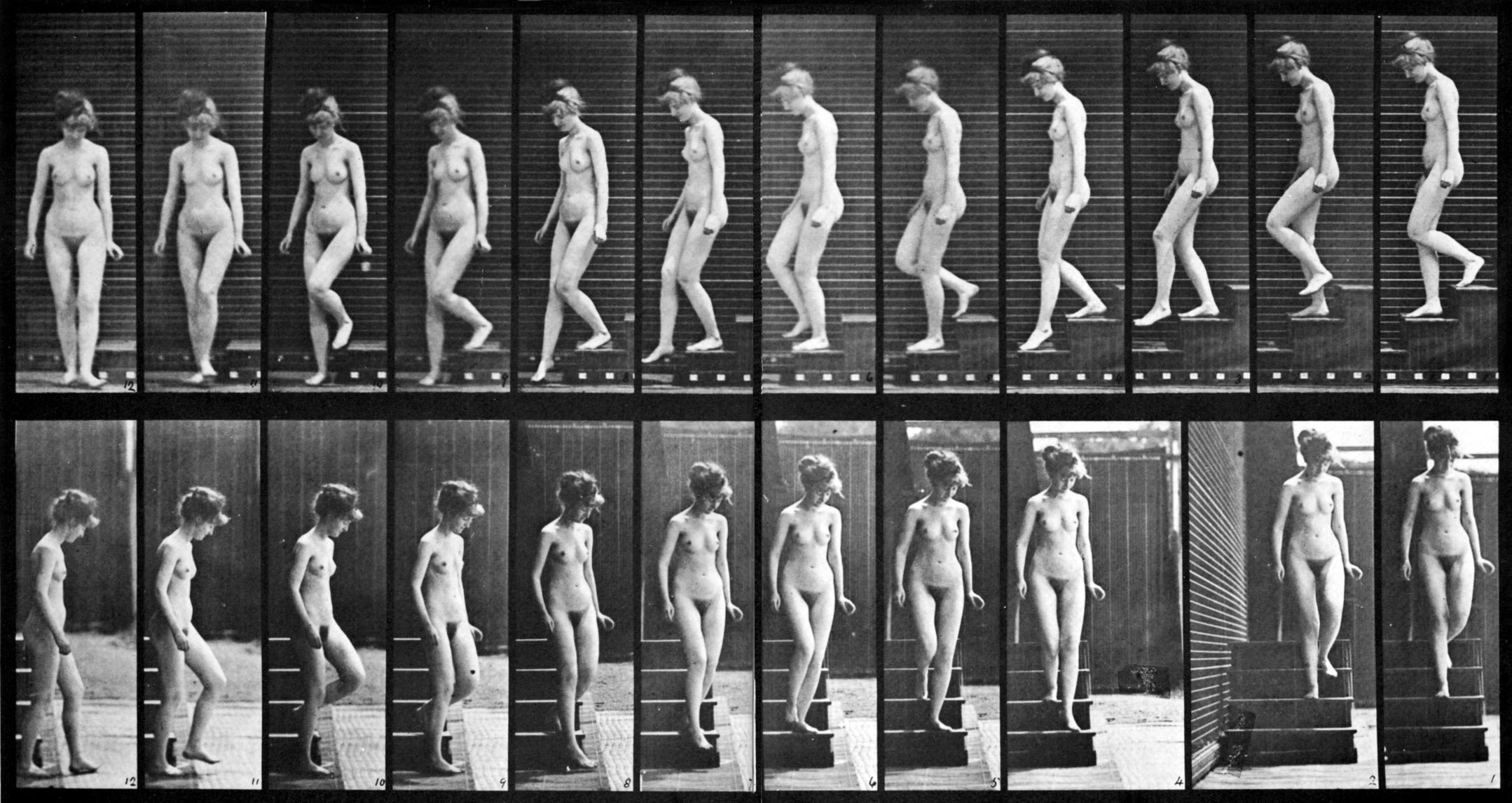
What was so upsetting? The painting doesn’t depict a recognizable human figure at all. It shows something more radical: a body in time. Duchamp had been studying the chronophotography of Étienne-Jules Marey and the motion studies of Eadweard Muybridge — sequential photographs that broke movement into discrete frames. Muybridge’s 1887 images of a nude woman walking downstairs, her body captured in overlapping moments, gave Duchamp a formal language for something painters had never attempted: rendering not the nude, but the act of being nude while moving through space.
This is the conceptual leap that makes Nude Descending a Staircase not just a modernist milestone but a genuine philosophical intervention. Every nude before Duchamp — from Praxiteles to Ingres — had treated the body as a fixed object for contemplation. Even the Cubists, who fractured form into facets, presented multiple views of a stationary figure. Duchamp did something different. He painted the nude as a verb.
The painting’s title is itself a three-part provocation. “Nude” invokes the entire classical tradition. “Descending” turns that tradition into pure motion — you can’t pin down where the body is, only where it’s going. “A Staircase” places this radical experiment in the most banal of domestic settings. It’s not Venus rising from the sea. It’s a person walking downstairs. The gap between the title’s grandeur and the image’s mechanized abstraction is precisely the joke, and precisely the point.
Duchamp submitted the painting to the 1912 Salon des Indépendants in Paris. His own Cubist colleagues — including his brothers Jacques Villon and Raymond Duchamp-Villon — asked him to withdraw it or at least change the title. They found the subject matter embarrassingly literal, too close to Futurism, beneath the dignity of the movement. Duchamp complied by taking the painting off the wall. But he never forgave the slight. It was, he later said, the moment he realized that even the avant-garde had rules — and that he would spend the rest of his career breaking every last one of them.
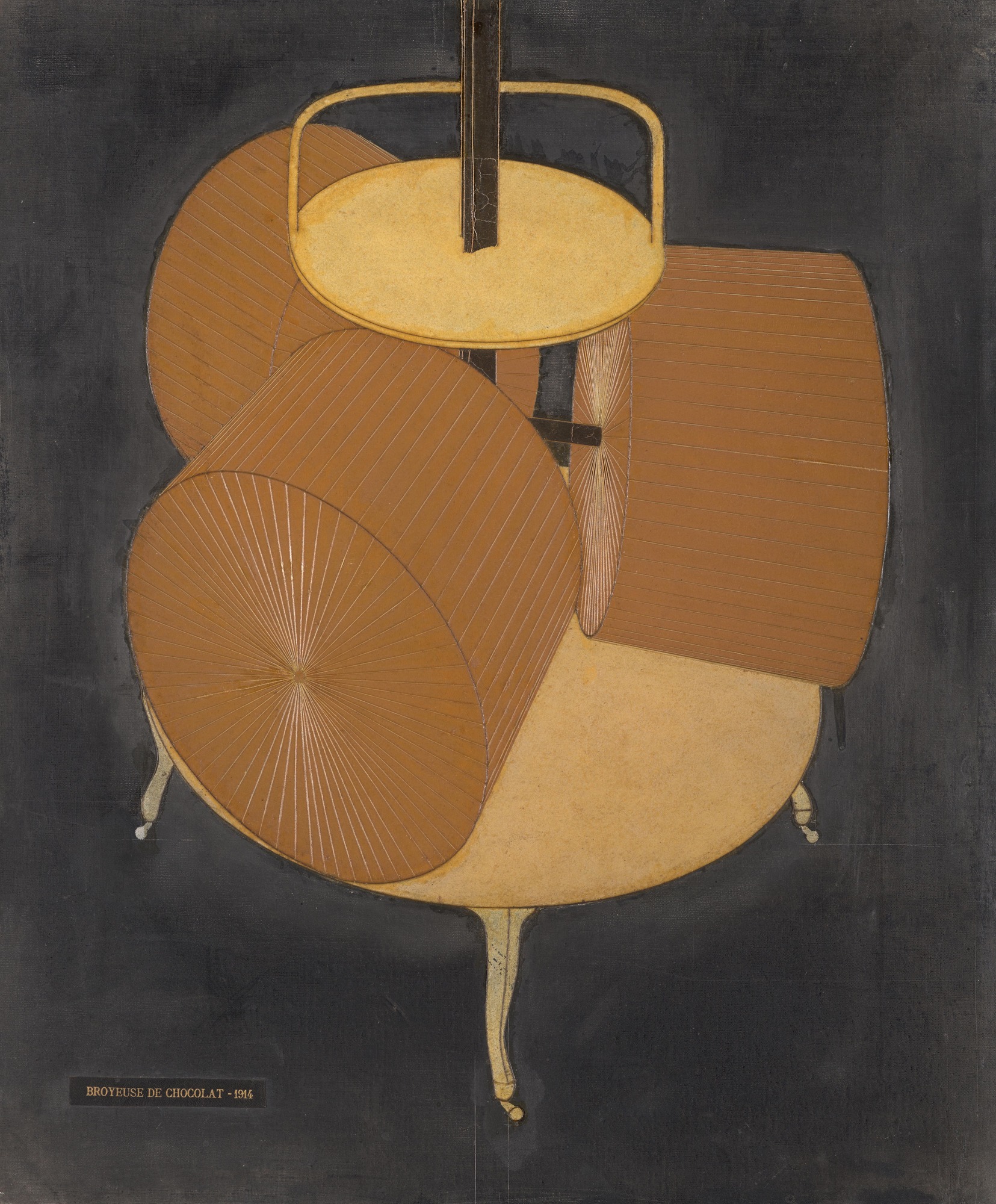
And break them he did. The trajectory from Nude Descending a Staircase to the readymades — Bicycle Wheel (1913), Bottle Rack (1914), and the infamous Fountain (1917) — is not as sharp a turn as it appears. Duchamp was already moving away from what he dismissively called “retinal art” — painting that pleased the eye — toward something he described as art “in the service of the mind.” His Chocolate Grinder paintings of 1913–1914, with their cold, machine-like precision, sit exactly at this transition point. The human figure has vanished entirely, replaced by a mechanical device rendered with the clinical exactness of a technical drawing. The nude has given way to the mechanism. The body has become a system.
What do you do with a tradition of the nude in art, Duchamp seemed to be asking, when you’ve demonstrated that the body cannot be captured in a single image — that all representation is partial, all depiction a translation, all looking an act of violence against the thing itself? His answer was characteristically extreme: you stop painting nudes altogether. You make a urinal into a fountain. You put a bicycle wheel on a stool. You spend twenty years secretly building Étant donnés — a peephole diorama of a naked woman holding a gas lamp in a landscape — as a final, devastating comment on the relationship between the viewer and the viewed body.
The legacy of Nude Descending a Staircase extends far beyond art history. Every time a contemporary artist questions whether the nude can escape the male gaze, every time a museum visitor wonders why a particular body is on the wall and another isn’t, every time a photographer pushes past the classical ideal of the figure toward something more fragmented, more temporal, more true — Duchamp got there first. He didn’t just paint a new kind of nude. He made it impossible to paint the old kind ever again without irony.
One hundred and thirty-nine years after his birth, Duchamp’s challenge still stands. The nude in art is not a solved problem. It is — and perhaps always was — a question about what it means to look at another human being, to see a body not as a fixed object but as something alive, kinetic, irreducible to a single frame. Duchamp answered that question by refusing to supply an answer. He gave us the nude as a verb — and the staircase keeps going.