Andrea Mantegna died on September 13, 1506, at around seventy-five, in the city of Mantua where he had spent the second half of his life. Five hundred and twenty years later he reads as the most sculptural of the great Renaissance painters, an artist who approached the human body the way a stonecutter approaches marble. Where his contemporaries softened flesh with light, Mantegna hardened it into form. His nudes stand like statues that happen to be made of pigment, and that refusal to flatter is why he still matters.
The learned nude
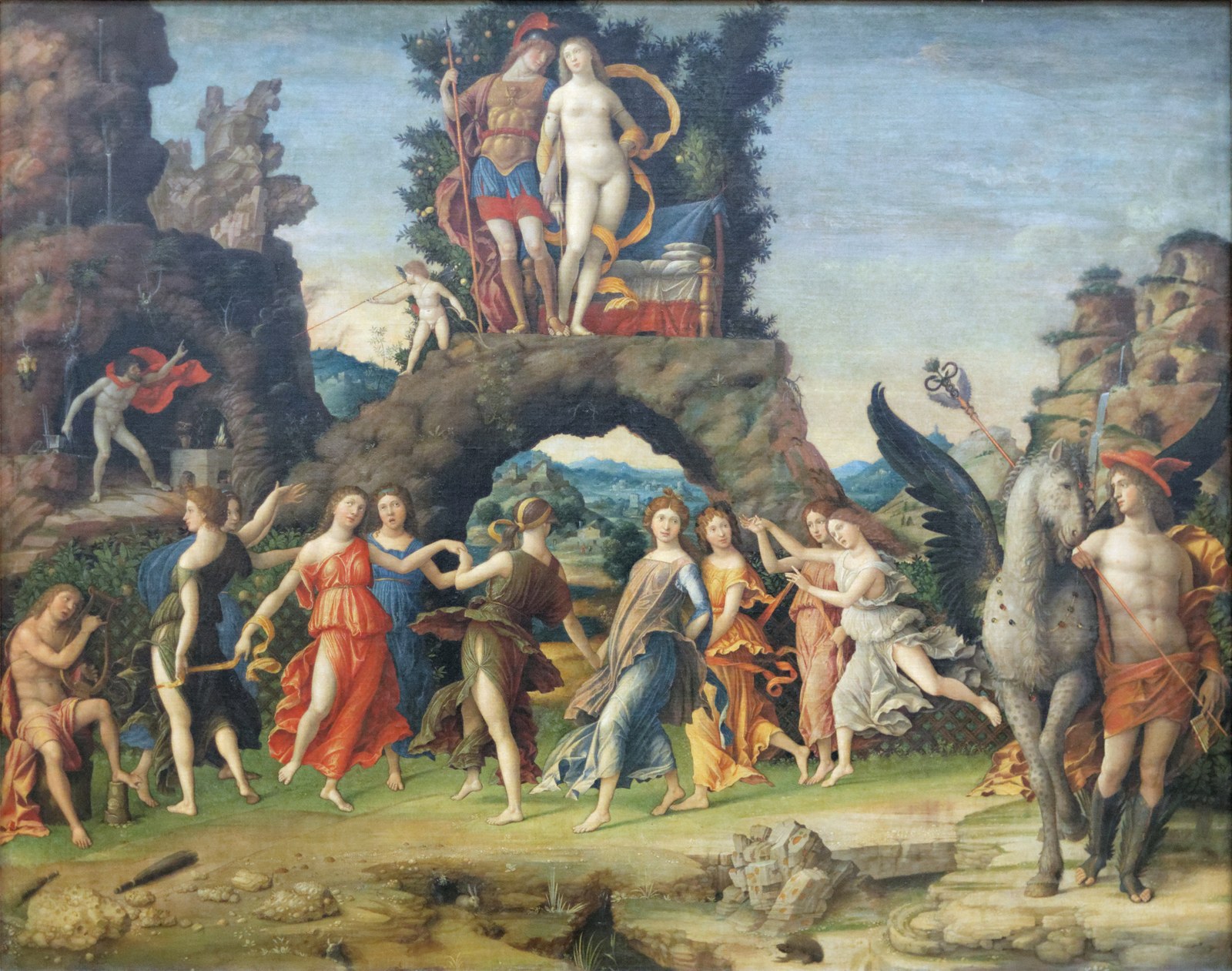
When Isabella d’Este, the marchioness of Mantua and one of the most formidable patrons of the Italian Renaissance, commissioned her private studiolo, she turned to Mantegna for the paintings. The first she received, in 1497, was Parnassus, now in the Louvre, a scene of Mars and Venus standing nude atop the mountain of the muses while Apollo plays his lyre below. No artist of the quattrocento had rendered mythological nudity with such archaeological seriousness. Mantegna studied Roman reliefs and surviving antiquities, and the result is a Venus and Mars who read as a declaration: the classical body, recovered, measured, and set in stone on canvas.
The reproducible nude
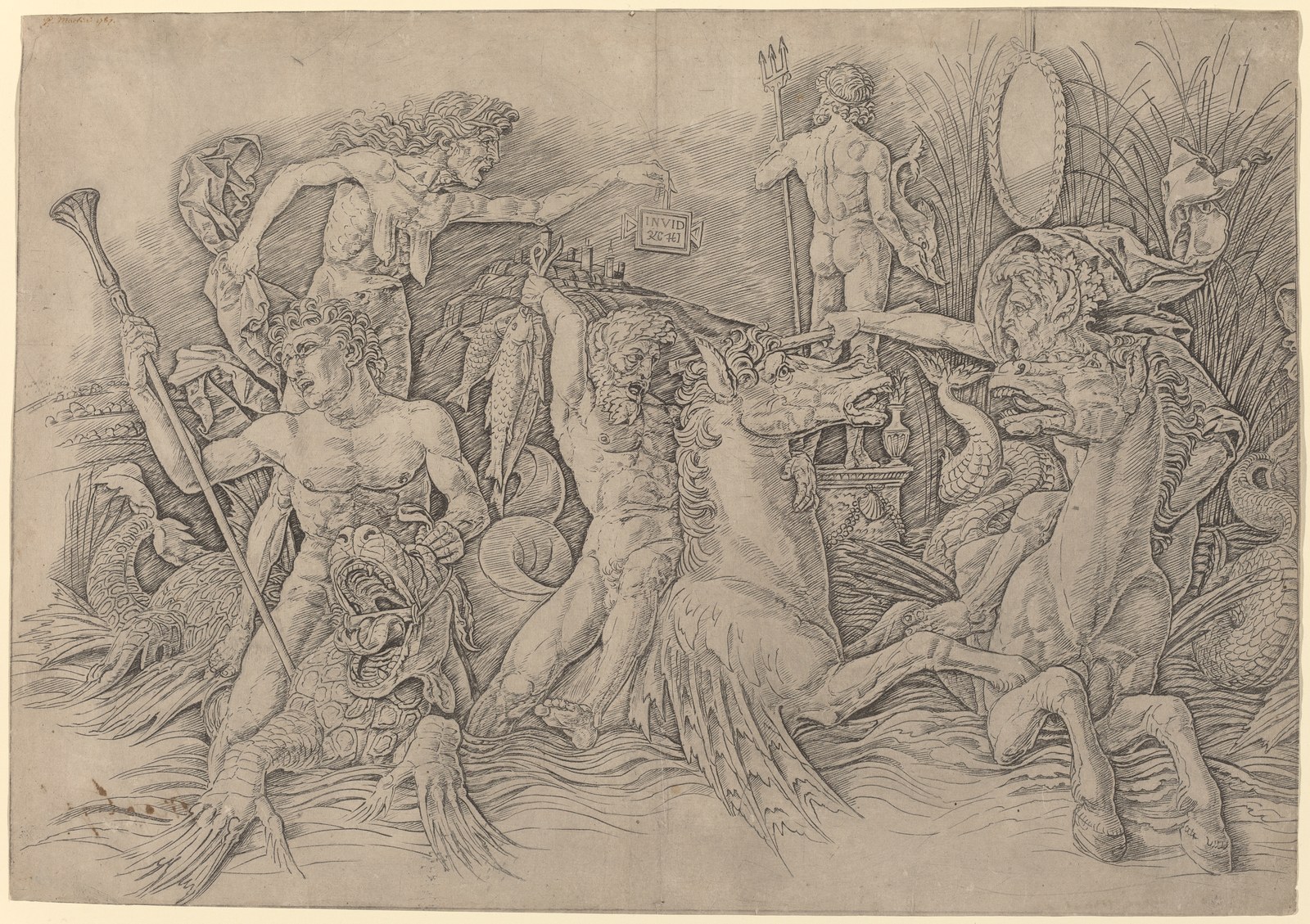
Mantegna led the workshop that dominated Venetian printmaking before 1500, and his engravings did something paintings could not. They traveled. The Battle of the Sea Gods, a frieze of naked sea creatures and half-nude gods locked in combat, circulated across Europe and carried the classical nude to artists who had never seen a Roman statue. A print is a naked body that can be folded, mailed, and copied, and in that sense Mantegna helped invent the modern circulation of the nude figure as image. The body stopped being a thing you had to travel to Florence or Rome to see.
The radical body
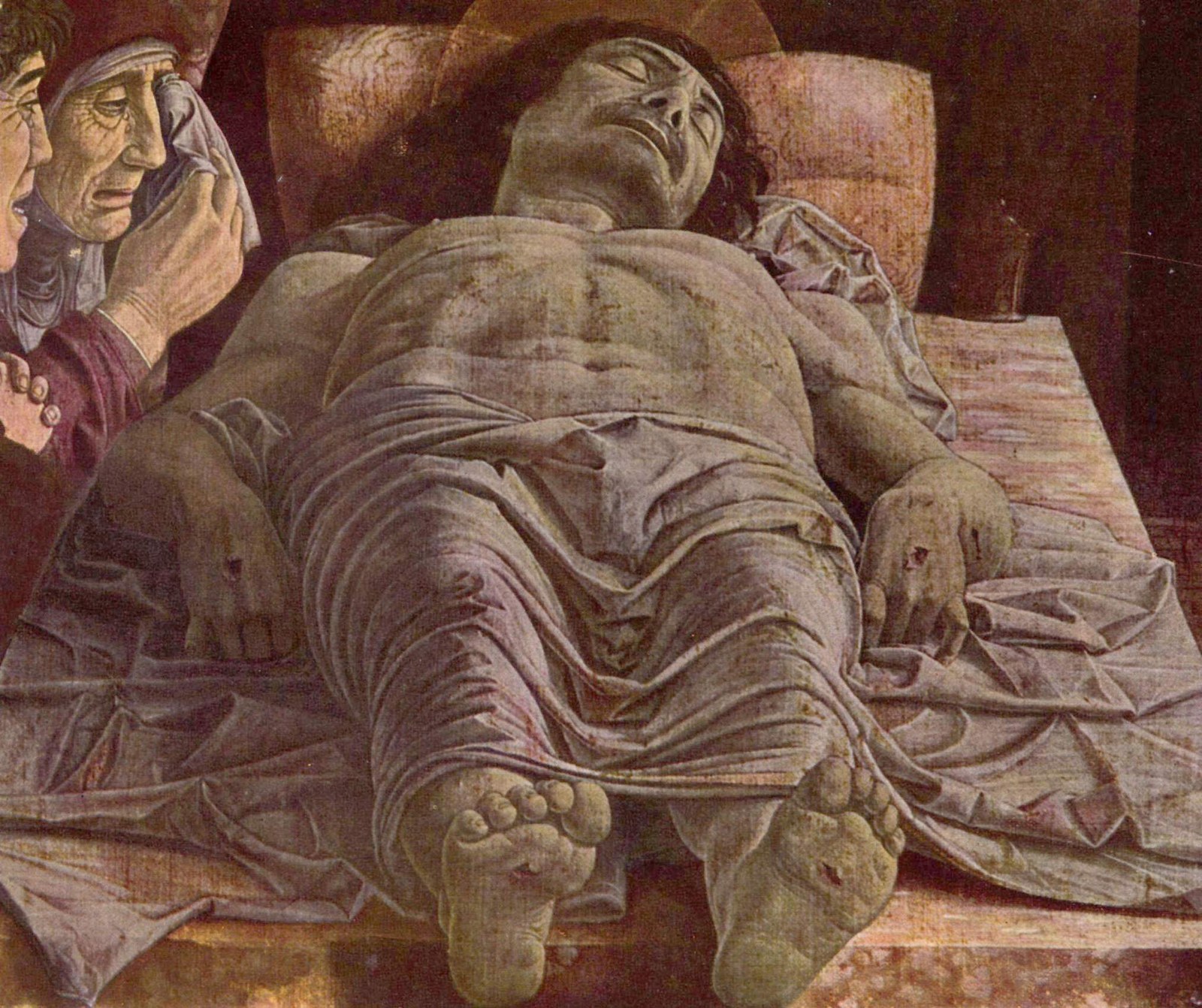
Then there is the painting that changed how Western eyes look at flesh. The Lamentation of Christ, painted around 1480 and now in the Pinacoteca di Brera in Milan, shows the dead body of Christ laid out on a stone slab, seen from the feet. The foreshortening is so extreme that the body collapses into a kind of geometry: two pale soles, a foreshortened torso, a head tilted back out of proportion. It is the most audacious piece of perspective on a human figure the Renaissance produced, and it treats the body as a mass to be measured. Mantegna shrinks the corpse to make the viewer feel its weight. You stand at the foot of the slab, and the body falls toward you.
Why he matters now
Mantegna’s hard-edged, unflattering body has a strange afterlife. His insistence that the nude is, above all, a form to be studied anticipated every artist since who treated the figure as a construction. The metallic landscapes and stony figures that critics once called cold now read as the prehistory of the modern idea that a body on a canvas is, first, a set of formal decisions. Five centuries on, an artist who made flesh behave like architecture looks more contemporary than half the painters who came after him.
So on the 520th anniversary of his death, the useful thing Mantegna leaves us is a question. What does an artist find when they set beauty aside and pursue truth in the body? His answer, carved in paint and printed in ink, is a thing harder to look at and harder to look away from.