Théodore Chassériau was born on September 20, 1819, in Samaná, in what is now the Dominican Republic. Thirty-seven years later he was dead in Paris, and he left behind the sharpest unresolved argument in nineteenth-century French painting. Chassériau stood between Jean-Auguste-Dominique Ingres, who taught him, and Eugène Delacroix, who pulled him away. One master held that the line was everything. The other held that color was the whole soul of painting. Chassériau spent his short life trying to hold both at once, and his nudes are where he held them.
That tension runs through the entire history of the nude. The academic tradition wanted the body as an ideal, measured, corrected, drawn in the cleanest possible contour. The Romantics wanted the body as flesh, warm and vulnerable and alive. Chassériau is the painter who refused to accept that those two demands had to be enemies.
Venus Anadyomene: line with blood under it
At nineteen, Chassériau painted Venus Anadyomene, a nude rising from the sea, and the Salon of 1839 accepted it. The draftsmanship is pure Ingres. The contour of the figure, the poised turn of the head, the deliberate gesture of the raised arms, all carry the master’s discipline. But the skin has a warmth that Ingres’s marble nudes rarely allowed themselves. There is blood moving beneath the surface. A critic of the day recognized the double inheritance at once: a young painter borrowing his line from one master and his warmth from another.
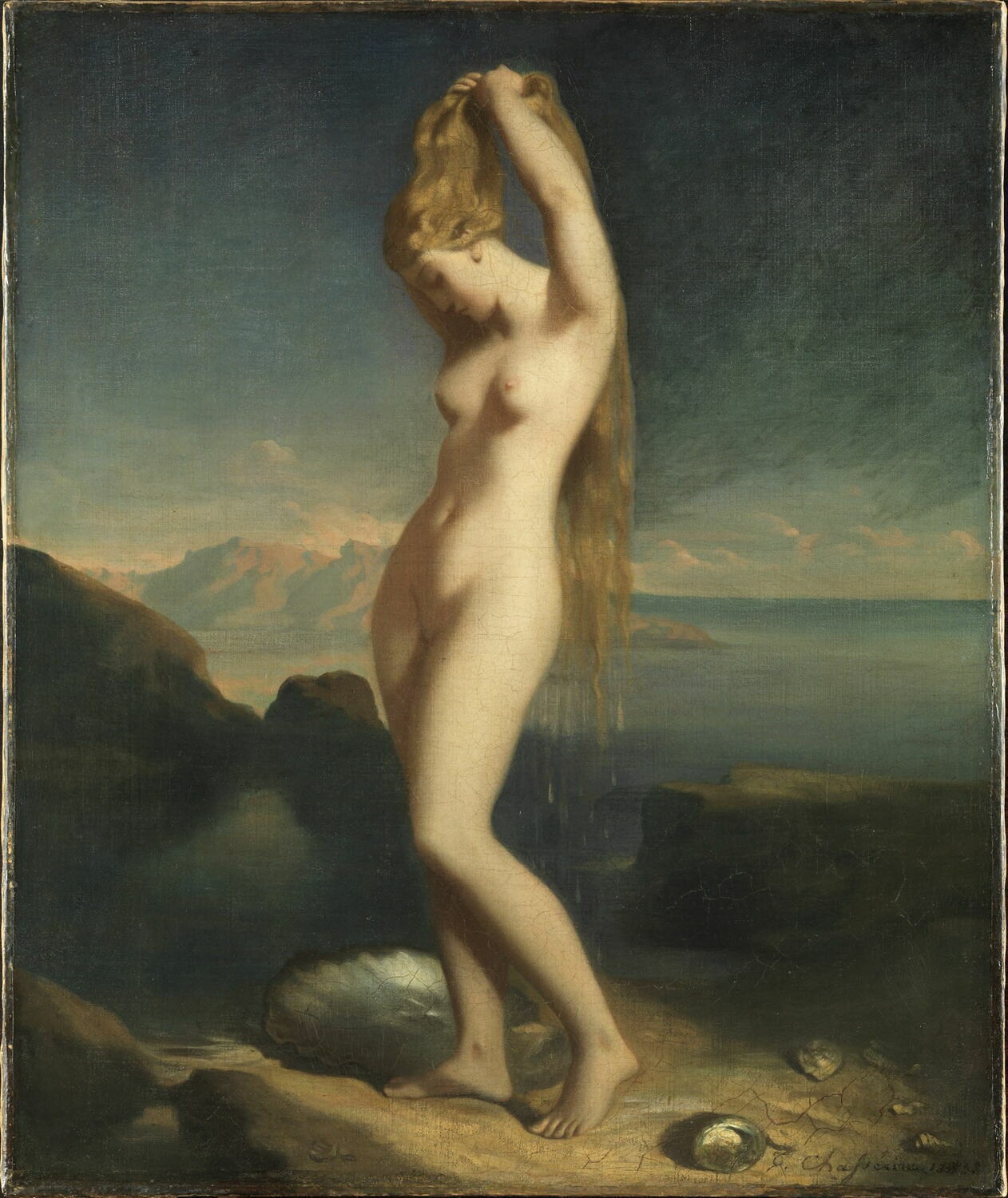
That blend was Chassériau’s invention, and it made him a problem for both camps. He had entered Ingres’s studio as a child and become the favorite pupil. When Ingres left for Rome, Chassériau drifted into Delacroix’s orbit, and by 1840 the break was complete. He announced it with a paintbrush rather than a manifesto.
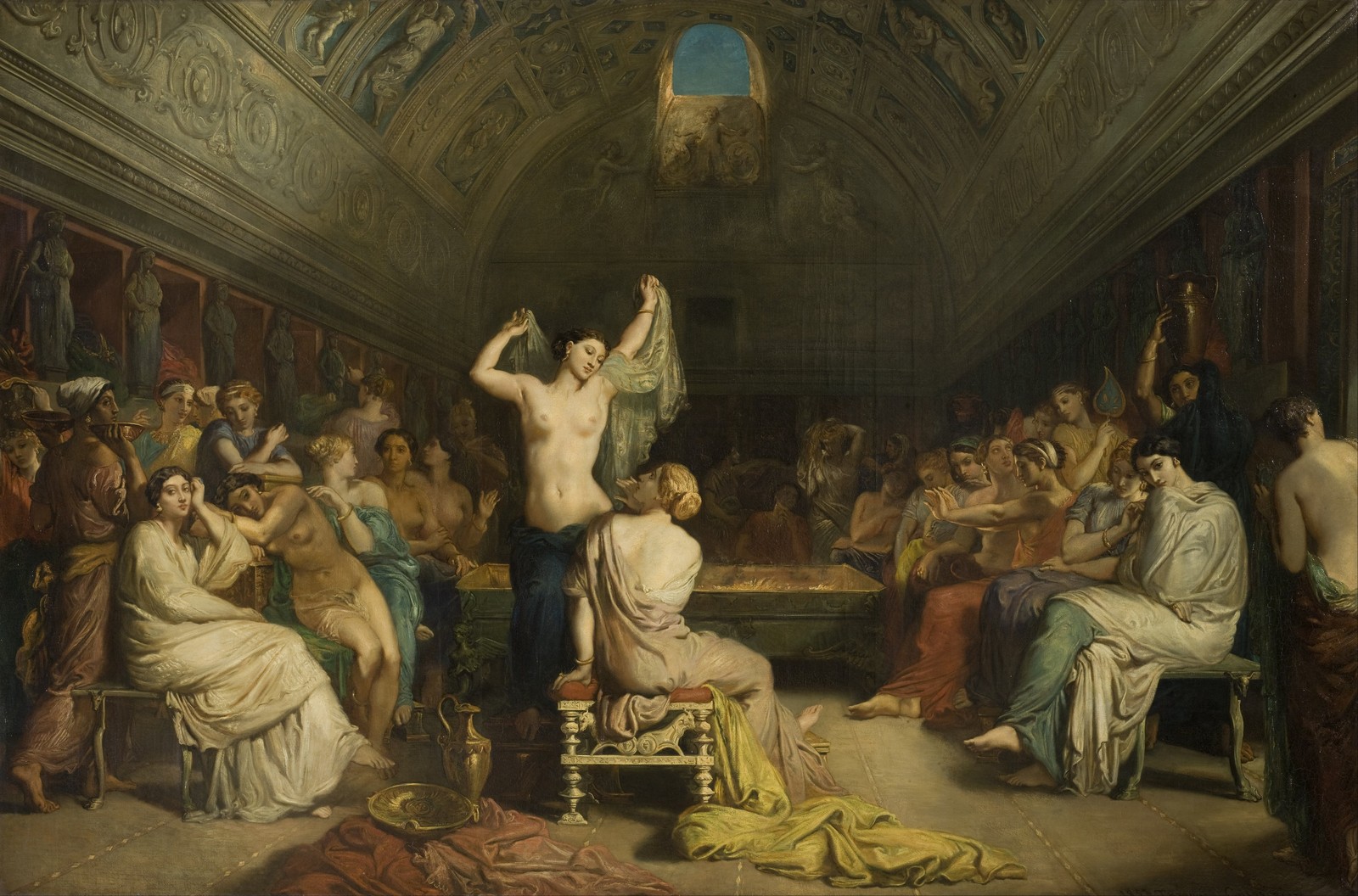
The Tepidarium: the nude without an alibi
His late masterpiece, The Tepidarium of 1853, now hangs in the Musée d’Orsay. It shows a room of women resting and drying themselves in the warm chamber of a Pompeian bath. Chassériau painted bodies at ease, half asleep in the steam, the nude domesticated into an ordinary afternoon. No mythology licenses the looking here. A body does not need a myth to justify itself.
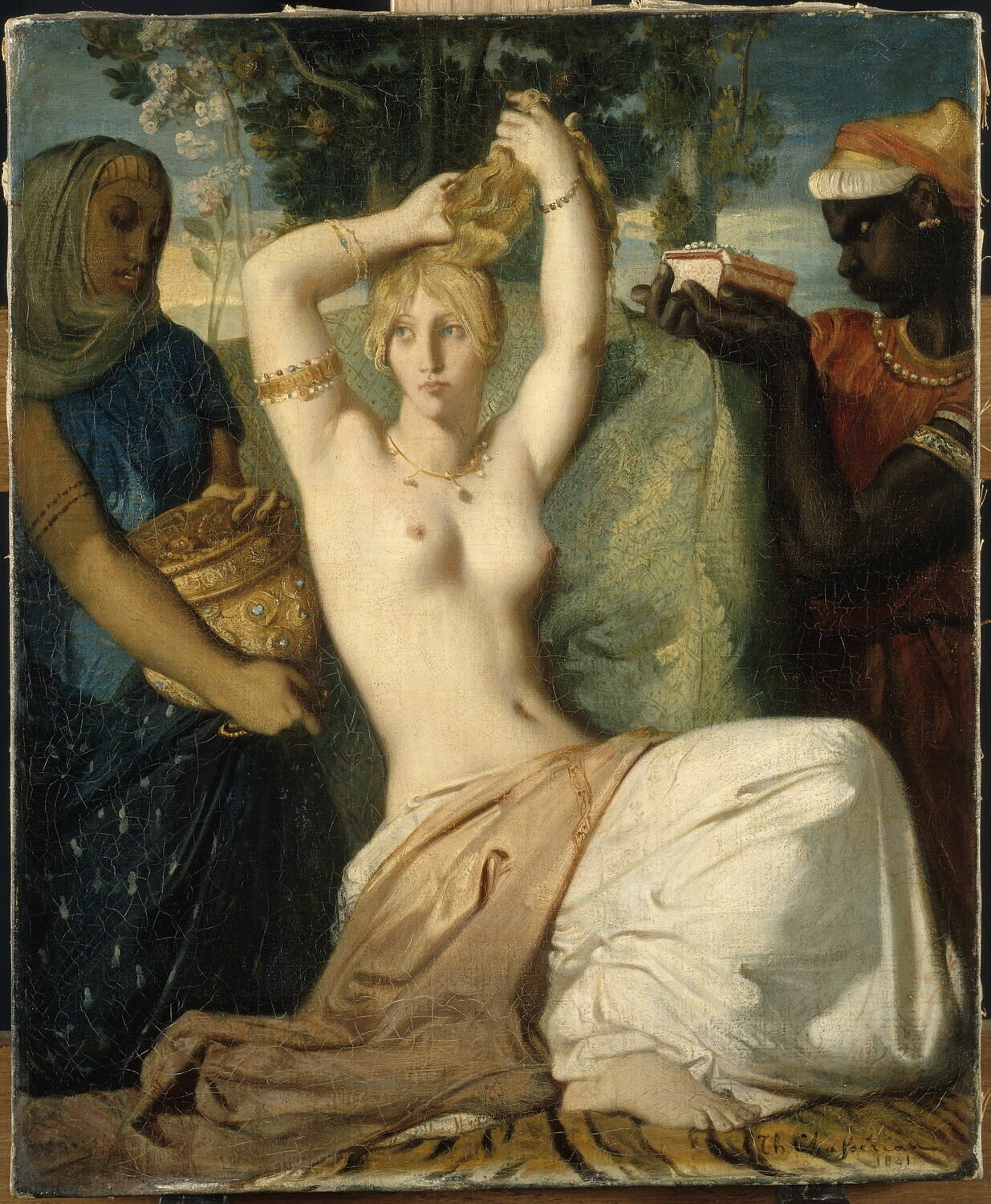
Alongside it sit The Toilet of Esther (1841) and Andromeda Chained to the Rock (1840), nudes drawn from the Bible and from myth that Chassériau pushed toward the orientalist dream. The woman at her bath and the woman bound to the rock become places of heat and longing instead of cold symbols. Chassériau took the classical nude and let it feel.
The legacy of the man who would not choose
Chassériau died on October 8, 1856, weakened by years of illness, at thirty-seven. His example passed into Gustave Moreau and Odilon Redon, into the Symbolists who took his atmosphere and his ambiguity and built a movement on them. The argument he embodied, line against color, ideal against flesh, never resolved. It never had to. His nudes held both at once, which is why they still feel alive a century and a half later.
The nude remains the place where art’s oldest quarrel gets fought. Chassériau’s answer was to stop treating the two sides as enemies. A body can be drawn perfectly and still breathe. That refusal to choose is what we celebrate today.