
On September 25, 1865, a painter was born in the Loire Valley who would spend his life convincing the art world that the nude belonged in the living room. Henri Lebasque, nicknamed the “painter of joy and light,” brought the unclothed figure out of Olympus and into warm, sunlit rooms, and in doing so he helped the modern nude find its way home.
Lebasque trained at the École des Beaux-Arts in Paris, but the academic machine never quite claimed him. He absorbed Impressionism from Camille Pissarro, and in 1905 he showed alongside the Fauves, the group around Henri Matisse that scandalized Paris with violent color. Lebasque shared their palette but not their aggression. Where Matisse and André Derain pushed color to the edge of pure sensation, Lebasque let it settle into something gentler: the honey light of the Côte d’Azur, the green shade of a garden, the warm gold of a woman’s skin at rest.
His subject was the body at ease. He painted bathers by the water, women at the toilette, nudes reclining on beds and rugs, figures caught in the ordinary quiet of a domestic afternoon. There was no myth to justify them, no Venus rising from the sea, no allegory to give the nakedness permission. The light did that work instead.
Nude at the Window (1926) is Lebasque’s argument in a single frame. A woman stands near a window, her body half in shadow and half in daylight, doing nothing more theatrical than existing in a room. The window is the whole point: it floods the figure with the one thing academic painting always withheld from the nude, ordinary, honest daylight.
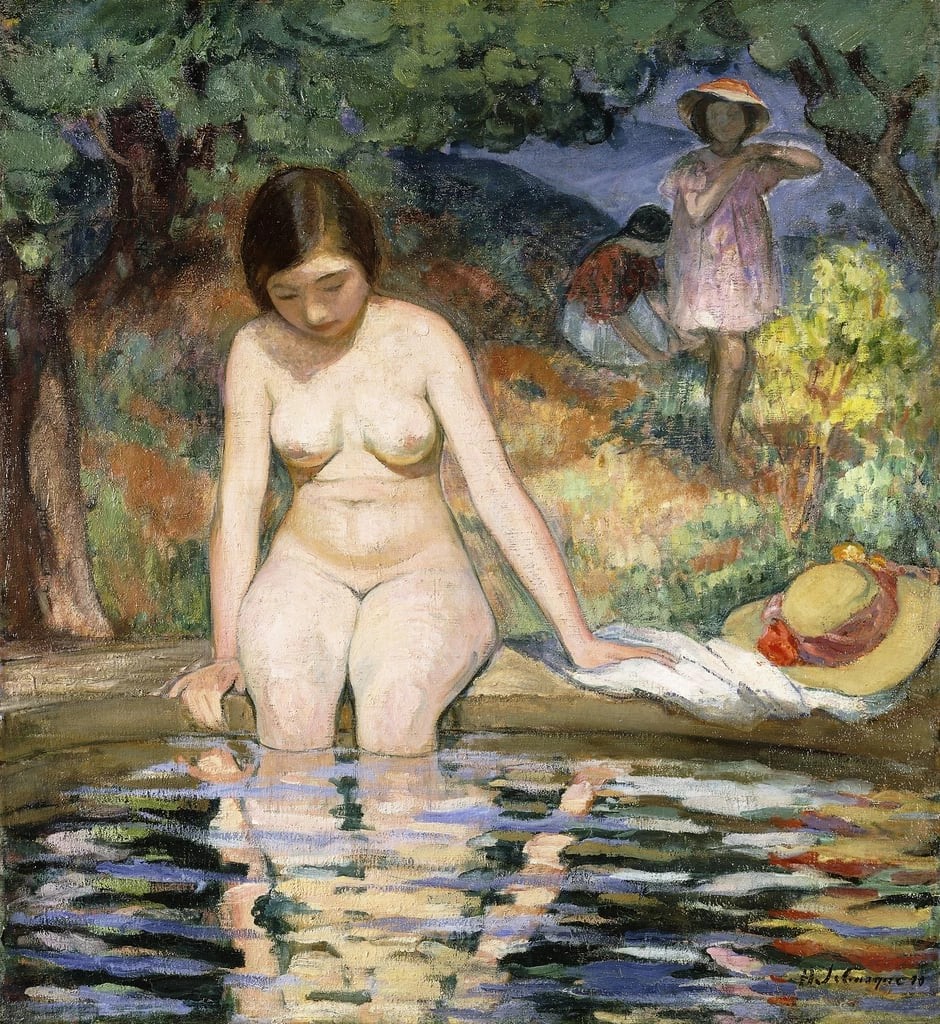
The bather was Lebasque’s other recurring figure. In Bather (1910) the body meets water and the two become one subject, both described in the same loose, light-struck brushwork. Lebasque inherited the bather from Cézanne and Renoir, but he softened the motif, removed its monumentality, and left a woman stepping through sun rather than posing for history.
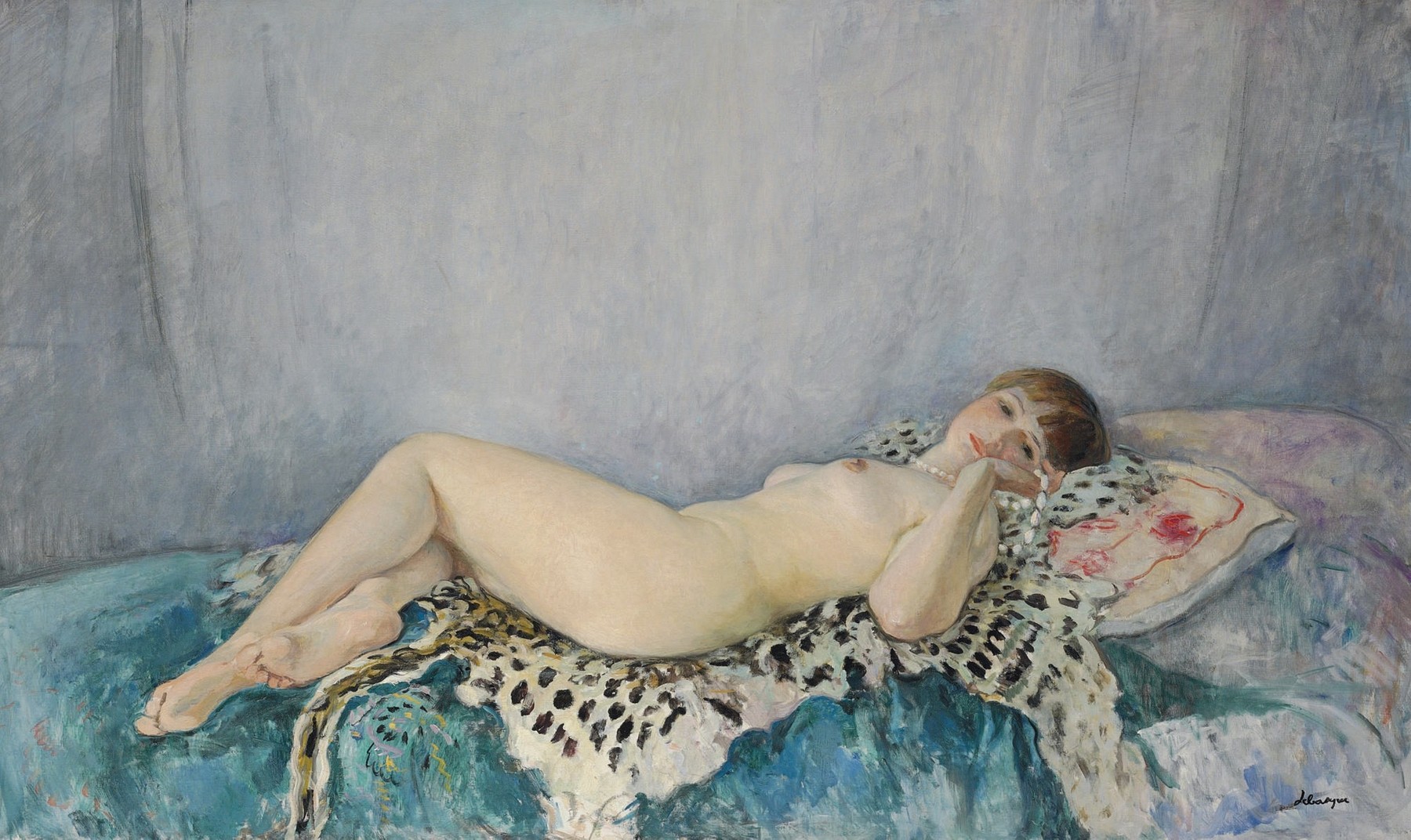
By the 1920s Lebasque had settled at Le Cannet, above Cannes, where the Mediterranean light that had shaped his work since his first trips south became his permanent material. Nude on a Leopard Skin (1926) belongs to this late period: a reclining figure, a patterned animal skin, and a field of warm color that feels closer to a remembered afternoon than to a studio setup.
What Lebasque contributed to the history of the nude is subtle and easy to underrate. He did not break the figure apart like Picasso or inflate it like Matisse’s late cut-outs. He changed where the nude was allowed to live. The classical nude belonged to temples and salons; Lebasque’s nude belonged to bedrooms, balconies, and gardens. He treated the body as part of the furniture of a good life, lit the way a good life is lit, and in that unassuming move he made the unclothed figure feel modern in a way grand allegory never could.
He died at Le Cannet on August 7, 1937, at seventy-one. His reputation dimmed through the mid-century while louder movements took the stage, but the painter of joy and light has aged well. In an era that keeps asking what the nude is for, Lebasque offers a deceptively simple answer: it is for light, and for the quiet pleasure of a body at rest in a warm room.