On October 8, 1856, Théodore Chassériau died in Paris at the age of thirty-seven. He left behind a mural cycle at Saint-Merri, a run of portraits, and a handful of nudes that carried French painting out of one era and toward the next. His death closed the shortest brilliant career in nineteenth-century art.
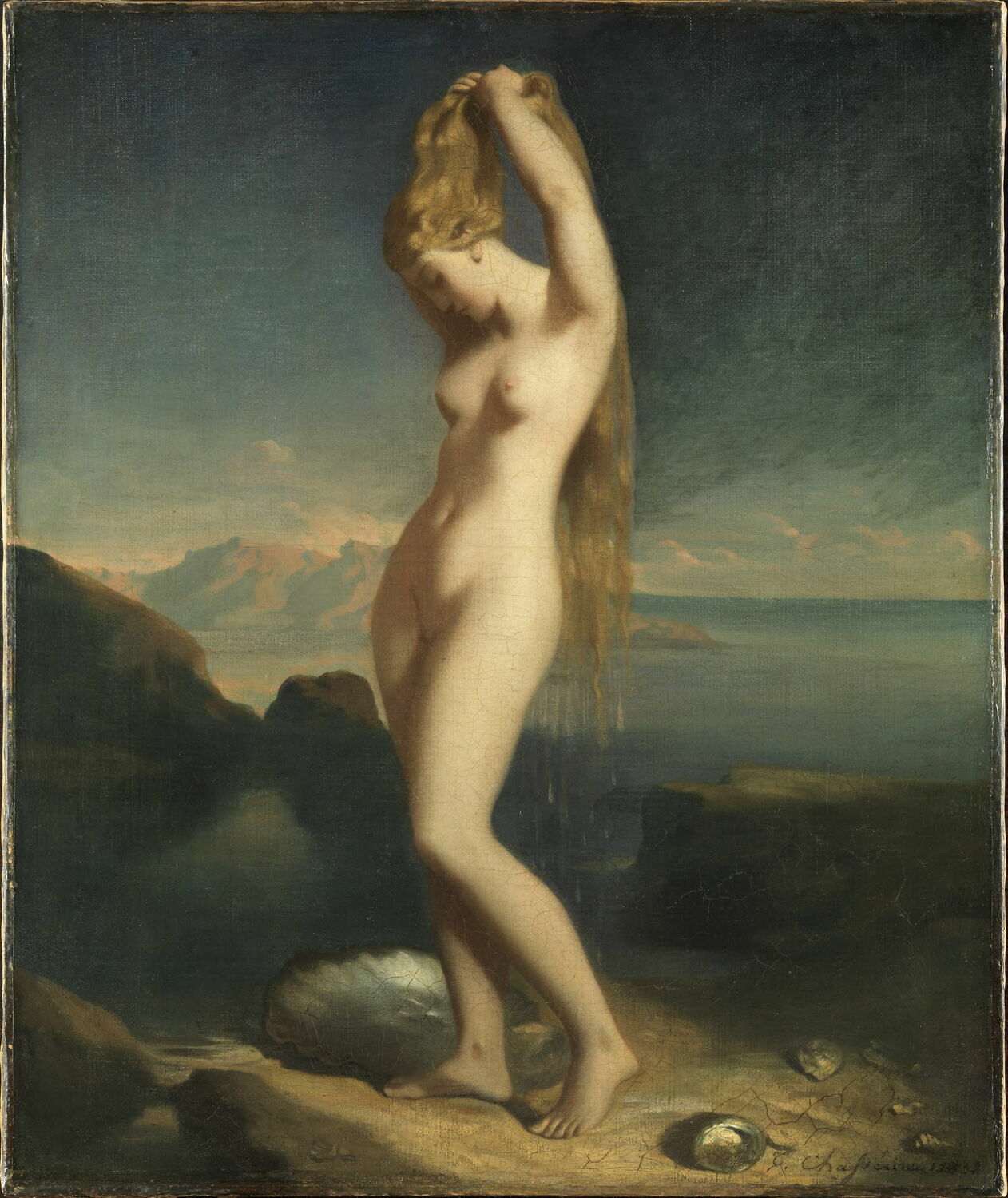
Chassériau was the prodigy the Louvre could not ignore. At fifteen he exhibited a portrait of the painter Prosper Marilhat, which made him the youngest artist ever shown at the museum. At eleven he had already entered the studio of Jean-Auguste-Dominique Ingres, who called the boy his truest disciple. At nineteen he painted Venus Anadyomene, a nude rising from the sea that carried the Salon of 1839. Most painters wait a lifetime for a single work of that confidence. Chassériau produced one before he turned twenty.
Then he did the harder thing: he walked away from Ingres.
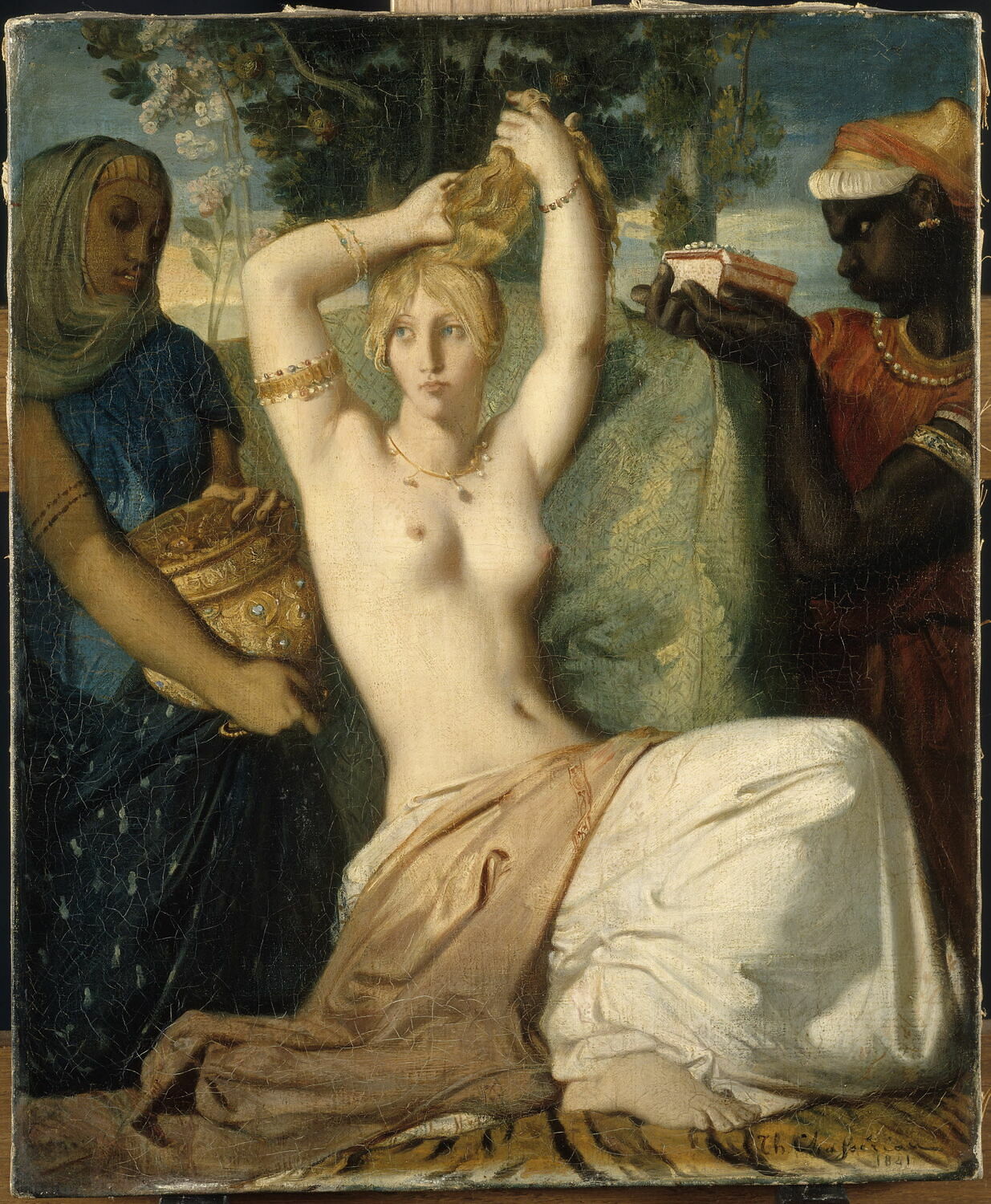
The break came from a deeper restlessness. Ingres wanted line, discipline, and the nude as a measured ideal. Chassériau wanted what the line left out: color, heat, and a body that breathes. He drifted into the orbit of Eugène Delacroix, the rival Ingres despised, and spent the 1840s building a style that borrowed the clarity of one master and the fire of the other. The nude became his testing ground. In The Toilette of Esther and a series of bathers he put a pulse back into the classical body.
The argument resolved itself in The Tepidarium of 1853, his masterpiece and his farewell. The canvas shows a Pompeian bath where women rest, comb their hair, and speak in low voices under a warm roof of light. The bodies are nude but unhurried, arranged like a frieze from some lost wall painting. Three years later Chassériau was dead, worn out by illness and overwork, and the painting had already become a private manifesto for the painters who came after him.
This is what the anniversary marks. Chassériau died too young to found a school. He lived long enough to point one out. Gustave Moreau, who revered him, took the dreamy, jeweled languor of The Tepidarium and turned it into Symbolism. Pierre Puvis de Chavannes borrowed its frieze-like calm. Odilon Redon counted Chassériau among the artists who taught him what painting could feel like. The nude that Ingres made an ideal and Delacroix made a drama, Chassériau made an atmosphere.
He died before he could finish the argument he started. A mural cycle went incomplete, a half-dozen projects stayed on the easel, and a reputation that should have been settled stayed open for a century of critics to argue over. The painter the Louvre hung at fifteen became a legend frozen at thirty-seven, his best canvas behind him and his influence stretching out ahead of him.