Luca Signorelli died in his hometown of Cortona on October 16, 1523, at about seventy-eight. He left one masterpiece that carried his name across five centuries: the fresco cycle in the San Brizio Chapel of Orvieto Cathedral, painted between 1499 and 1502. Its centerpiece, The Resurrection of the Flesh, crowds a wall with dozens of nude bodies climbing out of the earth. No Italian artist had painted flesh with such anatomical command since antiquity.
Signorelli learned his craft in the circle of Piero della Francesca, the master of calm, geometric figures. Where Piero’s bodies stand still, Signorelli’s twist, crouch, and strain. He built them from the skeleton outward, studying the nude and the flayed body, and he refused to hide that study under drapery. Foreshortening, the art of making a limb plunge toward the viewer, became his signature. Vasari judged him the first painter to show true mastery of the naked body in fresco.
The Orvieto cycle stages the Last Judgment across four great walls: the Antichrist preaching and struck down, the dead rising, the elect gathered to paradise, and the damned flung into hell. Every panel teems with the bare human form. The risen haul themselves up with the effort of real bodies; the damned fall with the weight of real bodies. Signorelli treated the nude as the only language strong enough to carry the drama of the end of the world.
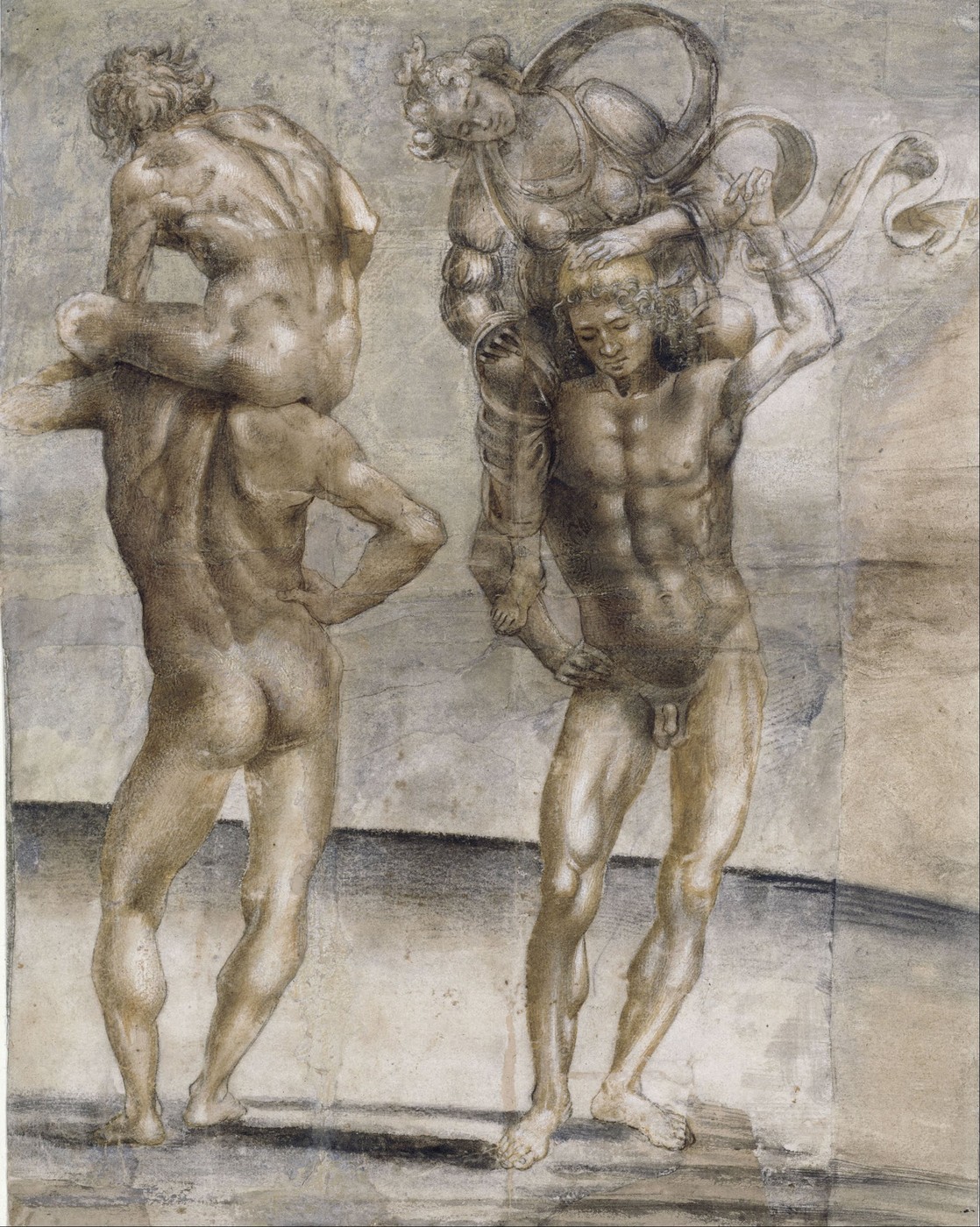
Michelangelo studied these frescoes. Vasari records that he admired Signorelli’s nudes and drew from them when he came to paint the Sistine Chapel ceiling and, thirty years later, the Last Judgment on its altar wall. The muscular, foreshortened figures that made Michelangelo’s name trace a direct line back through Orvieto. Signorelli prepared the ground; Michelangelo raised it to the ceiling.
Vasari also tells a harder story about what the body meant to Signorelli. When his son, a beautiful young man, was killed in Cortona, the painter had the body stripped and drew it, wanting to keep nature’s work before his eyes. The tale may be legend, but it captures the man. For Signorelli the nude was the most honest record a life could leave.
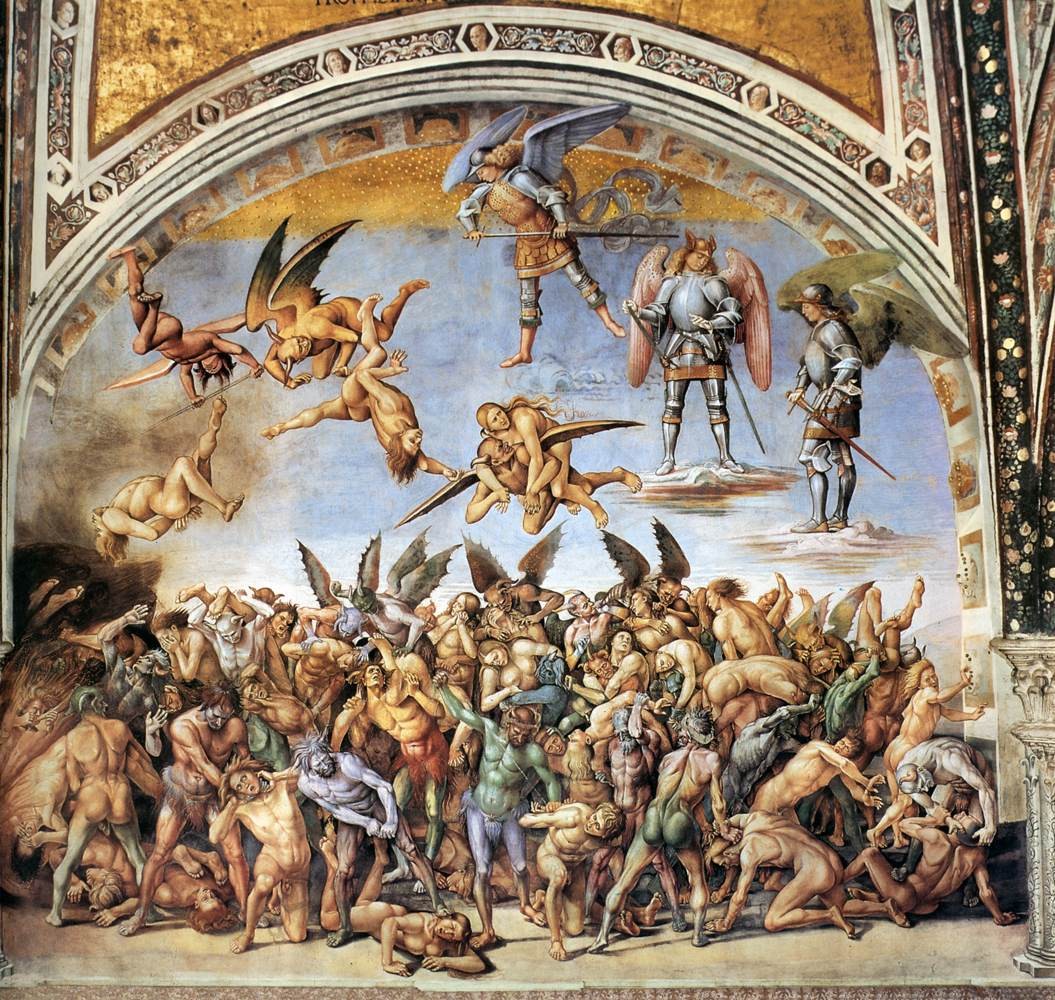
Five hundred and three years on, Signorelli survives mostly as the painter who came before Michelangelo. That framing undercuts his achievement. He gave the nude its muscle, its strain, and its mortality a full generation before the Sistine ceiling was begun. The bodies rising from the earth at Orvieto are the seed of every heroic nude the Renaissance produced after him.