The most copied body in Baroque Europe
Guido Reni was born in Bologna on November 4, 1575. By the time he died sixty-six years later, half of Europe called him “the divine,” and the name was a statement of fact. Reni painted the human body as if it had never suffered, aged, or sinned. He gave the nude an immaculate serenity that Caravaggio, painting a few streets away in Rome, could never have imagined.
That ideal arrived early. Reni trained first under Denys Calvaert, then in the Carracci academy, and by his twenties he was in Rome absorbing the classical bodies of Raphael and the antique. He found his subject in the tension between flesh and spirit: a body undeniably physical, yet not of this world.
The body in motion
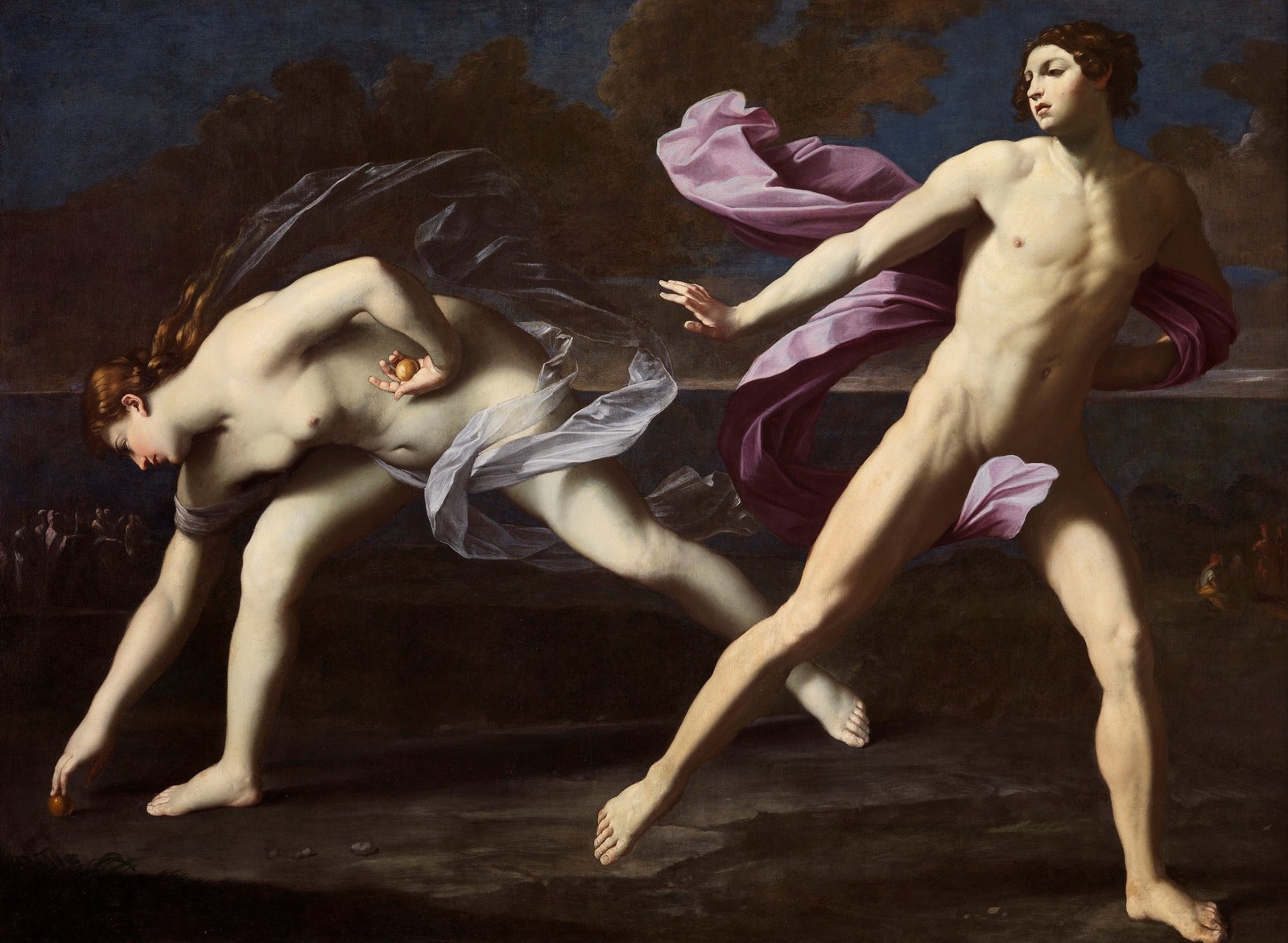
Reni was not only a painter of still, ecstatic martyrs. In Atalanta and Hippomenes, painted around 1620 for the court in Naples, he set the body racing. Atalanta, the fastest mortal woman alive, and Hippomenes, the suitor who won her hand in the race, are caught mid-stride. Both figures lean into the wind of their own speed, drapery snapping behind them like banners. Here the ideal body becomes pure velocity.
Saint Sebastian: devotion and desire
His most famous invention is the Saint Sebastian, the picture at the top of this post. Reni painted it again and again across his career. The young martyr stands pierced with arrows, head tilted back, eyes lifted, mouth softly open. The pose reads as rapture more than agony.
That image made the male nude a devotional object and, quietly, an object of desire. Reni’s Sebastian is beautiful in the way the Renaissance understood beauty, as a sign of grace. The body does not flinch because it is already half in heaven. For three centuries that serenity made it one of the most copied pictures in Europe. In the twentieth century it found a stranger second life. The novelist Yukio Mishima, in Confessions of a Mask, described his adolescent awakening before a reproduction of Reni’s Sebastian, an arrow biting into the smooth torso. The nude Reni meant as a testament to faith had become a mirror for longing. The same picture, the same body, two entirely different gazes.
Susanna, and who does the looking
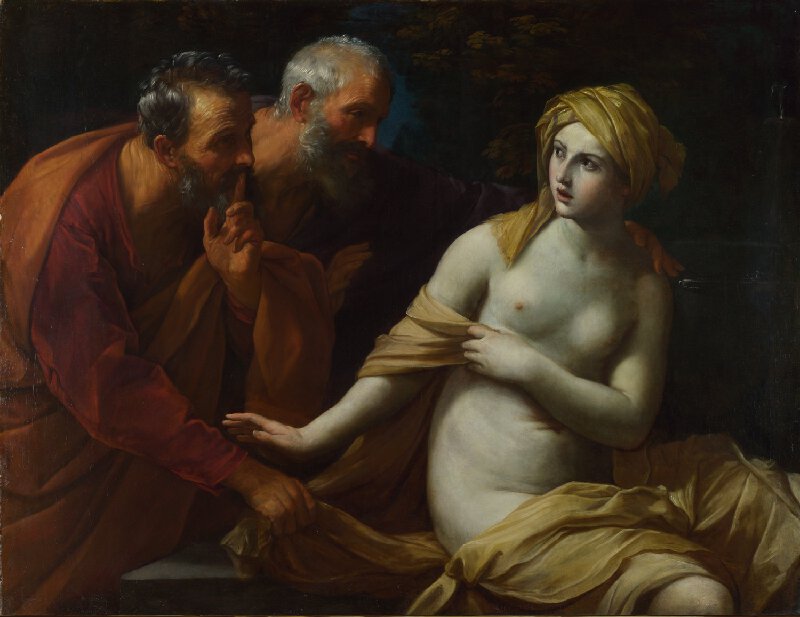
When Reni turned to the female nude, he chose the oldest and most uncomfortable story in the genre: Susanna and the Elders. Two old men spy on a young woman at her bath and threaten to destroy her if she refuses them. Reni paints Susanna as a woman interrupted, her hand raised in a gesture of refusal. The picture is about looking, and about power. His idealizing style refuses to leer, and the distance between viewer and body, so often a failing in academic art, becomes here a kind of protection.
Why the divine painter matters now
Reni’s reputation collapsed in the twentieth century. Critics dismissed his smooth perfection as sentimental, and the Baroque he helped define was reassessed around Caravaggio’s drama instead. That verdict is reversing. Museums have re-exhibited Reni, and scholars have returned to the strange discipline of his line. Reni’s nude is an argument that the human figure can be lifted out of its mortality and made into an image of something permanent. Whether you read that as faith or as longing is up to you.