Annibale Carracci gets the glory. His brother Agostino, born in Bologna on August 16, 1557, built the system. Together with their cousin Ludovico, the Carracci founded the Accademia degli Incamminati around 1582, the workshop that made drawing the naked body the first lesson every painter had to pass. If the nude is the foundation of Western art education, Agostino Carracci is one of the men who poured that foundation.
The academy was a quiet revolution. Before the Carracci, an apprentice learned by copying his master’s manner, and the nude came late, if at all. The Incamminati flipped the sequence. Students drew from plaster casts, then from live models, working through anatomy and proportion before they were allowed near paint. Drawing the nude became the entry point to art. Within a generation that model had spread across Europe, and it survived, in one form or another, until the twentieth century.
The printmaker who put the body in print
Agostino’s other obsession was engraving, and here he did something no painter had managed before. His series known as the Lascivie, a set of small prints cut around 1590 to 1595, took mythological nudes and put them in a format a collector could hold in one hand. Venus, Galatea, a sleeping nymph surprised by a satyr: the imagery was openly erotic, published as a suite with no text, no allegorical excuse, no moral frame. It was the nude as a commodity, reproducible and portable, decades before the print market made such things routine.
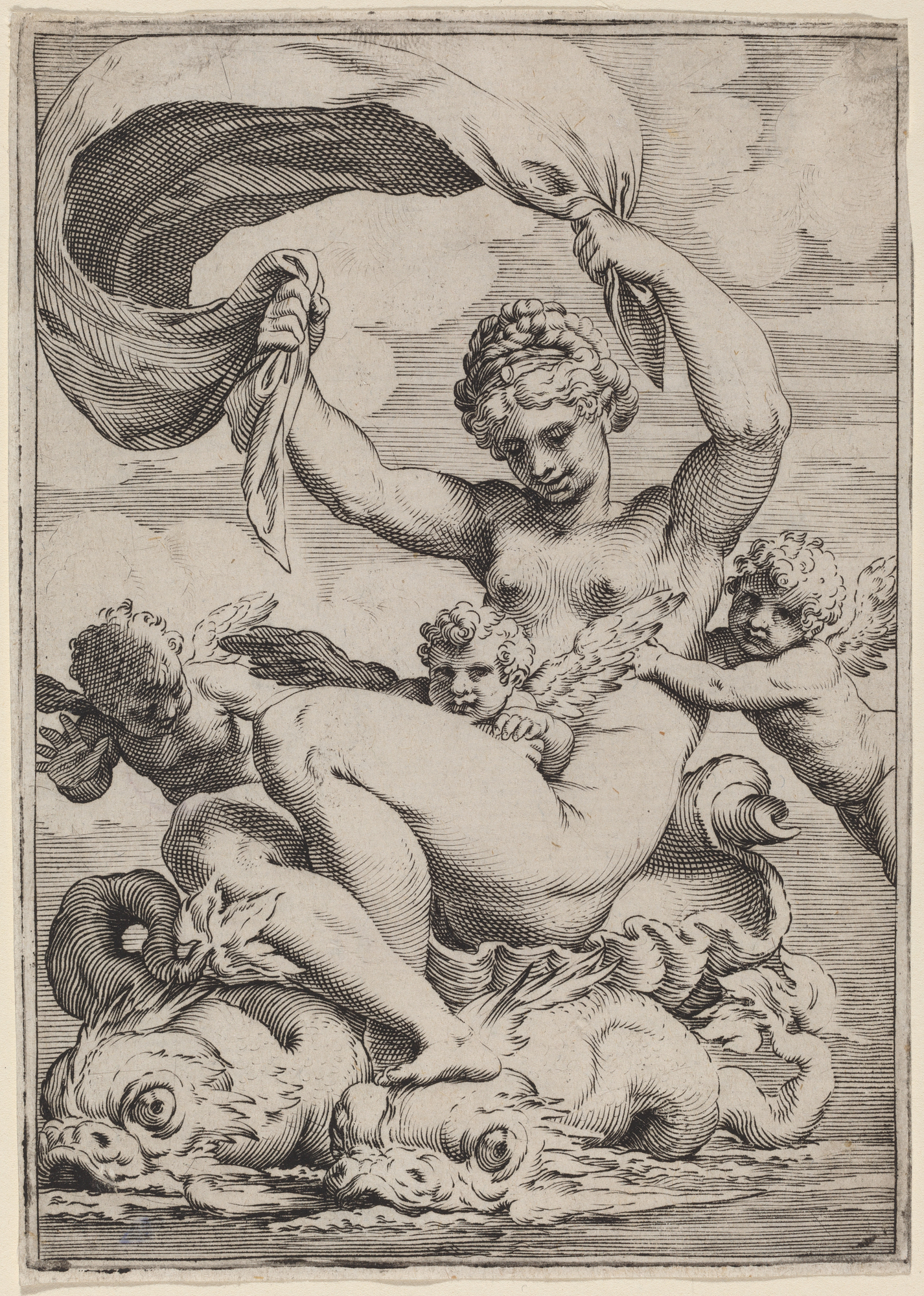
The Lascivie walked a fine line. Printers and collectors traded them quietly, and the series survives today in scattered impressions across museum collections because so many copies were later suppressed. Their small size and low price made them easy to buy and easy to hide. The nude had entered mass circulation, and the same technologies that spread it made it easier to censor.
Omnia vincit Amor and the finished system
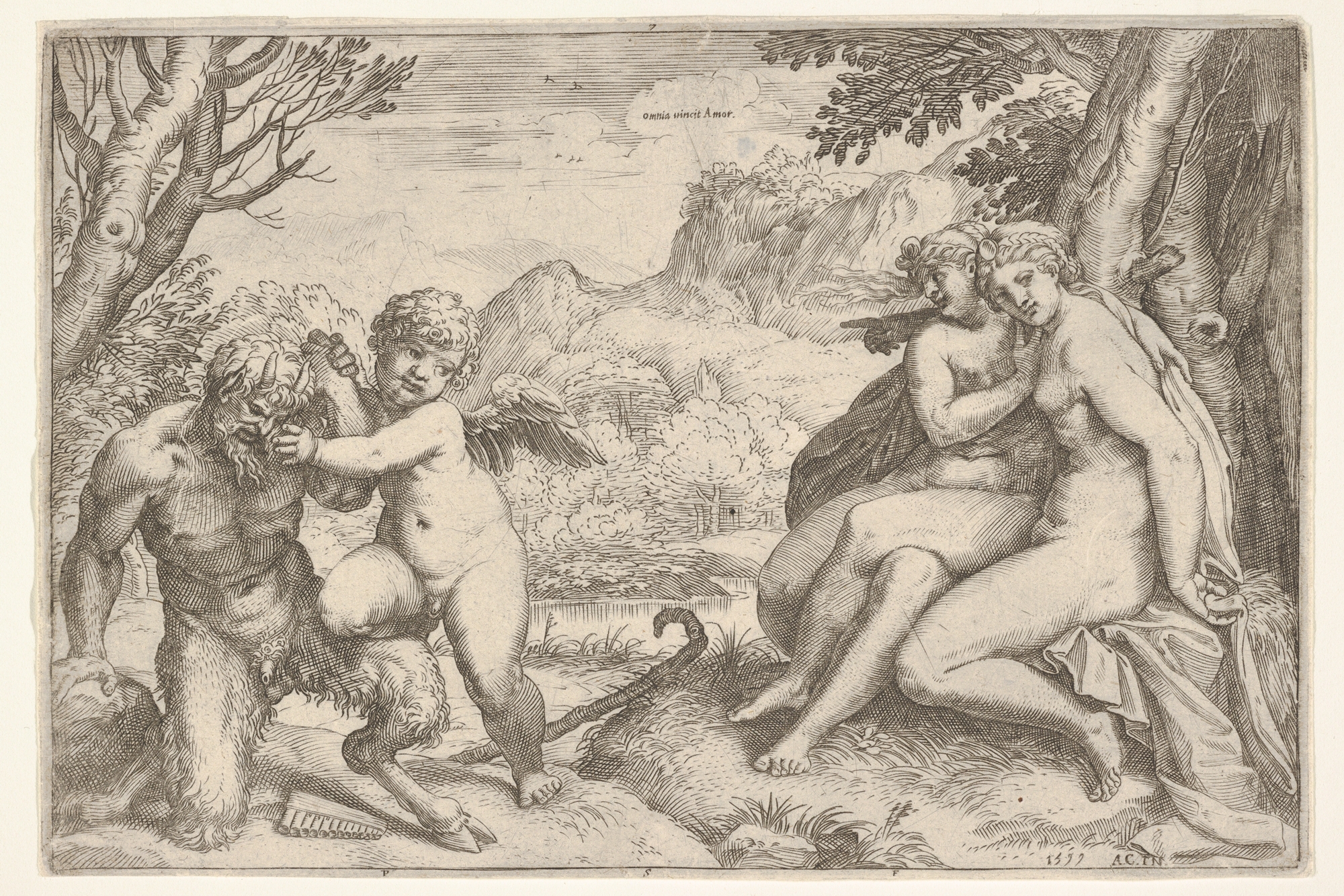
Agostino’s most famous print, Omnia vincit Amor, came near the end of his life, engraved after a design by Annibale. Venus and Cupid wrestle a satyr while nymphs look on, a composition of interlocking limbs and shifting weight. The engraving became one of the most copied images of the age, proof that a nude could travel further as a print than as a painting. By the time Agostino died in Parma on February 3, 1602, at forty-four, the nude had become a discipline instead of a subject.
Why it still matters
Agostino Carracci’s legacy is the idea that the body can be taught. A student can learn to draw a stranger’s naked form through method rather than inspiration, and a nude can move through the world as a reproduced object as easily as a poem or a song. Every life-drawing class, every figure study, every artist who sets up an easel in front of a model owes a small debt to a workshop in Bologna that decided the naked body belonged at the beginning of an artist’s education.
Four hundred and sixty-nine years after his birth, we argue constantly about where the nude belongs: in a museum, on a phone, behind a content warning. Agostino Carracci spent his short life deciding exactly where the body belongs in art. His answer, drawn and engraved and taught, is still the one most artists learn first.