Antonio Canova, the most celebrated sculptor of his age, died in Venice on October 13, 1822. Two centuries later, visitors to the galleries that hold his work still do what they have always done. They bend close. They reach toward the marble. They argue about whether the stone is breathing.
Canova’s great subject was the human body, and his great invention was a surface. He worked pumice and fine abrasives across his finished figures until the marble lost its grain and began to behave like skin. He polished the stone until light sank into it and glowed back, as if there were blood beneath. He made the hardest material on earth carry the most fragile illusion, a body that lives.
His most scandalous performance of that illusion is a portrait that doubles as a nude. Venus Victrix, carved between 1805 and 1808, shows Pauline Borghese, Napoleon’s sister, reclining on a couch with the golden apple of the Judgement of Paris in her hand. She is Venus, goddess of love, and she is also a specific woman, a married aristocrat and the emperor’s sister, rendered bare to the waist and triumphant in marble.
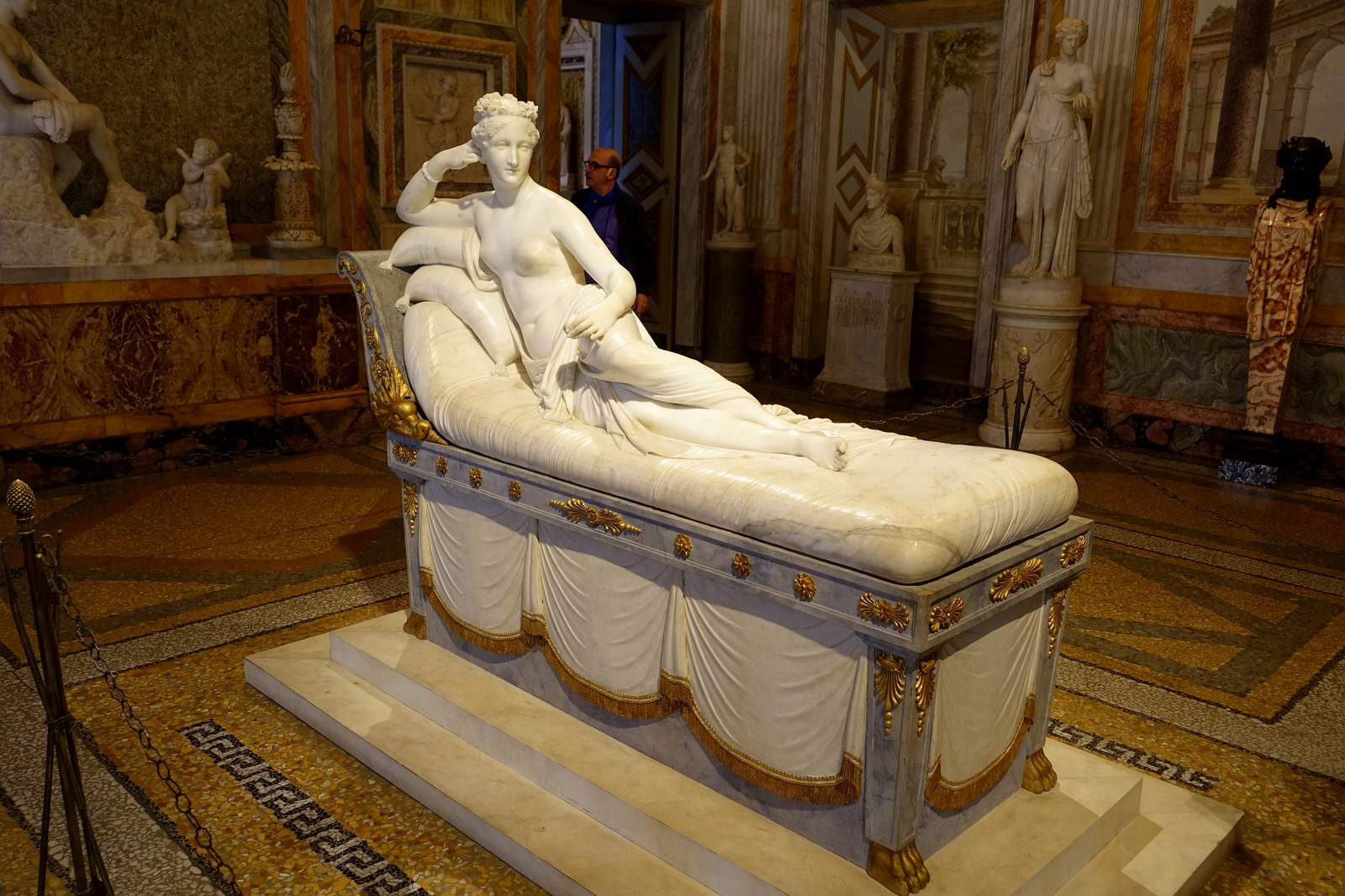
The scandal lived in that doubling. A goddess needs no name, but Pauline did. When visitors asked how a woman of her rank could have posed naked, she had an answer ready. The studio was heated. The quip deflected, but the tension Canova carved into the stone remained: the nude is most powerful when an ideal body and a real one occupy the same marble.
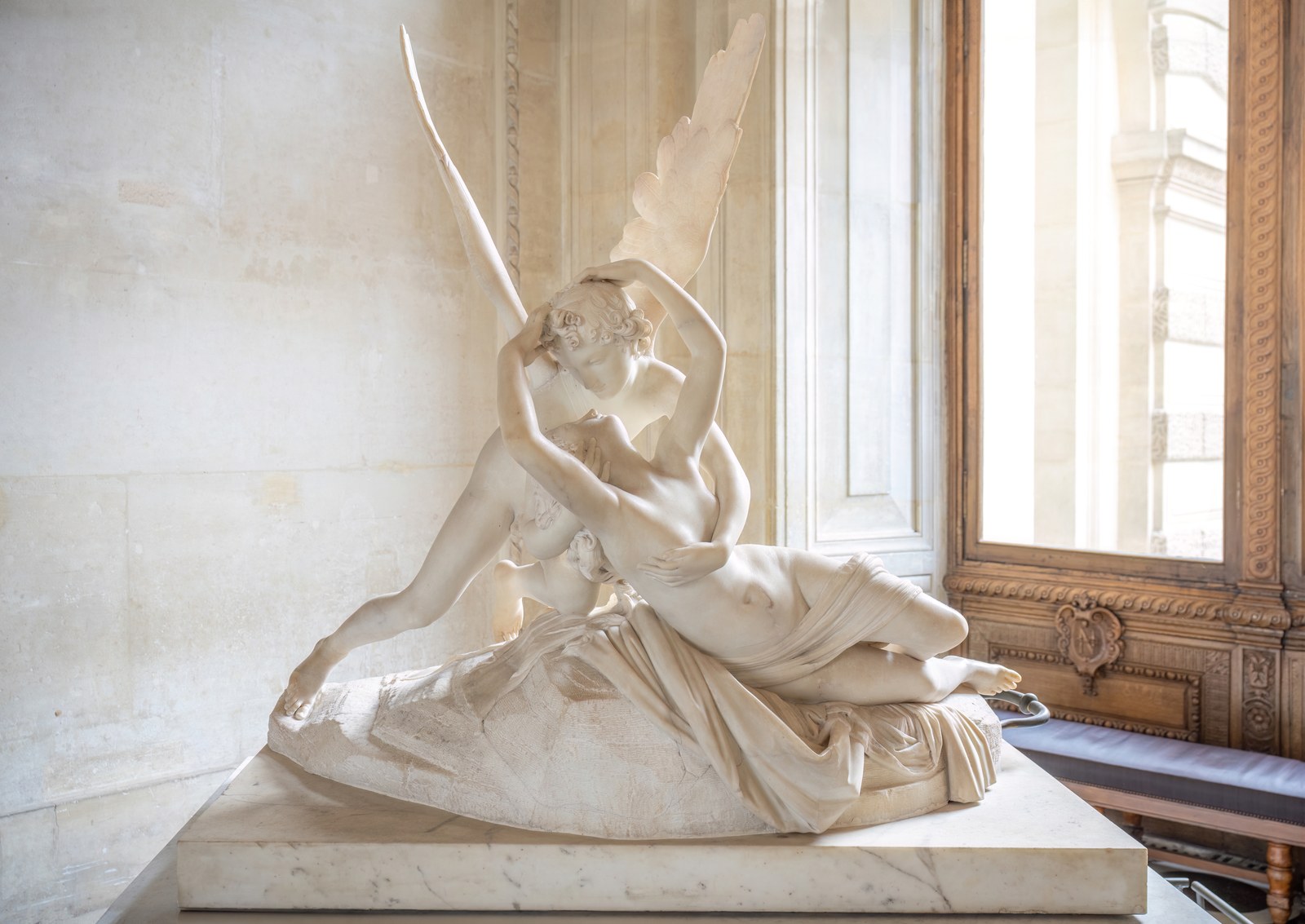
Canova could work in pure allegory too. Psyche Revived by Cupid’s Kiss, finished in 1793, captures the myth’s last instant, the moment Cupid’s embrace wakes Psyche from her deathlike sleep. Two winged figures spiral upward, weightless, bodies arranged with a precision that took years of study to achieve. No scandal here, only the ideal, and the same flesh-soft surface animates it.
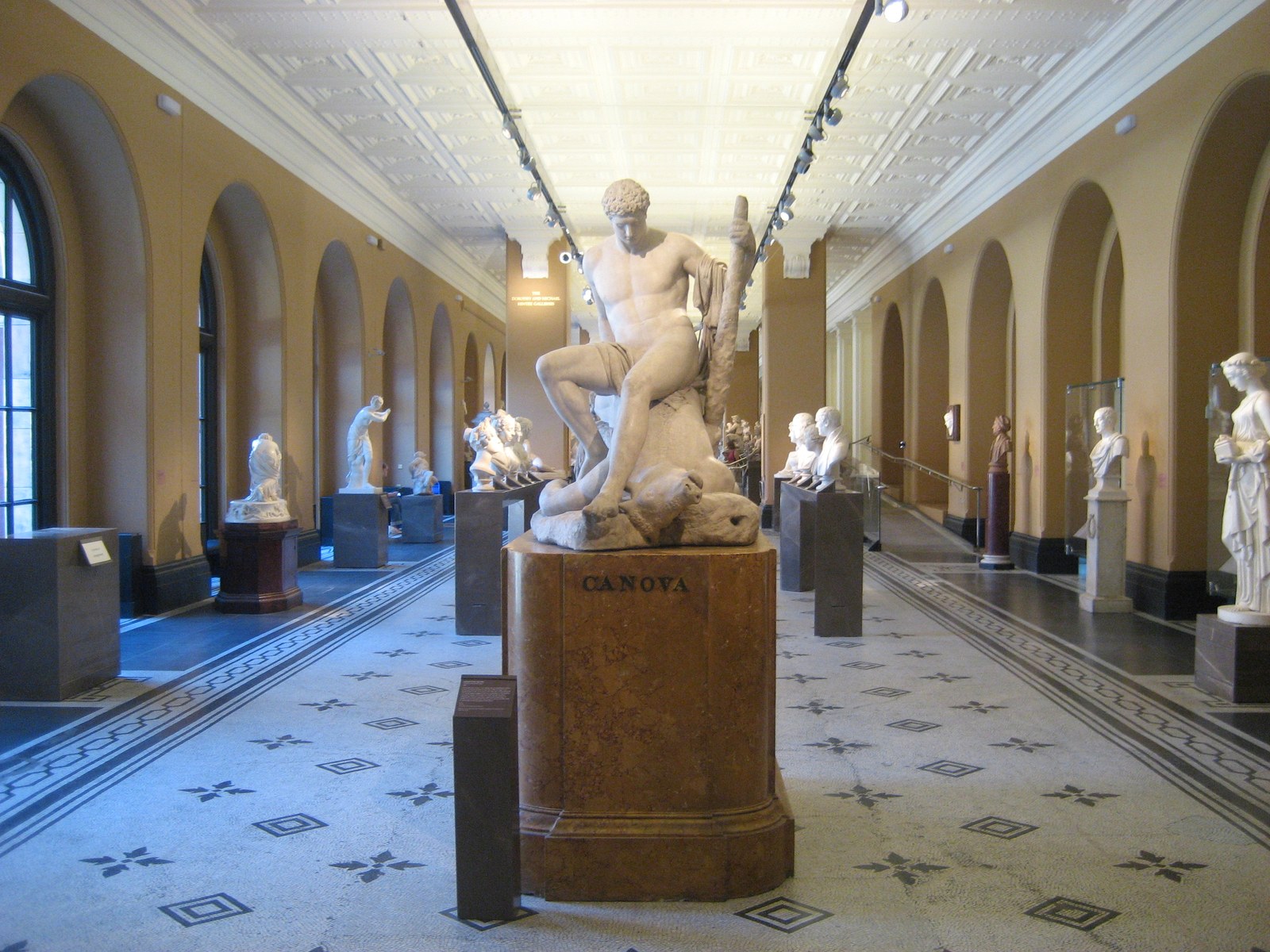
His first Roman triumph claimed the male nude. Theseus and the Minotaur, finished in 1782, shows the hero seated on the monster he has just killed. The violence is over. Theseus rests, calm, on the defeated body. This was Canova’s declaration: against the twisting, shouting figures of Baroque sculpture, he set a body at peace, measured and self-possessed. With that stillness he brought the classical nude back to life.
What Canova understood is that the nude is a machine for producing doubt. Is this Venus, or Pauline? Is this stone, or skin? Is this a goddess, or the emperor’s sister showing us how much she won? In his hands the answer is always both. That instability is the source of the nude’s power, and Canova polished it to a shine that has not dulled in two hundred years.