On November 12, 1840, Auguste Rodin was born in a working-class quarter of Paris. He would become the sculptor who taught the bronze nude to breathe.
His breakthrough arrived as a scandal. In 1877 Rodin sent a life-size nude of a young man to the Salon in Brussels and then to Paris. The figure stood with one hand raised to its head, as if waking from sleep. Rodin called it The Age of Bronze, after the moment humanity first stirred toward self-awareness.
Critics refused to believe a sculptor had made it. The body was too accurate, the proportions too exact, the surface too convincing. The charge spread that Rodin had cheated, that he had cast the work directly from a living model, a mechanical shortcut called surmoulage and the signature of a fraud.
The model was a young Belgian soldier named Auguste Neyt. Rodin defended himself with photographs of Neyt and by pointing to the small differences between the bronze and any living body. Fellow sculptors spoke in his defense, and the accusation collapsed. In 1880 the French state bought The Age of Bronze, cast it, and installed it in the Luxembourg Gardens.
The accusation matters because it names the thing that still unsettles us about the convincing nude. When a painted or carved body draws close to life, the first impulse is to suspect a trick. The artist must have cheated. The distance the nude has kept since antiquity, the space between art and life, is a contract the viewer holds the artist to.
Rodin broke that contract on purpose. He wanted the body to carry weight, strain, and breath. He built the figure from clay, plaster, and study rather than from an academic formula of proportion, and the result was a nude that looked alive in a way marble gods never had.
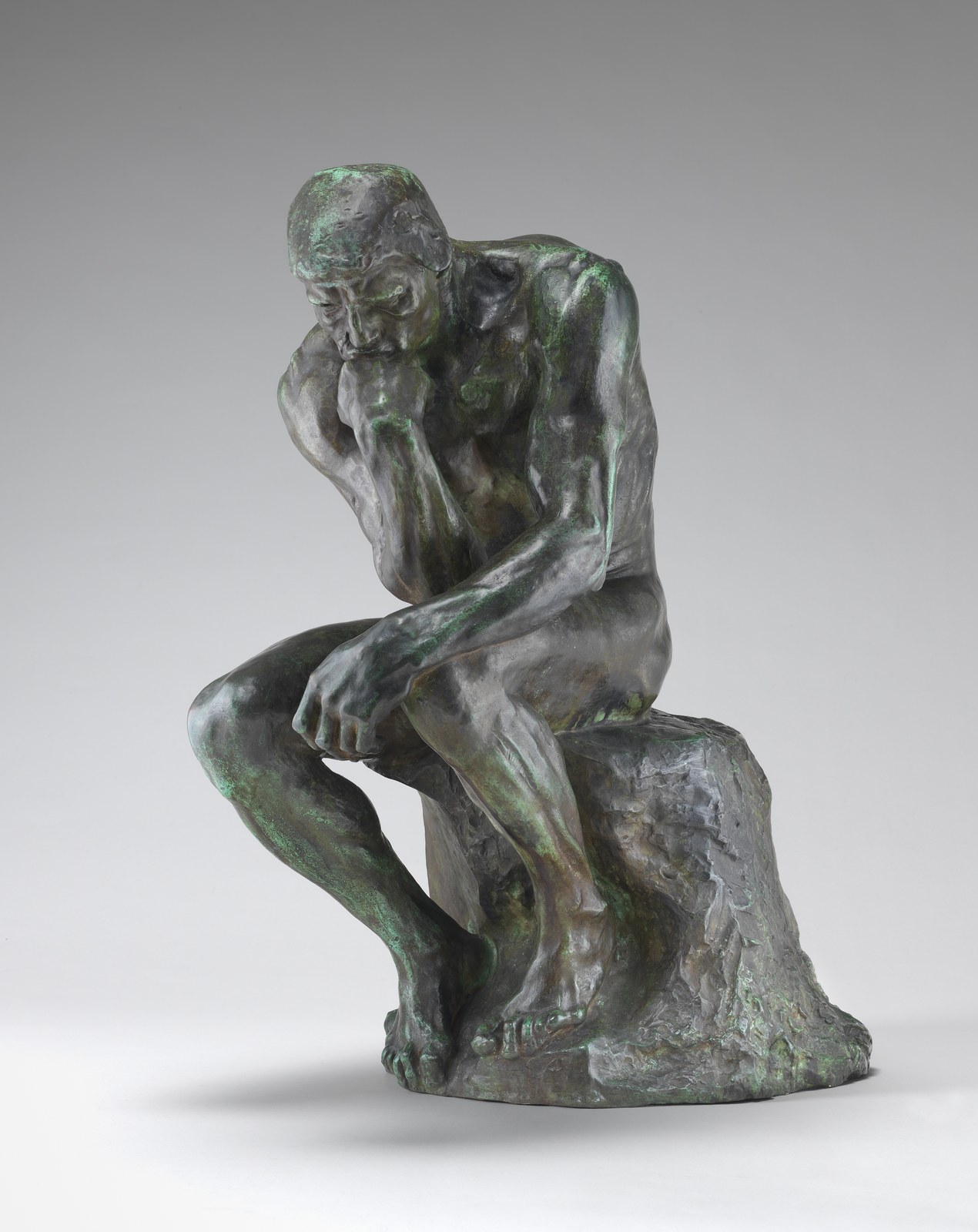
From that first accused body Rodin built the rest of his world. His Gates of Hell, the bronze portal crowded with twisting figures, took the nude of Dante and Michelangelo and turned it into a mass of private agony. At the top sat the small figure he first called The Poet, bent in thought over the whole scene. Cast monumental and set alone, it became The Thinker, the human body made into pure mind, muscle turned inward.
Rodin died in 1917, four days before his seventy-seventh birthday. On his 186th, the thing worth remembering is that accusation of 1877. It was a backhanded compliment, the only verdict the age could offer a sculptor whose nude was too alive to be believed. He answered it with forty years of proving that the body, faithfully seen, needs no alibi.