Paul Cézanne died on October 22, 1906, in Aix-en-Provence, after a storm caught him while he painted out of doors. He was 67. Through the last decade of his life he had circled a single subject again and again: women bathing in a landscape, their bodies emptied of myth, of names, of desire itself.
Those paintings, the three monumental versions of Les Grandes Baigneuses now held in London, Philadelphia, and the Barnes Foundation, are the most patient nudes in Western art. Cézanne did not paint them from life. He built them from memory, from the Old Masters he had copied in the Louvre, from a lifetime of drawings and watercolor studies. For him the nude was an act of construction, assembled slowly from memory and study.
He removed everything the nude had leaned on for four centuries. No Venus, no nymph, no biblical excuse. The women exist, arranging themselves beside water under a vault of trees that lean together like the ribs of a cathedral. They perform for no viewer. Their beauty lives in weight, rhythm, and color held in balance, far from the polished finish of the academic salon.
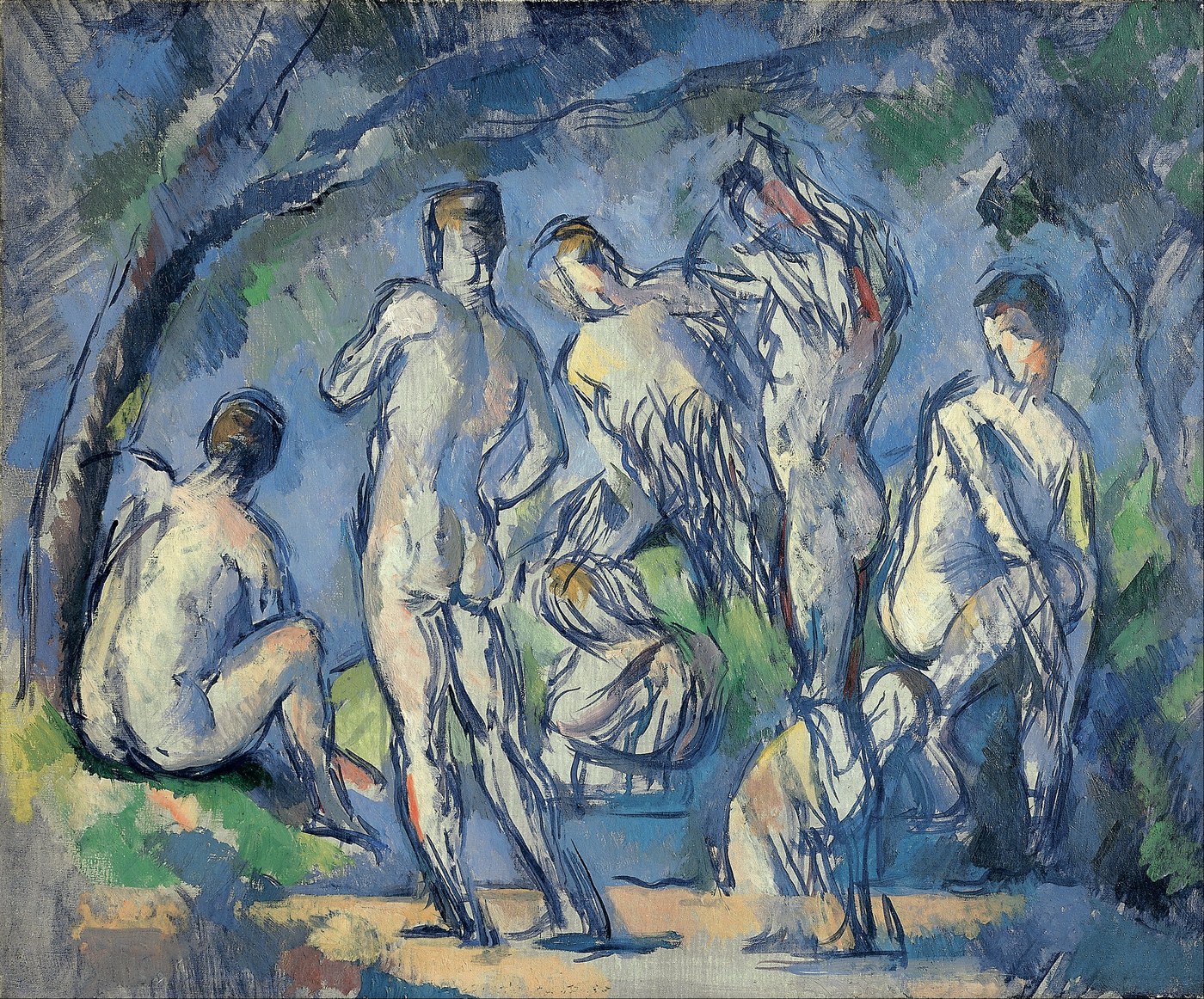
Seven Bathers, painted around 1900, shows where the obsession began. The bodies still read as individuals, still grounded in a real afternoon. Across the next six years Cézanne pressed them toward something more severe. In the final Large Bathers the faces blur toward blankness, the limbs repeat like a frieze, and the figures fuse with the trees and sky until figure and landscape share a single structure.
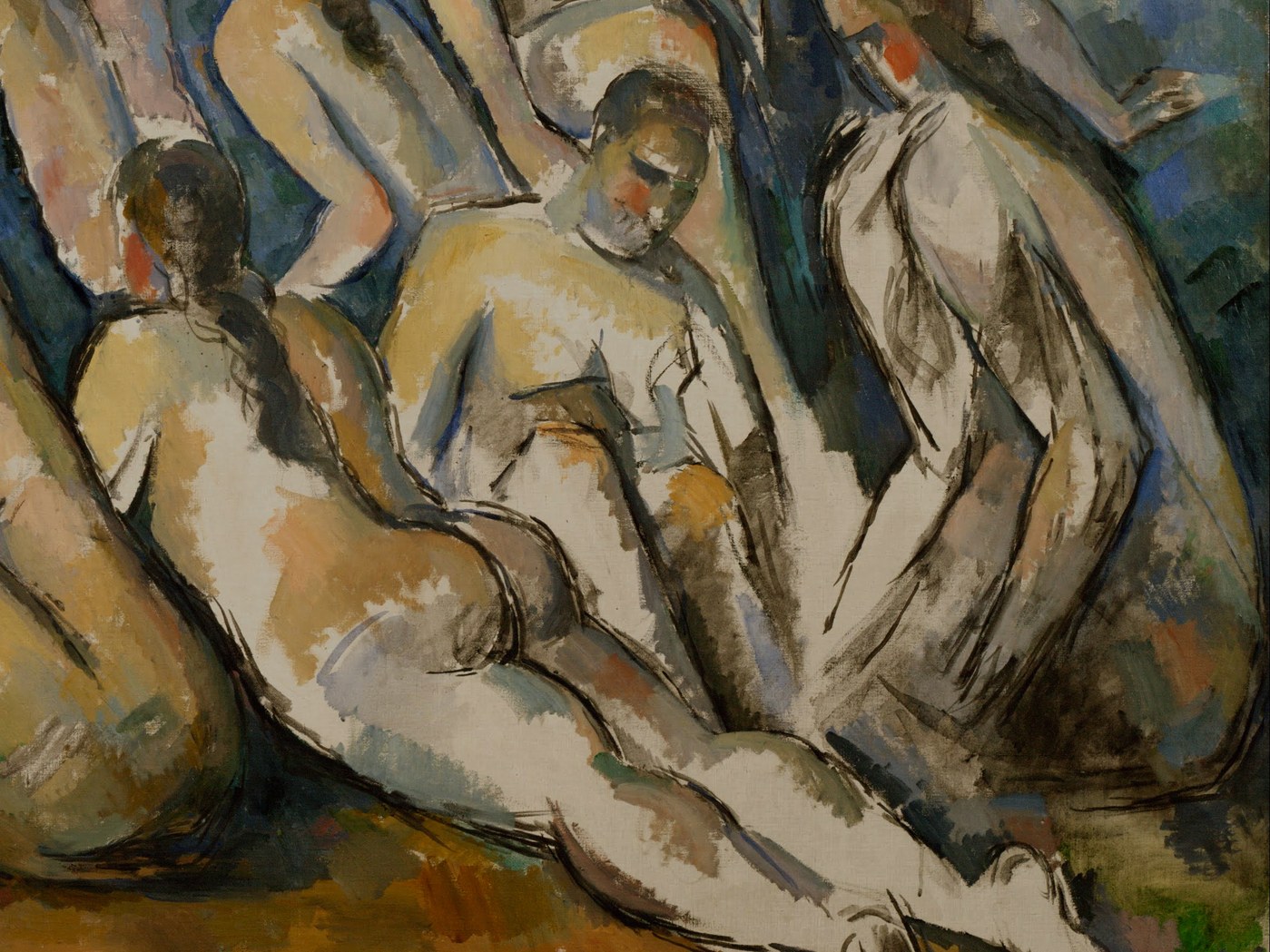
The Bathers mark the hinge between two centuries. They close the classical nude’s long career and open the modern one. Matisse carried their monumental calm into his own bathers and dancers. Picasso bought a small Cézanne bather and kept it all his life, and declared Cézanne the father of us all. The Cubists found, in those faceted bodies, permission to break the figure apart entirely.
Cézanne proved the nude could survive the death of its excuses. A body needs no goddess and no story to hold the eye. It needs only to be placed with enough truth. A hundred and twenty years after his death, that remains the hardest lesson the figure has ever taught us.