Charles Baudelaire died on August 31, 1867, at the age of 46. The man who taught the modern world how to look at its own body in art spent his last decade carrying a criminal conviction for writing about that body too plainly.
The poet on trial
Baudelaire is remembered two ways. As a poet, he wrote Les Fleurs du mal, The Flowers of Evil, the 1857 collection that landed him in court and cost him a fine. As a critic, he coined the phrase painter of modern life and argued that beauty is half eternal and half the passing moment, which meant an artist owed the same attention to a woman on a Paris boulevard as to a goddess on Olympus.
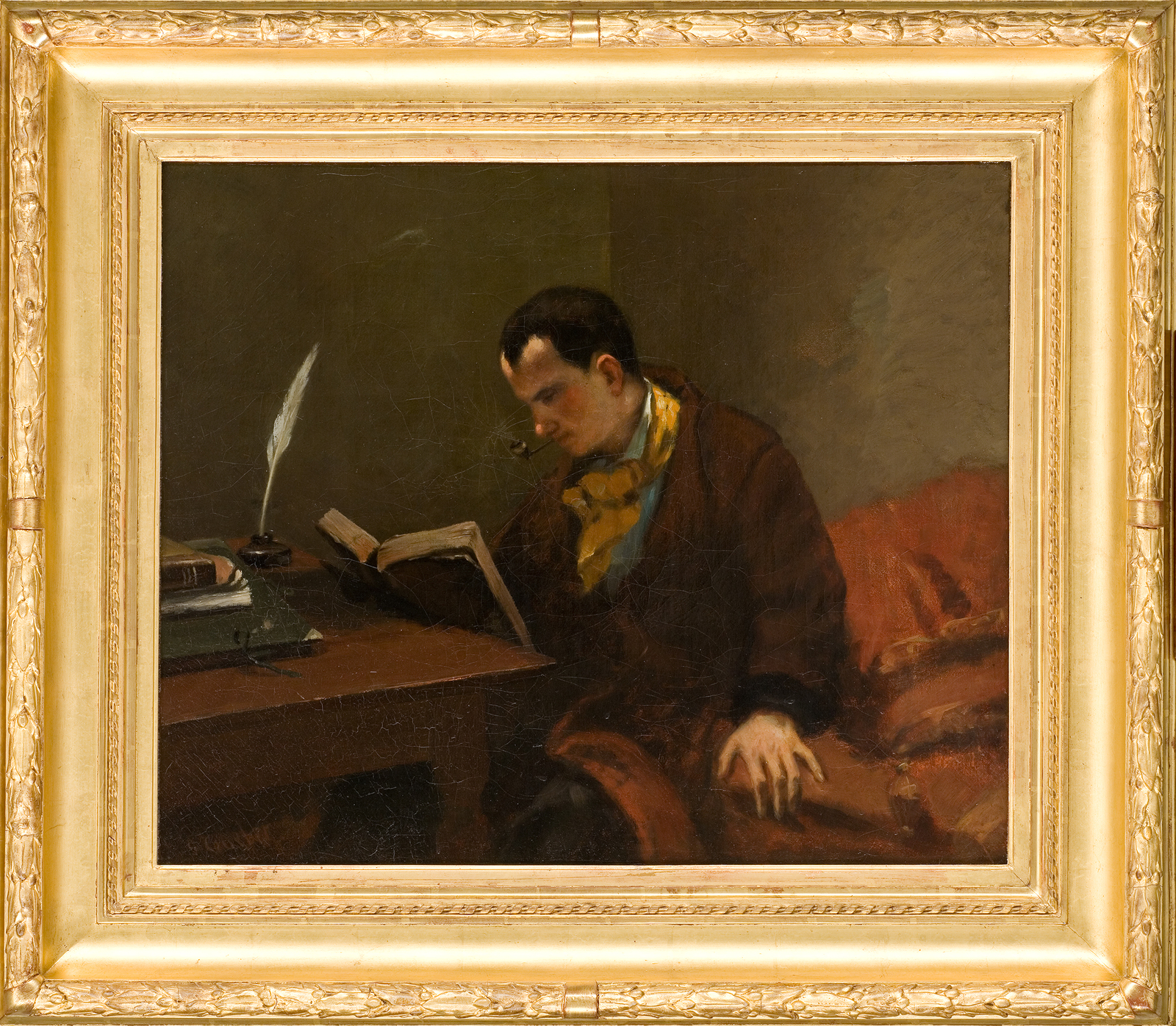
In August 1857, a French court condemned six poems from Les Fleurs du mal for offense to public morals and good manners. Baudelaire was fined 300 francs and ordered to cut the verses from his own book. Read today, the six banned poems are explicit only in their refusal to look away. Les Bijoux, The Jewels, watches a woman undress and shimmers with it. Lesbos defends Sappho’s island against the men who come to judge it. Les Métamorphoses du vampire turns a woman’s body into a meditation on desire and death. The court’s objection came down to a single thing: a body described without shame, and desire named without an alibi.
The critic who demanded the real body
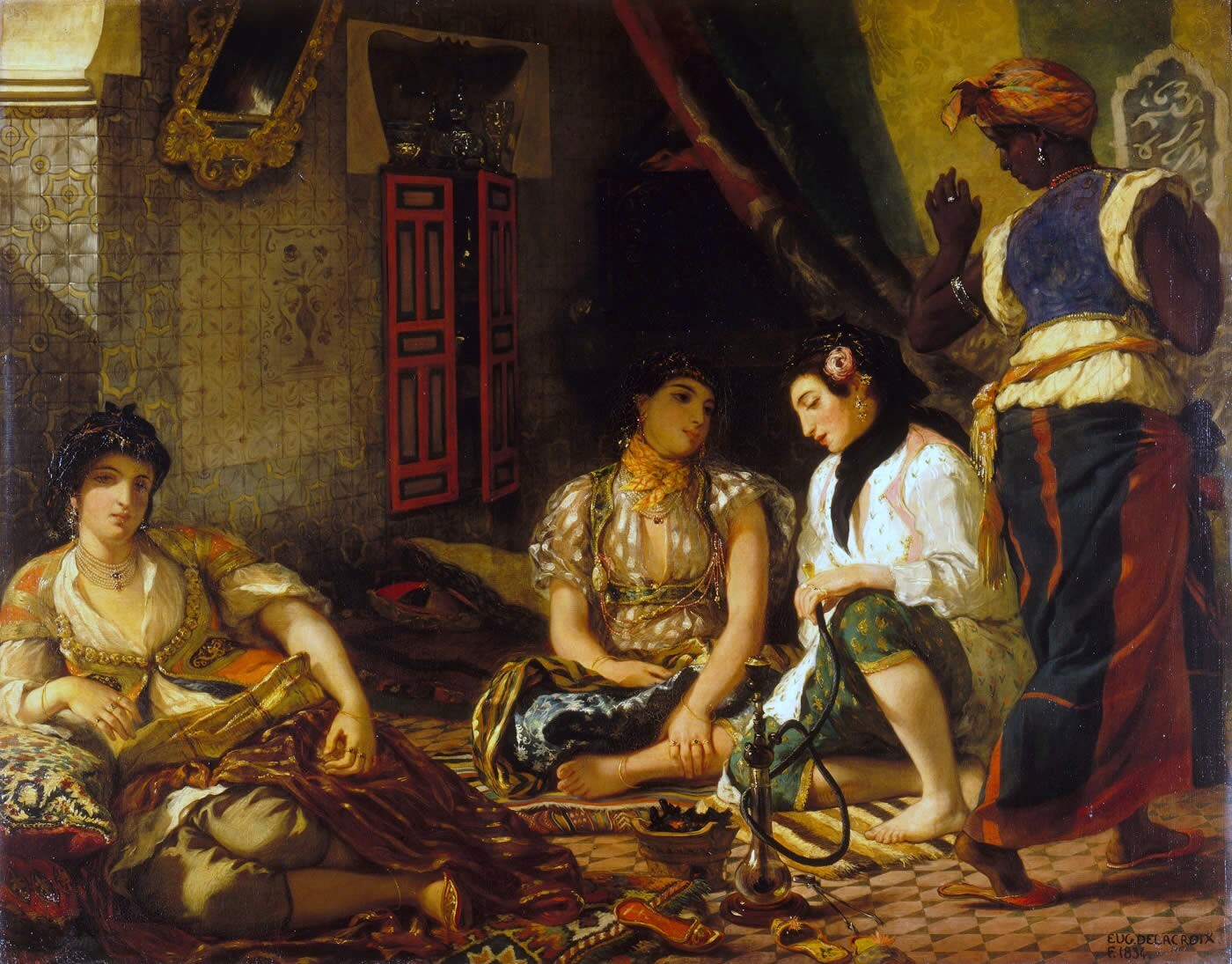
The same man spent those years insisting that painters stop hiding the body behind classical costume. In his Salon reviews he called Eugène Delacroix the most original painter of his age, and in The Painter of Modern Life (1863) he demanded that art turn toward the street, the crowd, the real woman. His hero Delacroix had already filled The Death of Sardanapalus with writhing, half-clothed figures, a canvas of bodies in extremis that scandalized Paris in 1828.
Baudelaire’s framework cleared the ground for what came next. His friend Édouard Manet painted Olympia in 1863, a naked woman who meets the viewer’s gaze with no goddess, no nymph, no alibi. Baudelaire had been telling artists for years to paint modern life as it was. Manet did it, and Paris answered the image with the same reflex that had convicted the poem: moral panic over a body that looked back.
A legacy of looking
The trial of Les Fleurs du mal sits at the head of a long line. Within a decade of Baudelaire’s conviction, Gustave Courbet painted L’Origine du monde, a nude so direct it stayed hidden from public view for more than a century. The word and the image were policed by the same reflex. When a culture cannot look at a body, it punishes whoever made that body visible, whether they worked in verse or in oil.
Baudelaire died worn out by syphilis and poverty on this day in 1867. His banned poems were rehabilitated only after his death, and not fully until 1949. He left a double legacy that still structures every argument about the nude: the critic who demanded honesty about the body, and the convicted poet who learned what honesty costs. Every time a museum posts a classical nude and a platform removes it, every time a curator defends a Courbet or a Mapplethorpe, the argument runs through Baudelaire. He looked at the body without flinching, wrote about it without apology, and spent his final years paying for the privilege.