On September 1, 1715, François Girardon died in Paris at eighty-seven. He had spent five decades giving Louis XIV’s Versailles its idealized bodies. His marble nudes still stand in the palace gardens, and they still explain how a king used sculpture to make his power look like the natural order of things.
The Apollo Group
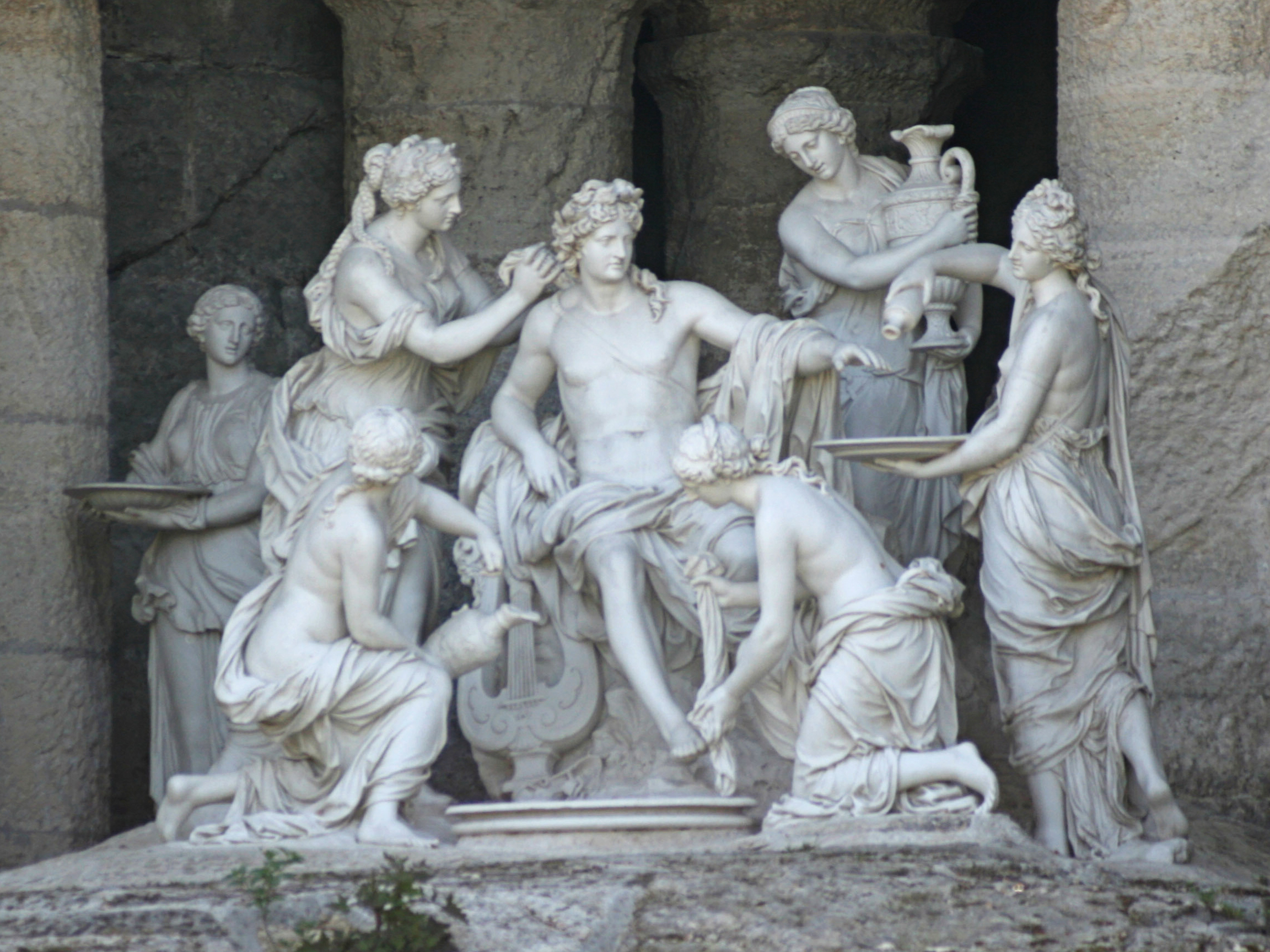
Girardon’s masterpiece is Apollo Tended by the Nymphs, carved between 1666 and 1673 with his assistant Thomas Regnaudin. A nude Apollo sits at the center while five nude nymphs kneel, stand, and reach to bathe and serve him. Girardon made the work for the Grotto of Thetis, a sea cave in the palace gardens where the Sun King could be received as the god of light. The group later moved to the Baths of Apollo, where it stands today.
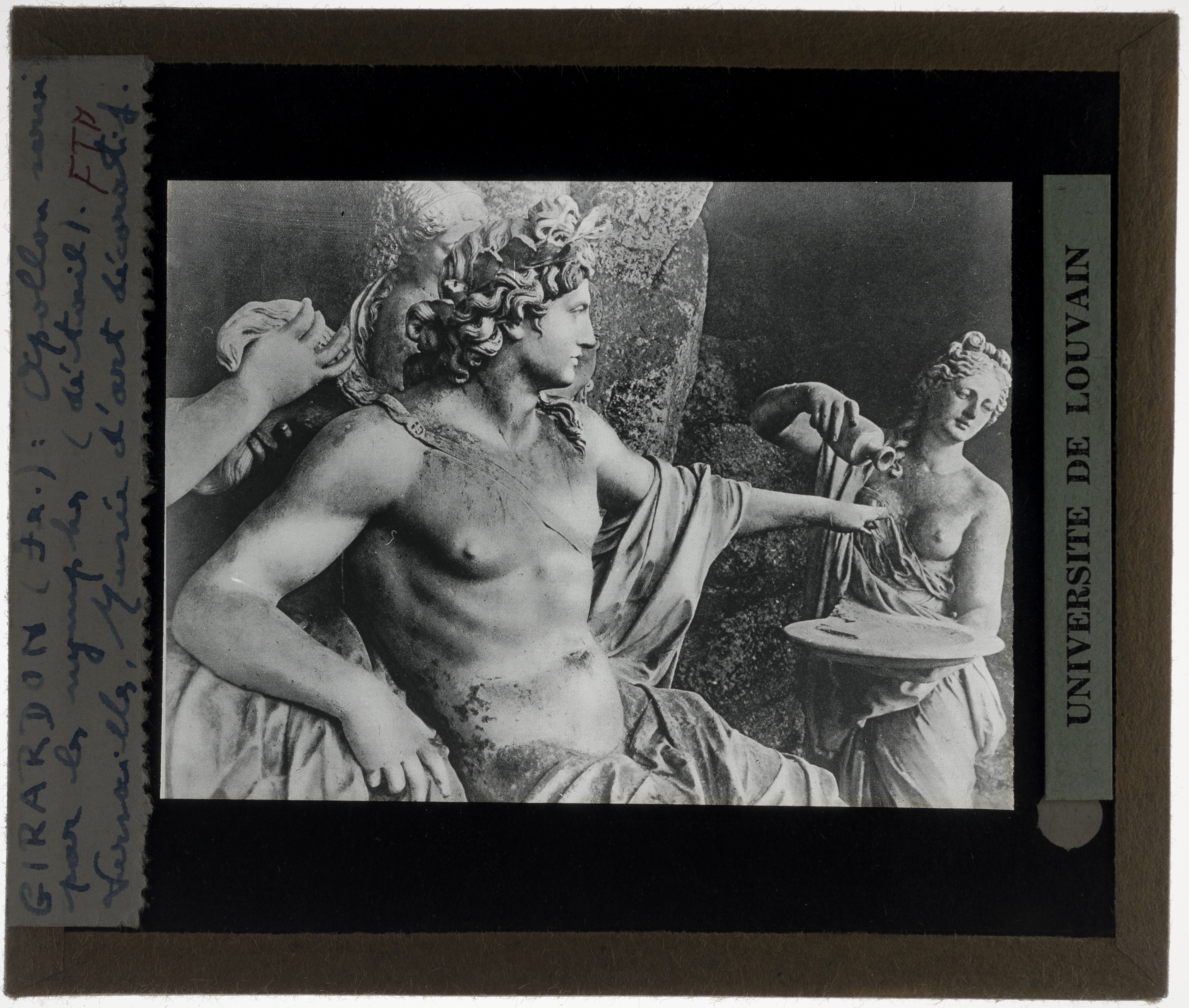
Every muscle carries a political message. Apollo’s relaxed, idealized body is Louis XIV’s body by proxy. The nymphs’ compliant grace is court flattery set in stone. Here the nude is a vessel for royal glory.
The Classical Nude as Royal Propaganda
Girardon championed a restrained, classical ideal against the twisting, theatrical Baroque of Gian Lorenzo Bernini. When Bernini came to Paris to design the east façade of the Louvre, Girardon led the French faction that rejected the Italian’s plan. Louis XIV sided with Girardon. French sculpture would stay calm, balanced, and French.
That choice mattered. The classical nude became the official language of the Sun King’s reign. Idealized gods and goddesses filled the gardens of Versailles, their nakedness a mark of virtue and eternity rather than shame. As the leading sculptor of the king, Girardon directed an army of assistants who produced these bodies by the dozen.
The Other Pole: Violence
The same sculptor who made serenity could make force. His Rape of Proserpine, completed in 1699, shows Pluto’s muscular nude seizing the struggling Proserpine. Here the naked body becomes power in motion. The two works sit at opposite ends of Girardon’s range, and together they show what the Baroque nude could do: flatter one day, terrify the next.
The Career Behind the Bodies
Girardon was born in Troyes in 1628, trained in Paris, and studied in Rome, where he helped restore the ancient Laocoön. Back in France he rose fast. He carved the tomb of Cardinal Richelieu in the Sorbonne, modeled the bronze equestrian statue of Louis XIV, and made the Apollo group that secured his name. Revolutionaries destroyed the equestrian statue in 1792, but reduced versions survive, and the Apollo group endures.
Why It Still Matters
Girardon’s nudes are political documents. They show how the idealized human body served absolute power, how a king could be shown naked and still read as sovereign, and how the same marble expressed calm authority and violent force. Three centuries later, we read them as what they were: the body recruited to make a monarchy look like the natural order of things.