The first nudes in Western art were already ashamed.
Long before the reclining Venus or the odalisque, before the life room and the academy, the naked body entered European painting as a story about guilt. In the Book of Genesis, Adam and Eve stand unclothed and untroubled in the garden until knowledge arrives and shame follows: “Then the eyes of both were opened, and they knew that they were naked.” The first recorded reaction to the nude in our culture is embarrassment, and artists turned that embarrassment into an alibi.
For four centuries, when a painter wanted to study and display the unclothed body, the Fall of Man supplied the excuse. Adam and Eve were painted because they were a Bible story, and their nakedness was theologically required. Nudity that would have been indecent in a courtesan became permissible in Eden. The myth licensed the body.
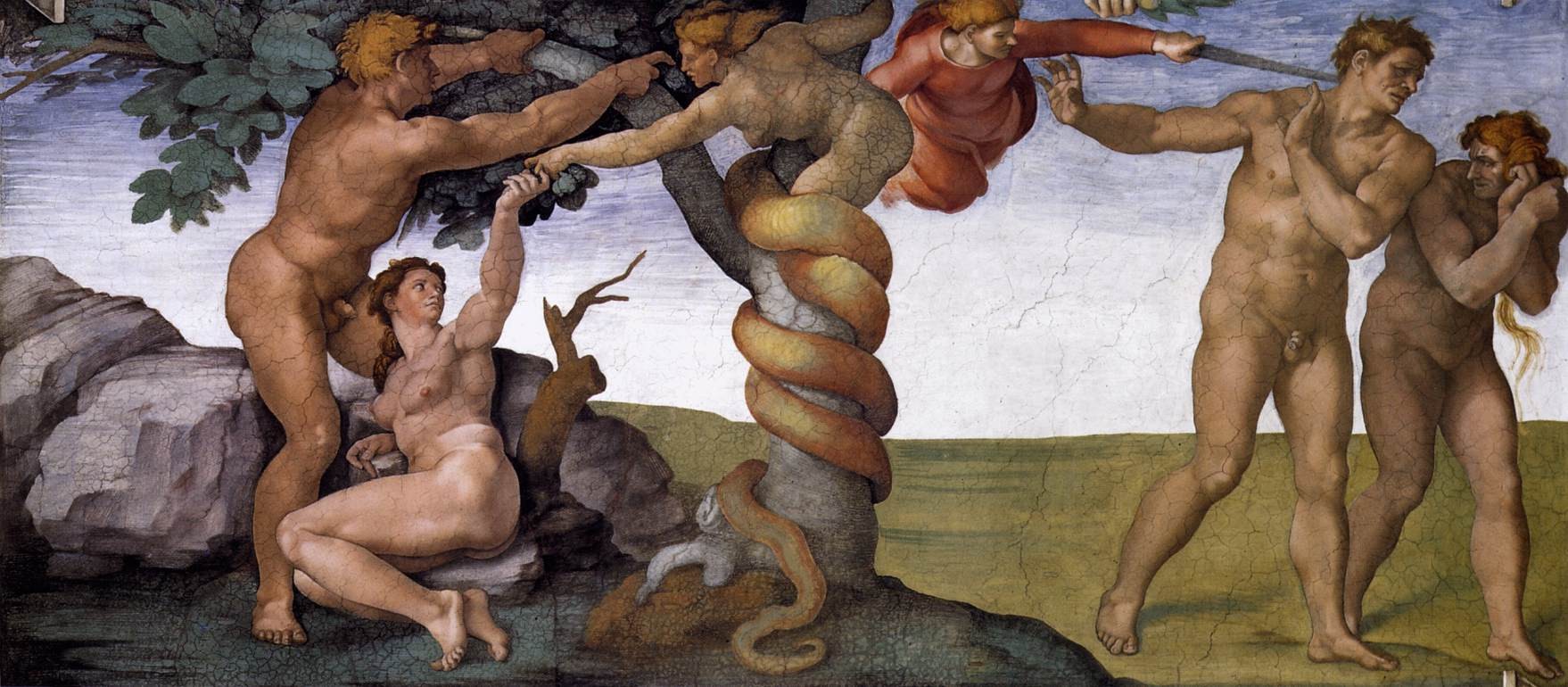
Michelangelo made the contradiction visible on the Sistine ceiling. In The Fall and Expulsion from the Garden of Eden he painted the moment twice in a single panel. On the left, Eve reaches for the fruit, her body at ease in its own skin. On the right, the same two figures cower as the angel drives them out: Adam shields his face, Eve covers her breasts, their bodies suddenly heavy with what they now knew. The nude is the same nude. Only the shame has changed. Michelangelo grasped the Fall as the body learning to see itself, and every later nude, every Venus and bather, is a body deciding whether to cover itself.
Albrecht Dürer’s Adam and Eve of 1507, the first life-size depiction of the nude in Northern art, is the pivot. He painted it as a demonstration of his new theory of ideal human proportion, the body measured against a geometry of its own. The biblical couple gave him cover to do what no Northern painter had attempted: paint the full-length nude at the scale and seriousness of a monument. The fig leaf, rendered with careful botanical detail, was the price of the alibi. Cover the one detail the story requires, and the rest of the body could stand naked before the public.
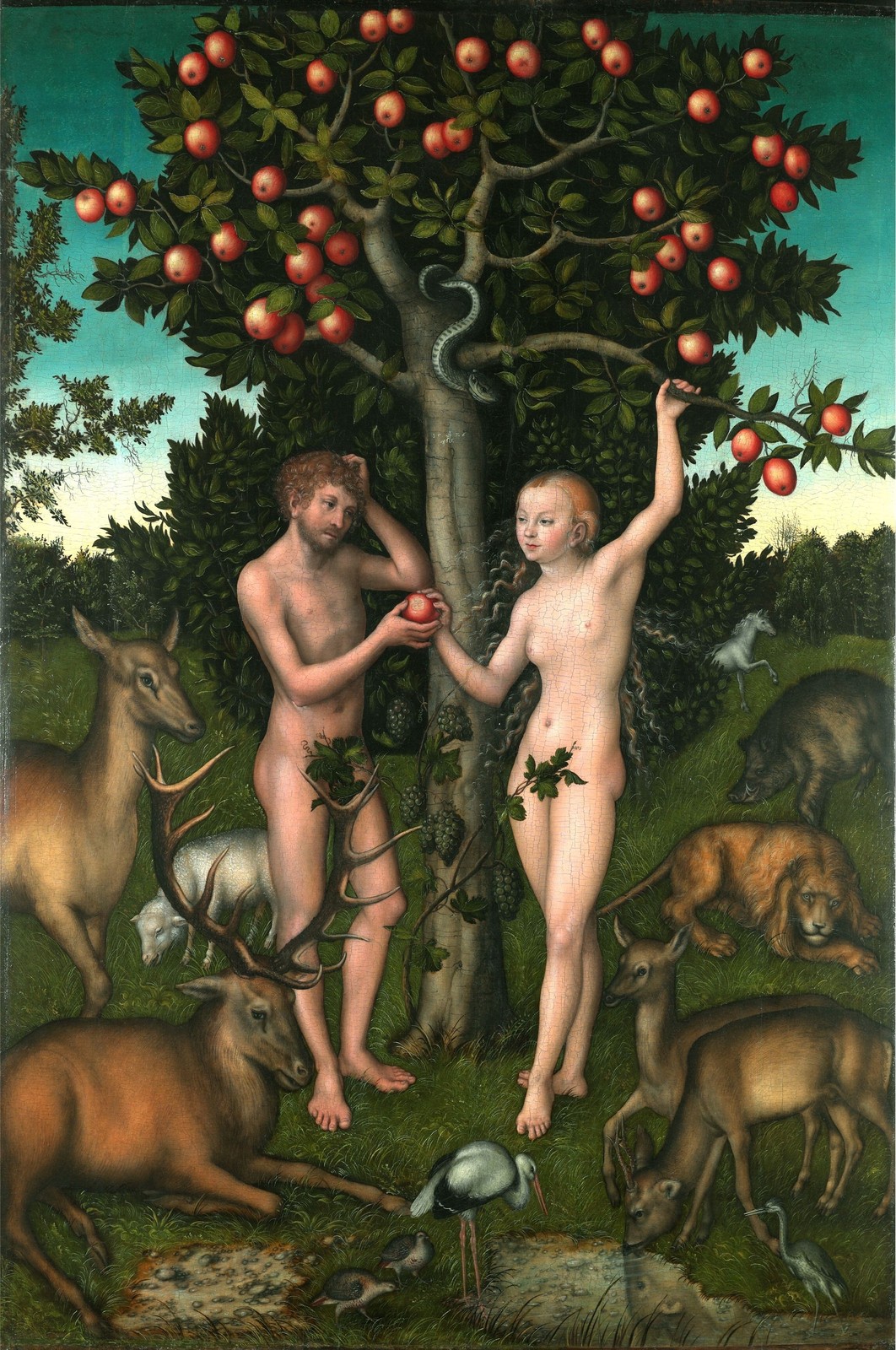
Lucas Cranach, Dürer’s rival, pushed the permission further. His Adam and Eve of 1526 stretches the pair into slender, courtly figures, all long limbs and sidelong glances, the serpent’s apple held like a prop. The theology recedes and the bodies take over. Cranach’s Eve reads as a fashion plate. The nude slips free of its scripture and becomes an aesthetic object on its own terms. That is the quiet revolution the Fall made possible, painting the naked body beneath the banner of the Bible until the banner fell away.
The story of the nude is the story of that slow shedding of the alibi. Venus, Danaë, the bathers, the odalisques: each is a body that no longer needed Eden as its excuse, because the excuse had already done its work. The Fall of Man taught Europe to look at the naked body and call it art.