Three hundred and sixty years ago today, Frans Hals died in Haarlem. He was old, he was poor, and he had spent a lifetime painting a single subject: the human body caught in the act of being alive. A laughing mouth, a raised hand, the flush of skin under northern light. Hals needed no mythology to make flesh his subject. He looked at people and painted what he saw, and in doing so he taught three centuries of painters what a living body looks like on canvas.
His method was the secret. Where his contemporaries built a picture from smooth, invisible layers, Hals laid paint down in swift, visible strokes, wet into wet, so that each brush mark records a decision made at speed. Up close, a hand dissolves into a few decisive smears of pigment. Step back, and the body snaps into focus, breathing. His own century thought the work looked unfinished. Later painters knew better.
Vincent van Gogh wrote of Hals’s “twenty-seven blacks,” marvelling at the richness of tone in a single dark sleeve. Courbet and Manet studied him. John Singer Sargent copied him. The Impressionists claimed him as a founding father. What they all took from Hals was the belief that paint, handled boldly, could carry life.
The Laughing Cavalier of 1624 is the proof. The man in the portrait is unknown, and the title came later, yet the figure feels more present than most people we meet. The upturned mustache, the hand braced on the hip, the eyes meeting ours with a half-smile about to change. Hals caught him between one expression and the next. That is the body in time, and no painter before Hals had managed it at this scale.
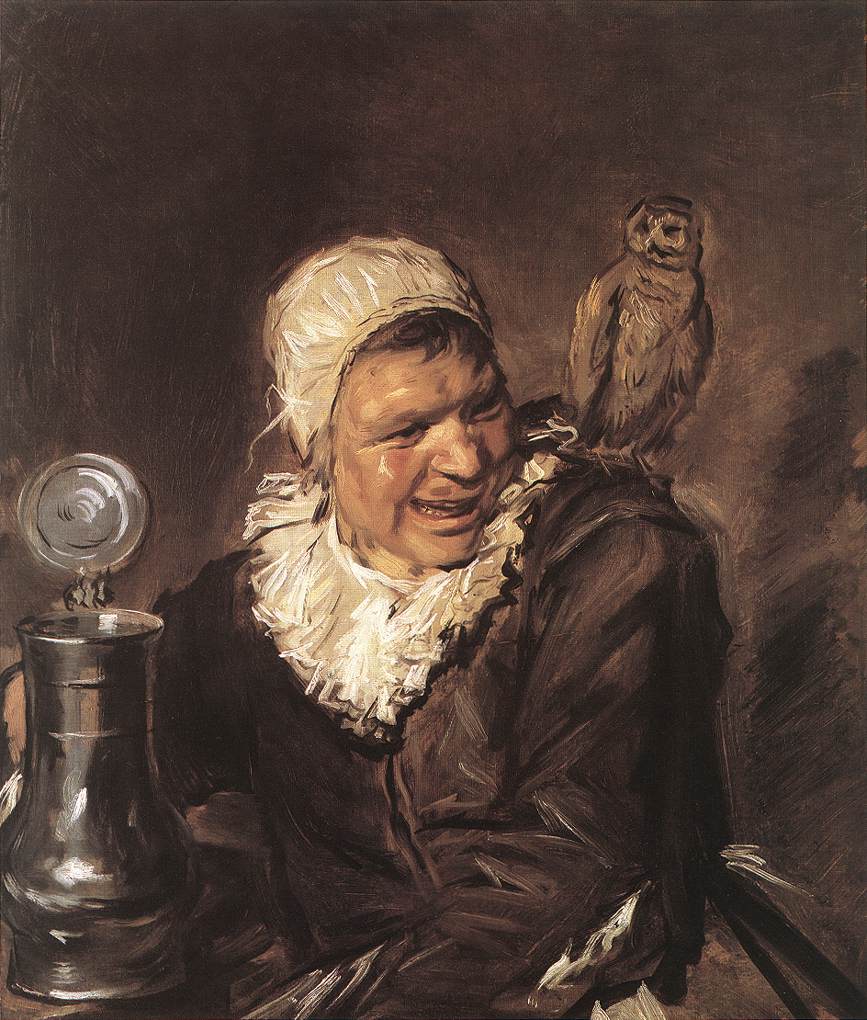
Hals brought the same truthfulness to bodies art usually ignored. In Malle Babbe, painted around 1633, he showed an old woman of Haarlem laughing with her mouth open, a tankard in hand, an owl on her shoulder. There is no flattery here, no smooth ideal. The face is weathered, the skin loose, the joy unguarded. It is flesh as it ages, and it is riveting. Hals refused to reserve dignity for the young and the beautiful. Every body, in his eyes, deserved honest light.
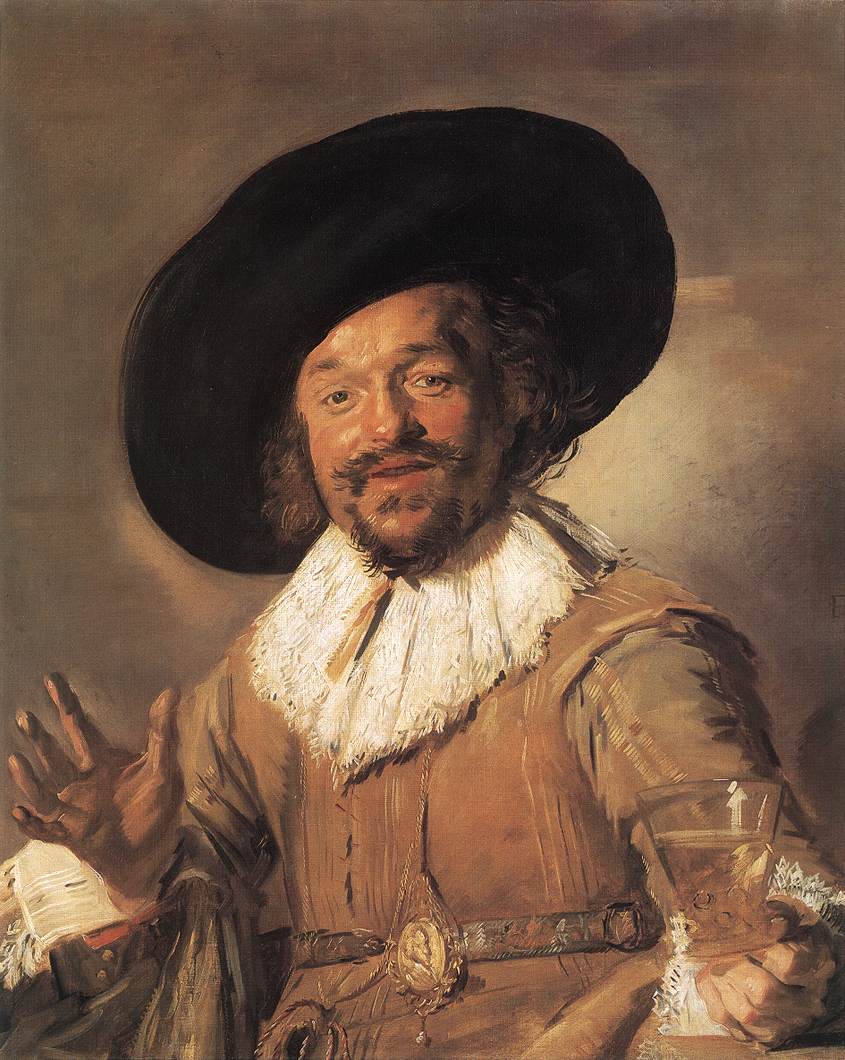
The Merry Drinker, from around 1628 to 1630, is a man stopped mid-toast, one hand raised, his face flushed with drink and good company. The painting is a snapshot three centuries before the camera, but a snapshot with an opinion. Hals liked this man, and you can tell. The warmth lives in the brushwork, in the way light slides across the cheek and the white collar. This is the body as a social creature, alive among others.
Hals died in 1666 and was buried in St. Bavo’s Church in Haarlem. The city had granted him a small pension in his final years, a quiet acknowledgment that its greatest painter had fallen on hard times. Fame thinned for two centuries, then returned with force. Today his work hangs in the Rijksmuseum, the Louvre, the National Gallery, and the Wallace Collection, and visitors stand before it trying to work out how a man with a brush and some oil made the past feel so close.
The body in art wears many forms. The nude idealizes it, mythology dignifies it, the academy polices it. Hals chose another path. He painted the body as it is: clothed, aging, laughing, hungry, alive. Three hundred and sixty years after his death, that honesty still feels like a breath of fresh air.