Four hundred and fifty years ago today, on 27 August 1576, Tiziano Vecellio died of fever in Venice while plague swept the city. He was somewhere around ninety. No painter had done more to make the naked human body the central subject of Western art, and no painter has done more since.
Titian did not invent the nude. Greek sculptors and his own Venetian predecessors had already claimed it. What he invented was the reclining nude: the unapologetic, horizontal female body that looks straight back at the viewer and offers no excuse for its own nakedness. Every figure that followed, from Rubens and Velázquez to Manet’s Olympia and the pin-up, descends from a single painting he finished around 1538 for the Duke of Urbino.
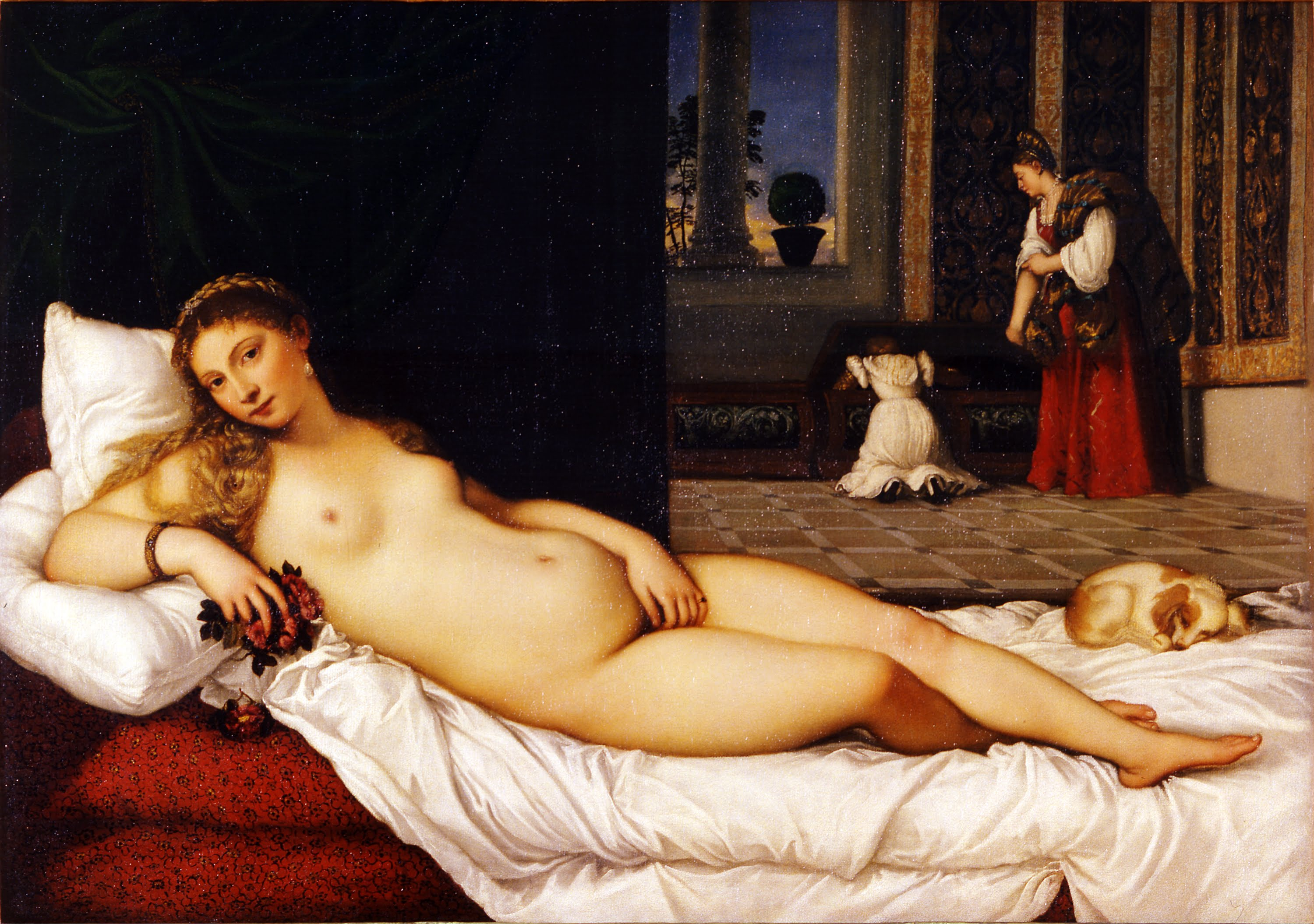
Venus of Urbino is not a goddess. She is a specific young woman in a domestic interior, reclining on a couch with her hand resting between her thighs, her gaze level and direct. Earlier Venuses looked away, asleep or ashamed. Titian’s subject looks at the viewer and does not blink. That directness, not the nudity, was the scandal. He removed the mythological alibi and left the body itself, in a real room, as the entire point of the picture. When Manet repainted the pose three centuries later as a modern courtesan, he was answering Titian directly.
Titian spent his last decades returning to the body as both subject and surface. For Philip II of Spain he painted a cycle of mythological canvases he called his poesie, poems in paint, built around naked flesh and its consequences. In Danaë he rendered the myth of Jupiter’s golden shower as a study in skin, drapery, and light. In Diana and Actaeon he turned the nude into a moral question: the hunter who glimpses the bathing goddess is punished for the very act of looking that every viewer of the painting commits.
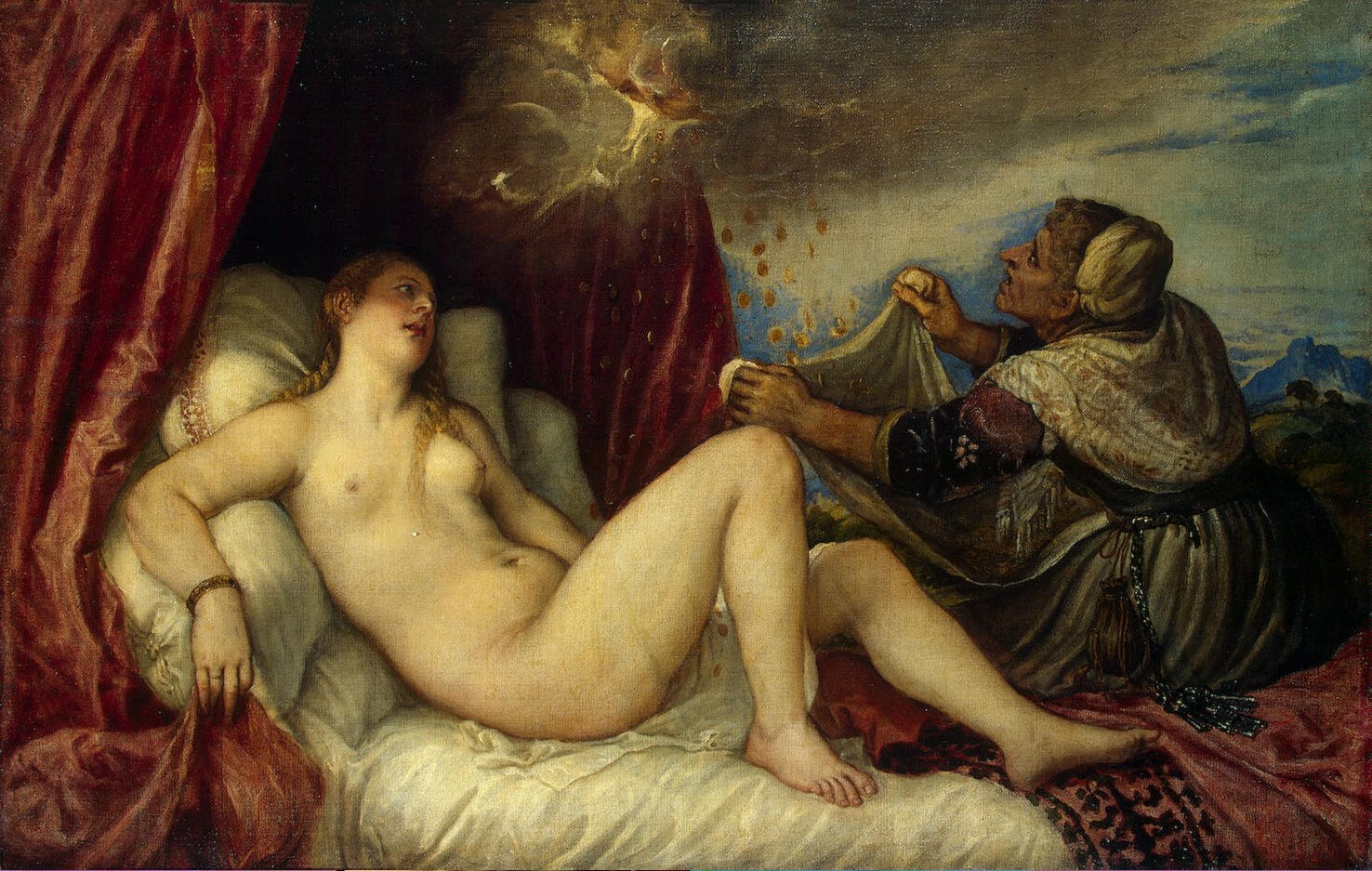
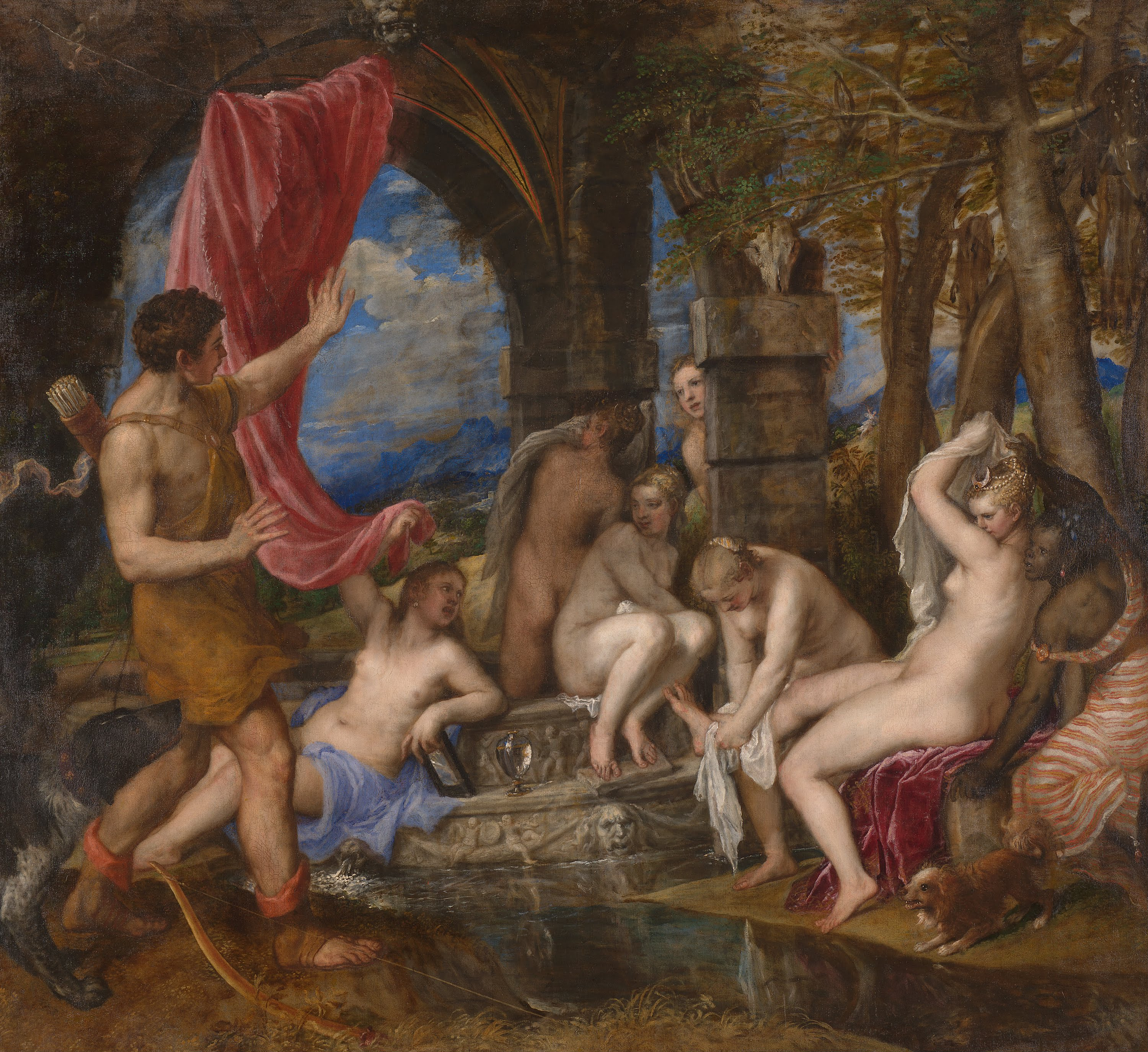
What separates Titian from the painters before him is touch. His late nudes are built from loose, visible brushwork that dissolves the boundary between body and paint. Stand close to a late Titian and the flesh falls apart into strokes; step back and it reassembles into a living woman. That technique became the model for Rembrandt, for Rubens, for Velázquez, and for every painter who has tried to make skin feel warm rather than merely look correct. He taught the tradition that the nude is a color problem and a texture problem before it is a subject problem.
The body in his work is never abstract and never apologetic. It is mortal, appetitive, and alive. Four and a half centuries after his death, when a painter or a photographer wants the nude to feel immediate rather than classical, they are still reaching for what Titian found in that small canvas for Urbino: the courage to let the body look back.