On August 29, 1780, a boy was born in Montauban, in the south of France, who would spend eighty-six years drawing the human body with a line critics called cold. Jean-Auguste-Dominique Ingres believed the nude could be perfect. He spent his life chasing that perfection, and he kept breaking his own rules to make the perfect body feel alive.
Ingres trained under Jacques-Louis David and worshipped Raphael. “Drawing is the honesty of art,” he wrote, and by drawing he meant the contour, the single unbroken line that carries the weight of a body. He dismissed color as a distraction and Rubens as a peddler of flesh. For Ingres the nude was an idea before it was a body: proportion, harmony, a form lifted out of nature and into geometry.
Then he painted La Grande Odalisque in 1814, and his own hand contradicted his own doctrine. The woman on the couch is stretched beyond anatomy: a back too long, a hip too high, a body that curves in ways a skeleton would refuse. Critics pounced. Ingres left it as it was. He stretched the body because the stretch was beautiful, because desire does not run in straight lines, and because the ideal nude he promised turned out to have a pulse.
Two works frame his long career like bookends. The Valpinçon Bather of 1808 shows a woman seen entirely from behind, her body reduced to one enormous, serene curve. La Source of 1856 shows a girl holding a water jar, weight on one leg, the classical contrapposto brought to a standstill. Both are pure Ingres: a single line, a single body, and a stillness that asks the viewer to slow down and look.
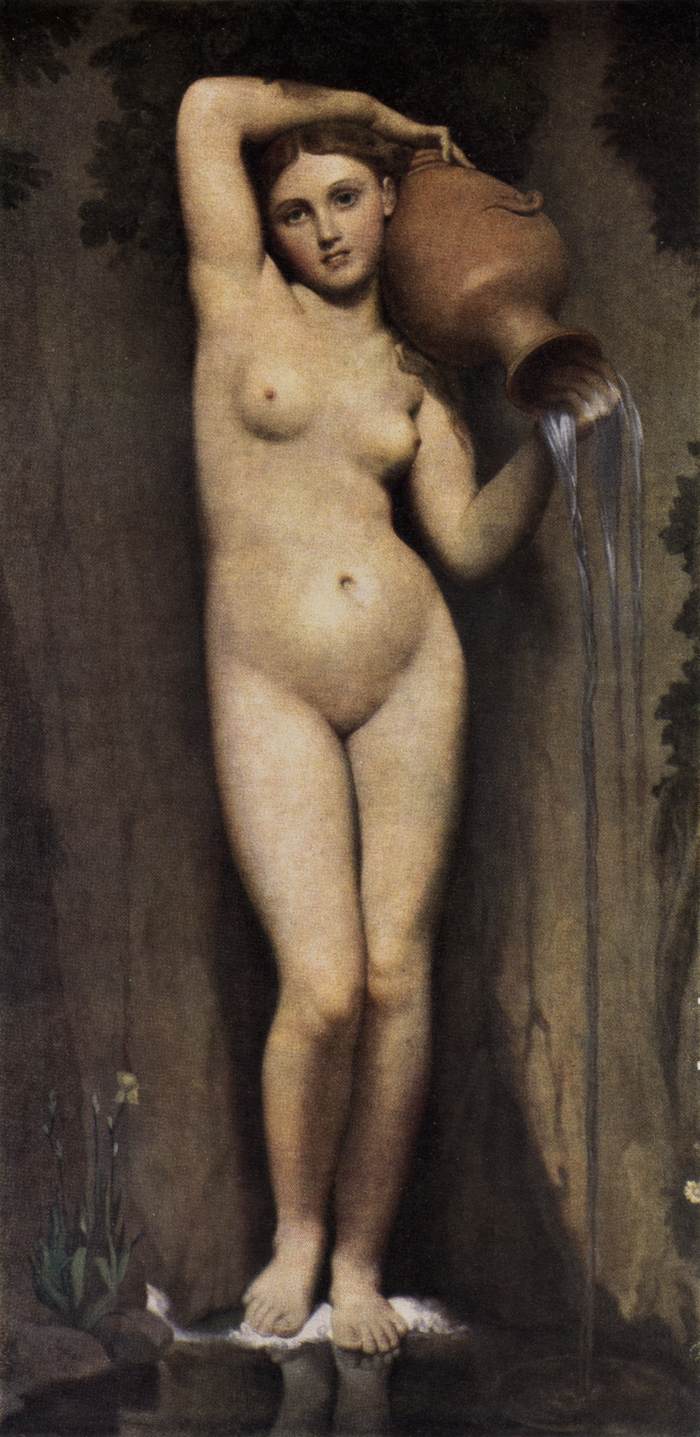
Modern art never stopped quoting him. Degas studied his bathers for years. Matisse painted odalisques in Ingres’s name, taking the reclining figure and dissolving it into pattern and color. Picasso had an “Ingres period” and copied La Source line for line. When Manet painted Olympia in 1863, he set his courtesan on the same couch where Ingres’s odalisques had lain and scandalized the public by telling the truth Ingres had only implied.
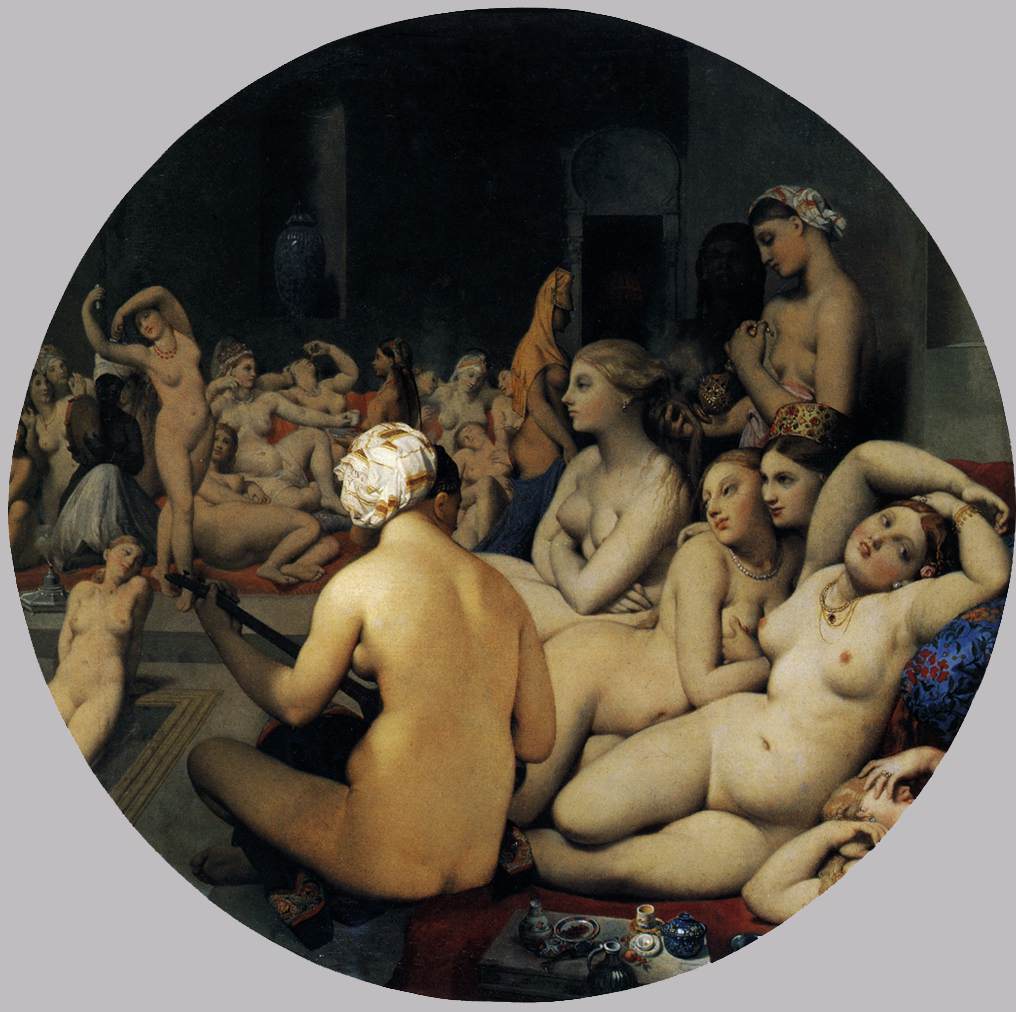
His final masterpiece, The Turkish Bath of 1862, gathers two dozen women into one circular room of flesh, a lifetime of bathers and odalisques compressed into a single painting. Ingres was eighty-two. The man who insisted the nude was an idea spent his last years proving it was a body: warm, crowded, imperfect, and impossible to look away from.
That is the gift he left to art history: a nude that was both an ideal and a temptation, drawn with a line that never wavered. Walk the full history of the body in art at nudeartla.com.