On August 28, 1833, Edward Burne-Jones was born in Birmingham, England. He became the most influential British artist of his generation, the bridge between the Pre-Raphaelite Brotherhood and the Aesthetic Movement, and the painter who treated the nude as a dream made visible. A hundred and ninety-three years later, his work still asks a question Victorian England refused to answer: what happens when a nude body insists on its own desire?
Burne-Jones came to the figure late and from an unusual direction. He studied theology at Oxford before Dante Gabriel Rossetti pulled him toward painting, and he never acquired the academy’s fluency with anatomy. His bodies are elongated, weightless, often androgynous. Where the salon painter rendered muscle and bone, Burne-Jones rendered longing. The figure in his art is a vessel for emotion, and that unsettled the Victorians in a way a thousand academic Venuses never did.
The Nude That Cost Him the Old Water-Colour Society
The breaking point arrived in 1870 with Phyllis and Demophoon. The subject comes from Greek myth. Phyllis, abandoned by her lover Demophoon, hangs herself and is transformed into an almond tree. When Demophoon returns and embraces the trunk in remorse, the tree bursts into blossom and Phyllis steps out of it, naked, and wraps her arms around the man who left her.
Burne-Jones refused to veil her or convert her into a safe allegory. He painted a specific woman, the sculptor Maria Zambaco, with whom he had carried on an affair that nearly destroyed his marriage, reaching out to reclaim her lover. When he showed the work to the Old Water-Colour Society, the members objected to her nakedness and asked him to alter the figure. He refused, withdrew the painting, and resigned from the Society.
The episode is often filed under Victorian prudery, but that reading misses the point. The Victorians lived surrounded by nudes. What they could not accept was a nude woman depicted as the author of her own desire, a body that reached out instead of waiting to be looked at.
A Body at Rest in Its Own World
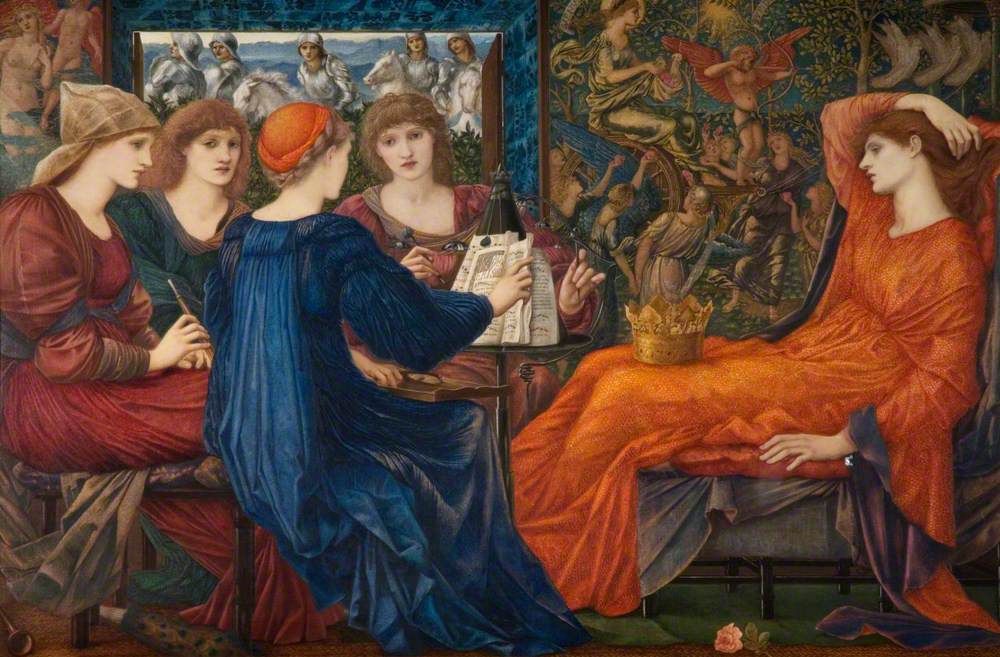
After the scandal, Burne-Jones refined his vision. Laus Veneris, begun in the 1870s, shows Venus reclining in a private interior, her body half-draped and her gaze turned inward, lost in a reverie no viewer is invited to enter. The pose echoes a long tradition of reclining nudes, but Burne-Jones removes the invitation. She is not arranged for an audience.
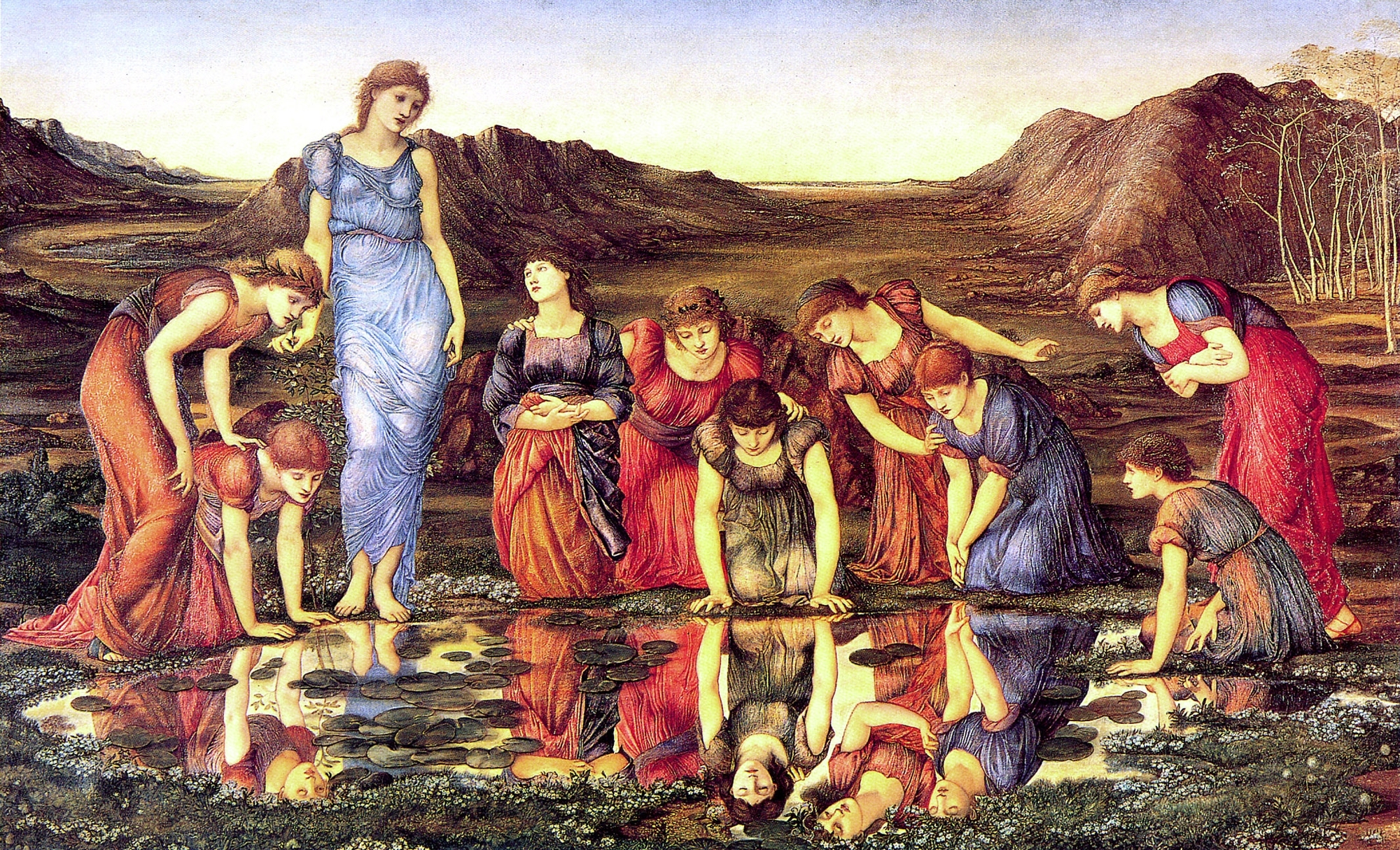
The Mirror of Venus pushes the idea further. A community of women gathers around a pool of still water, each absorbed in her own reflection. None of them performs for the viewer. The painting imagines the female body as it exists when no one is looking, which was precisely the thing Victorian convention could not tolerate.
The Nude as a Doorway, Not a Display
Burne-Jones died in 1898, a baronet and a celebrated national figure, but the tension he introduced never resolved. He moved the nude out of the academy and into the territory of dream and private feeling, and he paid a professional price for it. The Symbolists and Surrealists who followed walked through the door he opened, treating the body as a threshold to interior life rather than an object for display.
The question he raised in 1870 remains live. Whether a naked woman in a painting is allowed to want something, to act on her own longing, to refuse the viewer’s gaze, is still contested in galleries and comment sections alike. Burne-Jones answered it with a single image and a resignation letter. The nude, he decided, could be honest. That is still its most radical quality.