Four hundred and seventy-four years ago today, Lavinia Fontana was born in Bologna. Her father, the Mannerist painter Prospero Fontana, taught her to draw, a small act of defiance in a century that trained women to stitch rather than to study anatomy. She repaid the gamble by becoming the first professional woman painter in Western Europe, and she built that career on the one subject she was never permitted to see: the nude body.
The prohibition was absolute and rarely spoken. Academies and workshops barred women from the life room, where artists drew from live models. A woman who wanted to paint the human figure worked from casts, from prints, or from her own reflection. Fontana painted the female body from female models she could plausibly keep in her studio, and she painted it as a professional, for money, at a scale that demanded the word artist rather than amateur.
The body she was barred from studying
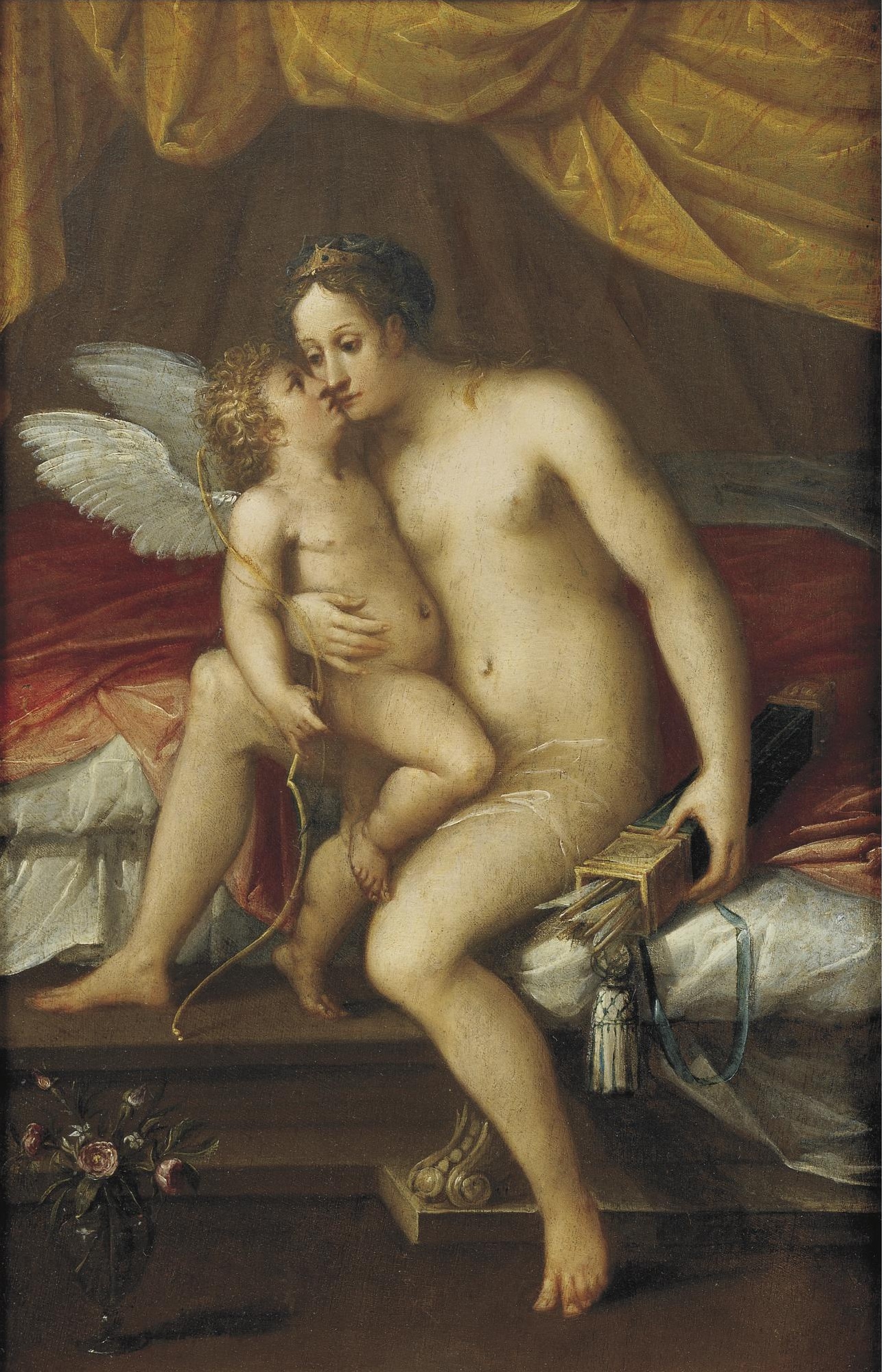
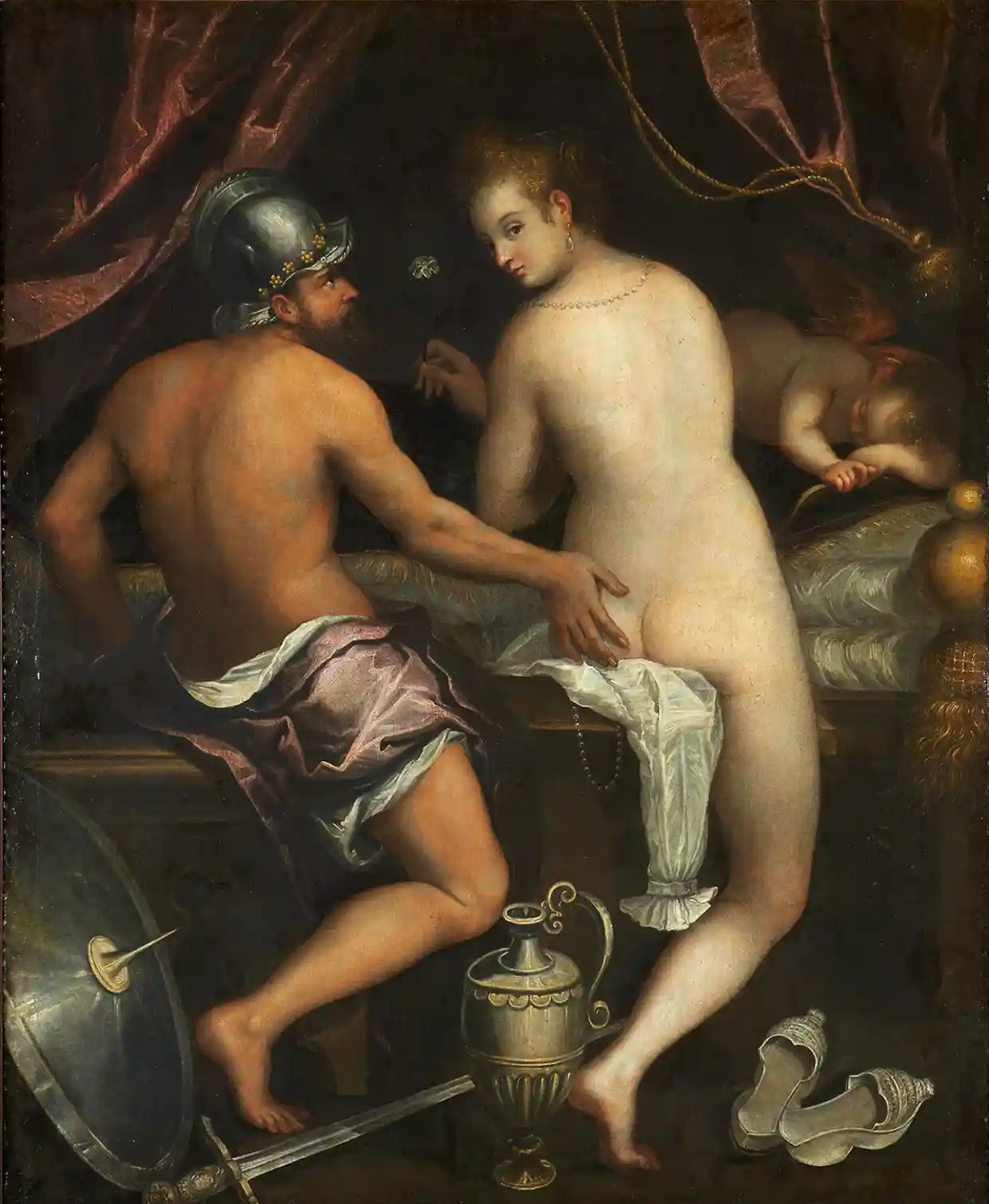
Her nudes make the point. Minerva Dressing, painted in 1613, shows the goddess of wisdom in the act of dressing, a full-length female nude rendered with the calm authority of a painter fully in command of her craft. Venus and Cupid, now in the National Gallery in London, and Mars and Venus, painted around 1595, place the naked body at the center of classical myth without apology. These were not private sketches. They were commissions, finished pictures, and public statements.
Read those canvases against the academy’s prohibition and a sharper truth emerges. The male nude had been the foundation of academic training for three centuries. A woman who painted the female nude was doing something else entirely: claiming a subject that belonged to men, through a body she could know from the inside. Fontana’s Minerva refuses the pose of the passive object arranged for a male viewer. She is a figure caught mid-action, dressing herself, indifferent to observation. The gaze, for once, is beside the point.
A career that outran the scandal
Fontana’s career outran every objection. She married the painter Gian Paolo Zappi, who took the supporting role, managing her commissions and her household so she could paint. She signed her work under her own name, a decision that preserved her authorship for four centuries. She painted portraits of the Bolognese nobility, a portrait of Pope Gregory XIII, and more than a hundred documented works. Pope Clement VIII summoned her to Rome, where she died in 1614, eleven days short of her sixty-second birthday, holding a reputation no woman painter had held before her.
Every later woman who painted the nude inherited something from Fontana. The life-room ban she navigated outlived her by nearly three centuries, collapsing only in the nineteenth century. Her example did not erase it, but it proved the ban was only a gate. A woman could paint the body, could sell the body, could build a living on it, even while the academies insisted she could not. Four hundred and seventy-four years on, a birthday should mean this: the gate was always the point, and Fontana walked through it first.