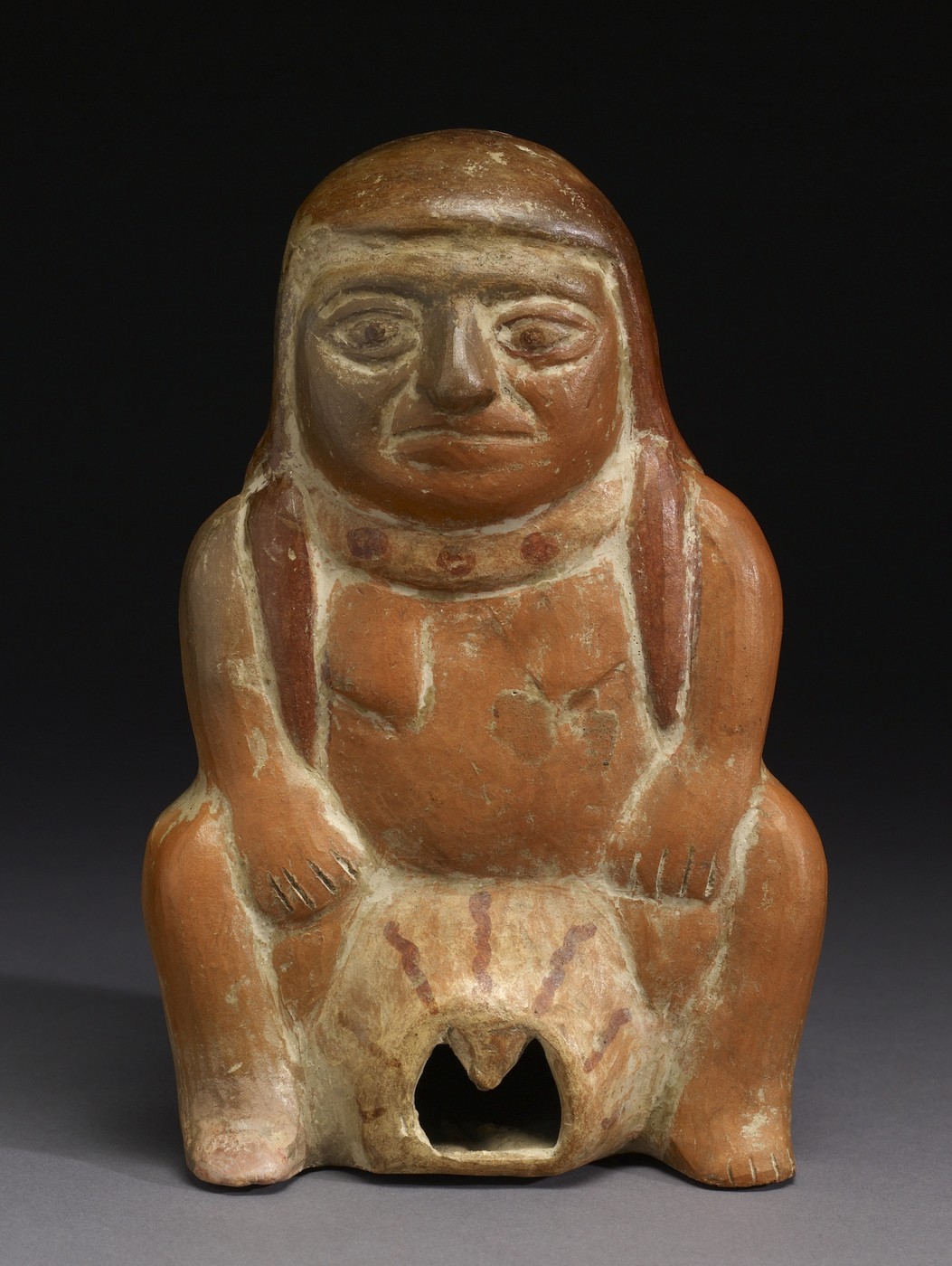
Three metres of fired clay stand in a park outside Trujillo, in northern Peru, shaped into the bodies and couplings that the Moche civilisation moulded more than 1,300 years ago. A conservative senator now wants them gone.
According to The Art Newspaper, senator Milagros Jáuregui of the Renovación Popular party has asked Peru’s culture ministry to remove the giant fibreglass replicas of Moche erotic ceramics, the huacos eróticos, from Parque de la Fertilidad, or Fertility Park. The sculptures went up in 2021, when the then-mayor of the Moche district, Arturo Fernández, installed them to draw tourists. Jáuregui, an evangelical pastor as well as a senator, told congress that “displaying these types of images in public is harmful to children.”
The objects she objects to are small. The real huacos eróticos stand no taller than 30 centimetres and date from the third to the eighth century AD. The Moche placed them in tombs as burial offerings, vessels bound up with fertility and with a whole system of belief about death and renewal. The archaeologist Walter Alva, who found the tomb of the Lord of Sipán in 1987, told the paper that the oversized park versions were made outside their historical context.
Strip away the fibreglass and you find a story as old as image-making. Every culture that has pictured the naked and fertile body has eventually met a censor who wanted those images moved out of public sight, and the stated reason is almost always the same: the children. The vessels Jáuregui wants hidden were never made for the street. They were grave goods, placed beside the dead to invoke the fertility the living hoped would outlast them. Blown up to three metres and stood in a tourist park, they read differently, and Alva’s caution about context carries weight.
The anxiety that drives this debate reaches far beyond Peru. The Vatican once ordered classical statues in its collections fitted with fig leaves. The nineteenth-century United States prosecuted vendors of anatomical prints under its obscenity laws, and its customs officers kept Courbet’s Origin of the World out of sight for decades. Today the gatekeepers are algorithms, and they flag a painted nipple the way an inquisitor once flagged a marble one. The nude is always the first image a censor reaches for, because the body is the one picture everyone recognizes and the one subject everyone has a stake in.
The Moche belong to that same long lineage. Their erotic ceramics sit in a line that runs back through the birth goddesses of prehistory and forward through every painter who ever insisted the body was a fact of nature. A figure of a woman giving birth, such as the one held in the Walters Art Museum in Baltimore, read to the Moche as a statement that life continues. The debate in Trujillo is only the newest round of a fight that artists and censors have been having since the first handprint went on the first cave wall.