Pierre Puvis de Chavannes died in Paris on October 24, 1898, at seventy-three. He left behind the grandest public murals of his century, walls in the Panthéon, the Sorbonne, and the Boston Public Library that thousands passed each day. He left behind something quieter too: a way of painting the nude that took away its weight.
Puvis lifted the female body out of the story. His nudes do not bathe, do not seduce, do not flee a satyr. They stand on pale shorelines and in silent groves, posed like sleepwalkers, their skin the color of stone at dawn. The three women in Young Girls by the Seaside (1879) turn their backs to the sea and to the viewer alike, unstartled, as if no one had ever looked at them. That indifference was the point.
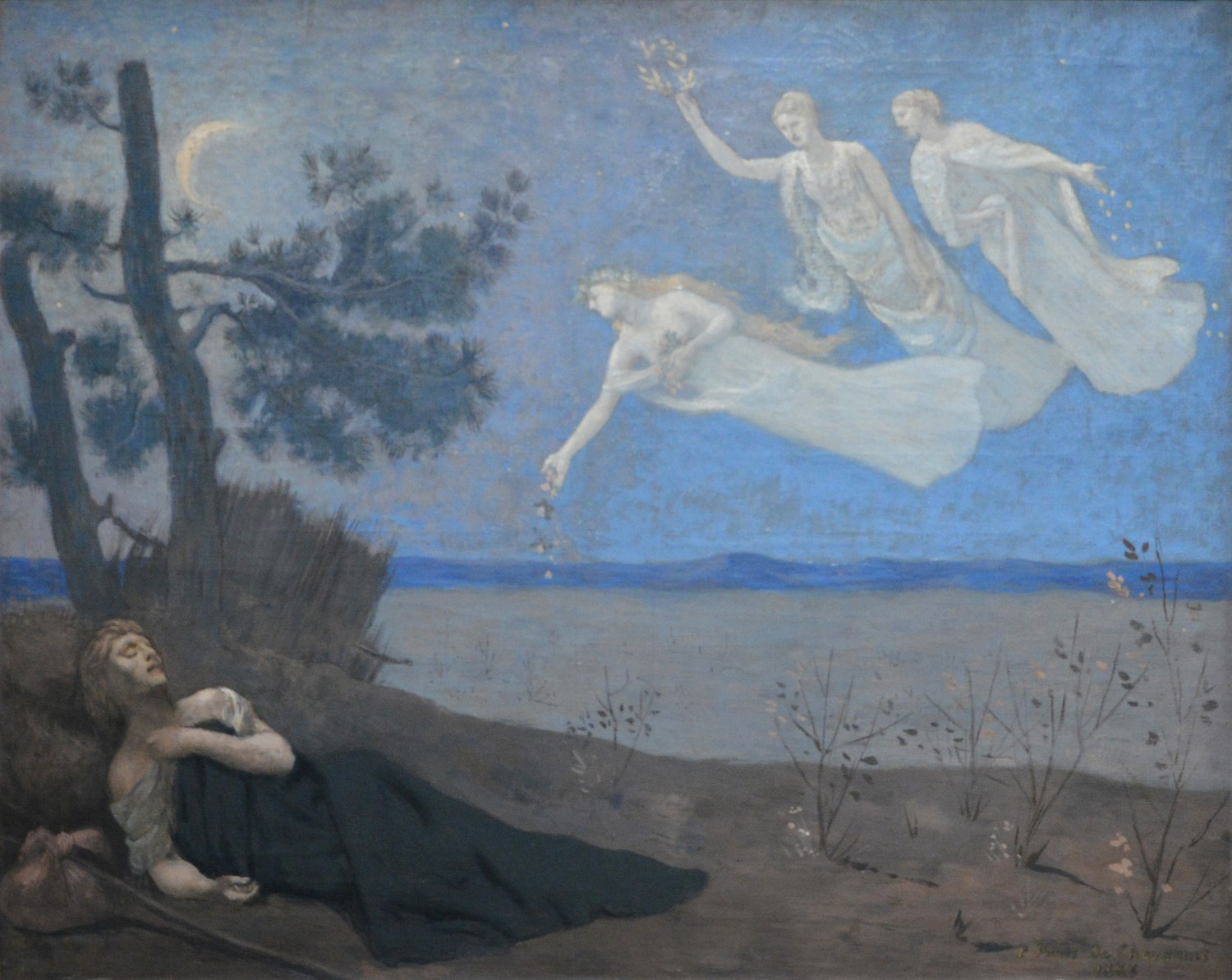
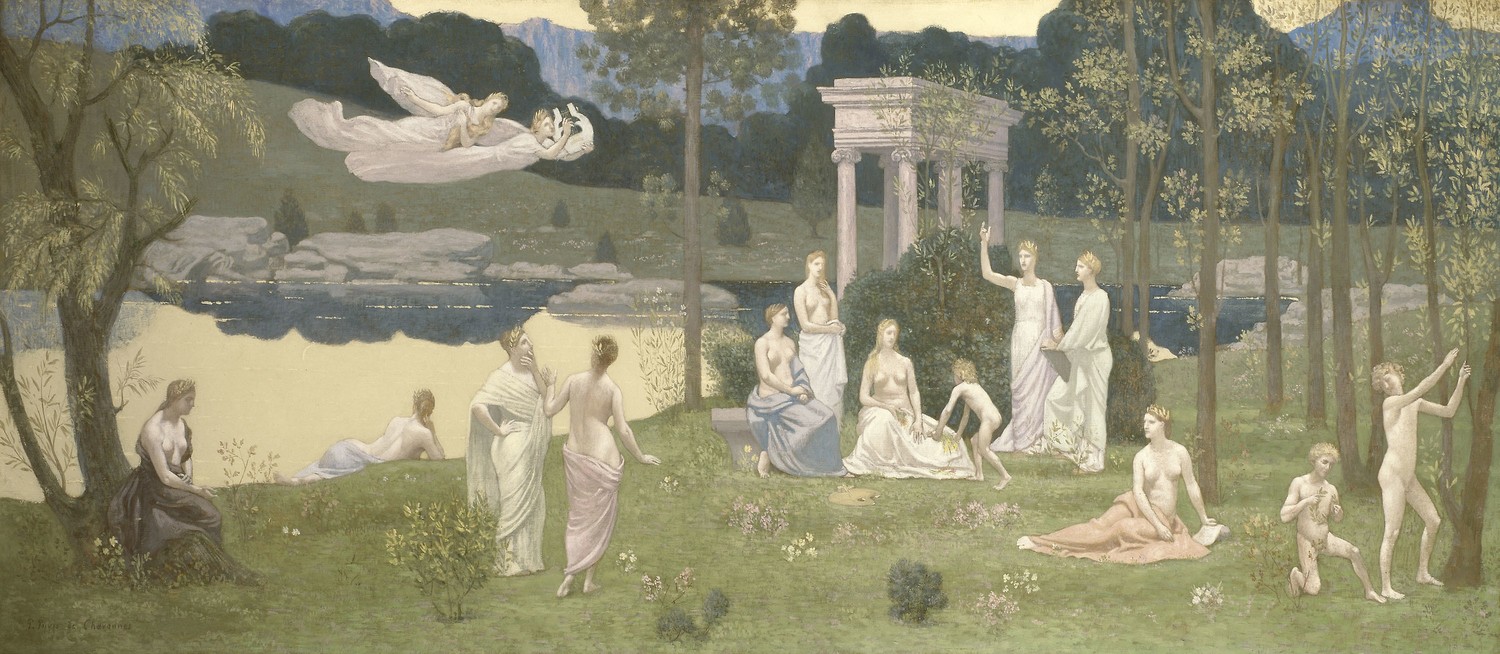
Where the academic nude of his teachers strained for anatomical perfection and the Romantic nude strained for drama, Puvis aimed for something cooler: the body as a symbol. He flattened his figures, drained the heat from their skin, and set them in landscapes that read like memory. A Puvis nude is a thought wearing a body, and the body exists only to carry the thought. The Dream of 1883 and The Sacred Grove of 1884 to 1889 distill the method: a reclining sleeper, a ring of muses, arranged with the calm of a fresco even on a small canvas.
Critics argued over him for forty years, and the painters watched closest. Gauguin copied him and kept his photographs. Seurat and Maurice Denis studied him. The young Picasso measured himself against him. Puvis became the bridge every modern artist crossed, the painter who taught a generation that a nude could mean more than it showed, and the Symbolists took that lesson and ran with it.
The trade was real. For timelessness, Puvis surrendered the body’s blood. His nudes never sweat, never age, never want. The gaze finds nothing to grip, because there is no flesh to grip, only light and line. That is the gamble of the ideal: a body that outlasts every individual body at the price of no longer being one.
A hundred and twenty-eight years later the nude still divides along the line Puvis drew. On one side stands the naked, specific body, with its weight and its aging and its claim to be seen. On the other stands the symbol, weightless and general. Puvis chose the symbol so completely that the painters who followed him had to unlearn him before they could begin. The dream was beautiful. It cost the body its warmth.