On November 1, 1849, William Merritt Chase was born in a small Indiana town. By the time he died in 1916, he had become the most influential American art teacher of his generation and the painter who made the nude an ordinary American subject.
Before Chase, the American nude arrived from Europe dressed as myth. Venus, Danaë, a nymph with a classical alibi. The body reached American walls already translated into allegory, safely remote from any living model.
Chase trained in Munich, learned the academic figure, then came home and set it in American light. In his Tenth Street studio in New York he painted the nude as a study: a body observed, measured, and rendered in paint, with no goddess attached. His Nude, painted around 1901 and now in the National Gallery of Art, shows a standing figure whose authority comes from paint and light, not from a mythological name.
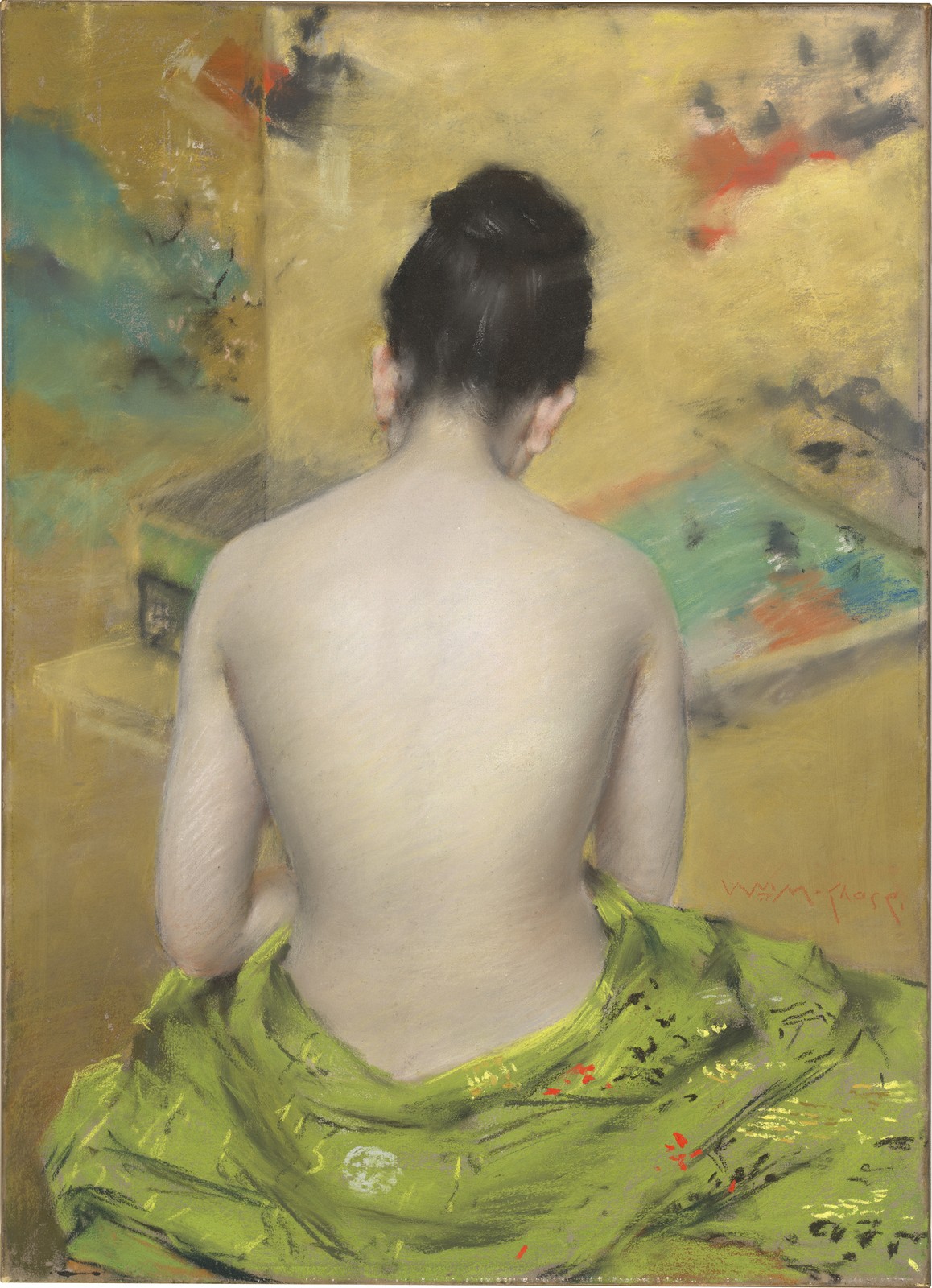
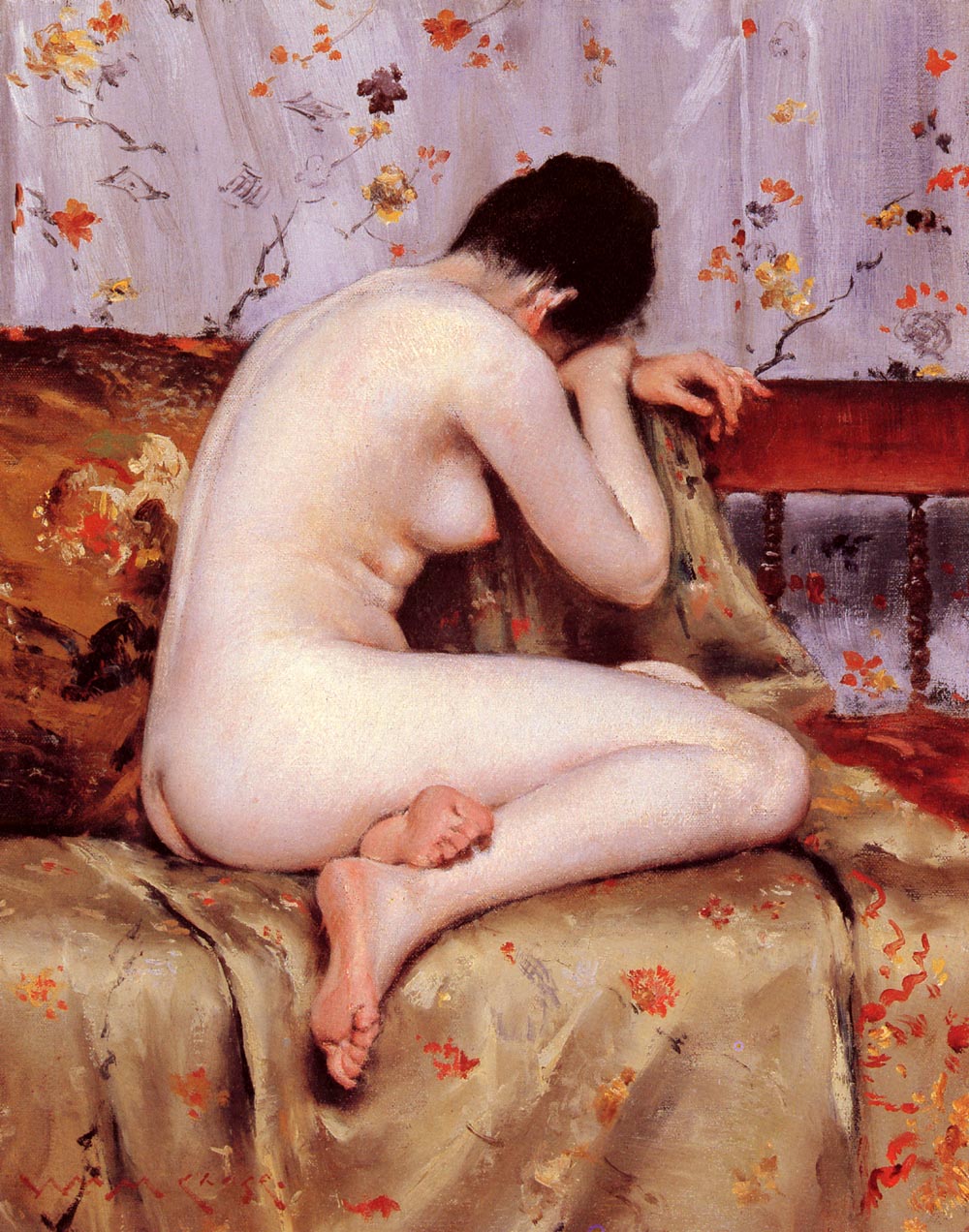
His studio was a laboratory for the figure. In Back of a Nude (1888) he turned the model away from the viewer and studied the long line of the spine the way a draftsman studies a curve. In A Modern Magdalen (1888) he borrowed a religious title and dropped the halo, giving an old theme a modern body at rest.
Chase taught more Americans to draw the figure than anyone of his era. He founded the Chase School, which became Parsons, and the Shinnecock Hills Summer School, the first great plein-air school in the country. Edward Hopper, Georgia O’Keeffe, Charles Demuth, Marsden Hartley, and Rockwell Kent all passed through his classroom. The nude was the spine of that curriculum: before a student painted a landscape or a society portrait, they drew the living body.
Chase saw no contradiction between the fashionable portrait and the studio nude. Both were studies of the same modern American body, one wrapped in silk, one unadorned. He moved between them with the same brush, and in doing so he closed the gap between the society painter and the figure painter.
That is Chase’s real contribution. He did not invent a new kind of nude. He normalized one: a body painted from an American model in American light, taught in American schools, bought by American collectors. The twentieth-century American nude, from Hopper’s rooms to the figure painters who came after, begins in his studio. On his 177th birthday, the least celebrated thing about him may be the most important: he made the nude a subject his country could finally claim as its own.