On June 10, 1880, André Derain was born in Chatou, France. By the time he was twenty-five, he had helped invent the most radical movement in painting since the Renaissance — and turned the nude body into a vehicle for pure, reckless color.
Alongside Henri Matisse, Derain was the architect of Fauvism, a movement so named because critics called its practitioners fauves — wild beasts. The label stuck because it fit: Fauvist nudes didn’t sit politely on mythological couches or recline in decorous classical poses. They burned.
The Wild Beast Who Painted Women
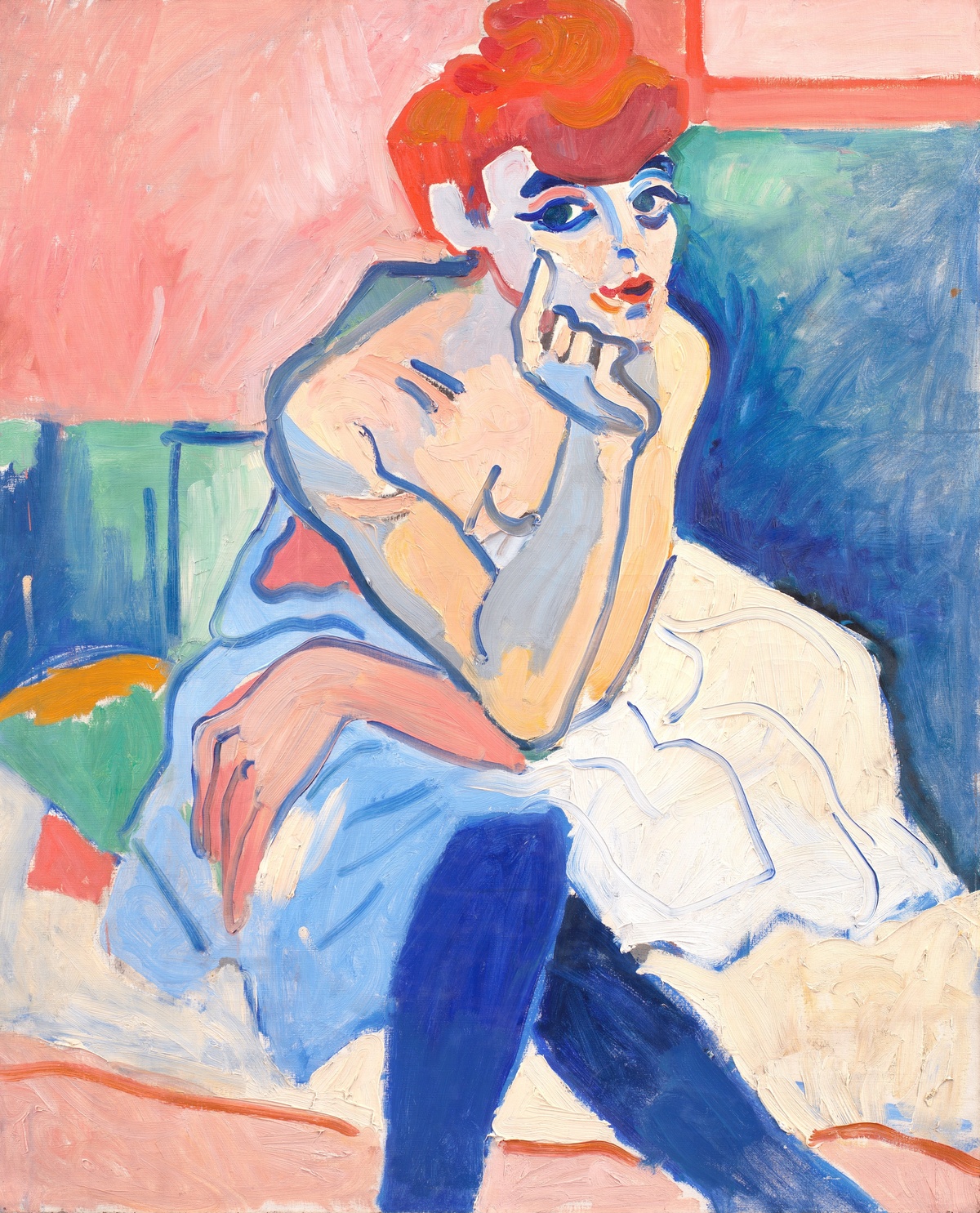
Derain’s Femme en chemise from 1906 is a manifesto disguised as a portrait. A woman half-dressed, half-uncovered, rendered in strokes of vermilion, viridian, and cadmium yellow that have no business existing in the same composition — and yet they cohere into something electric. The model isn’t passive. She’s not an object of contemplation. She’s a visual event.
This was the Fauvist breakthrough: the nude didn’t need allegory to justify itself. It didn’t need to be Venus or Diana or a goddess of anything. It could simply be a body, painted with the same raw energy Derain applied to a landscape of the Thames or a still life on a table.
Cézanne’s Shadow, Derain’s Light
Derain’s relationship with the nude was shaped by two opposing forces: the structural rigor of Paul Cézanne and the explosive color instincts of his own eye. In works like Baigneuses (Esquisse) from around 1908, you can see both.
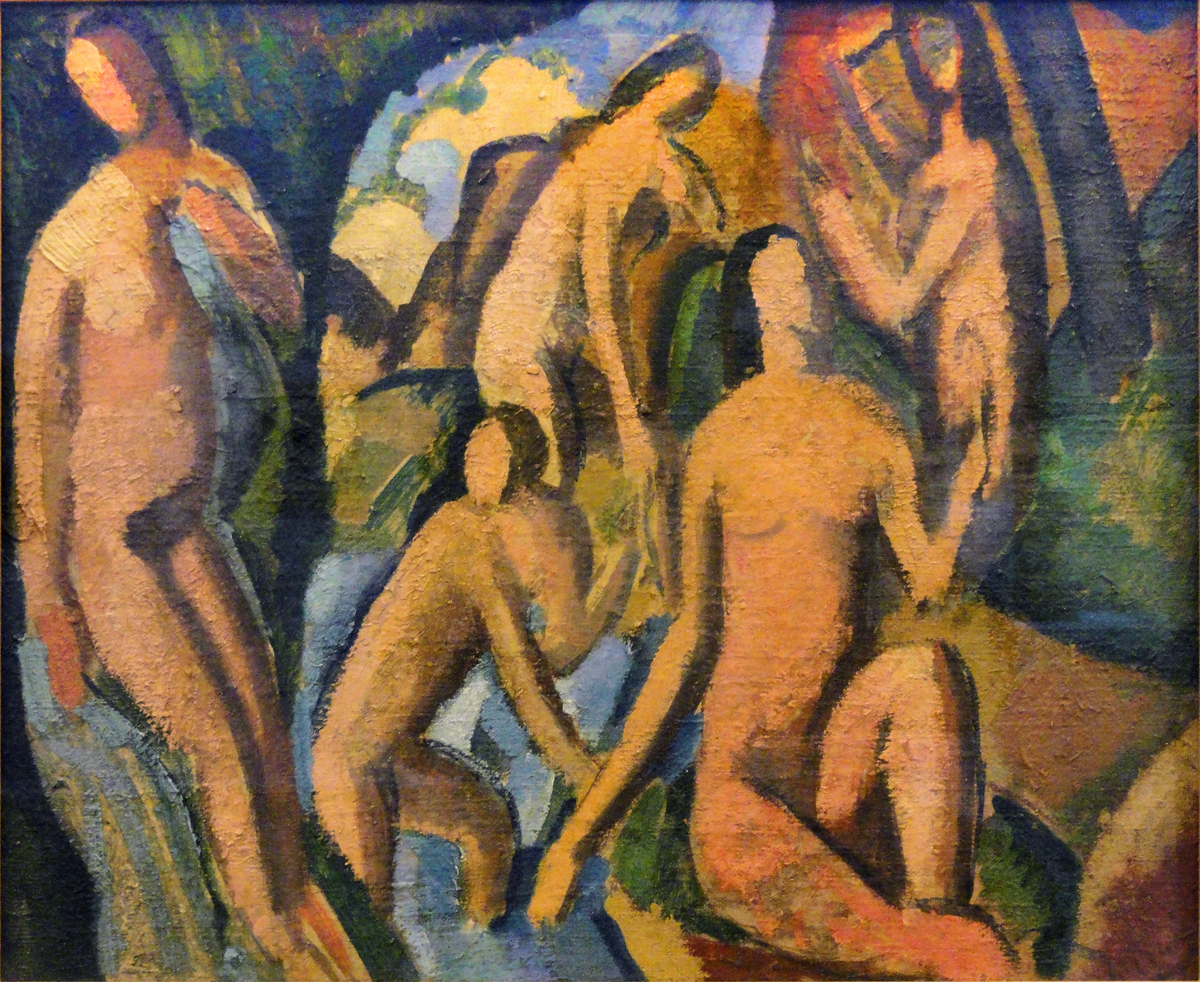
The bathers here are built from facets of color, their bodies carved out of the same pigment as the landscape around them. This is Cézanne’s lesson — figure and ground are one substance — but Derain pours it through a Fauvist sieve. The figures don’t sit in the landscape; they are the landscape, assembled from the same raw chromatic material.
It’s a radical levelling. The nude ceases to be the privileged subject isolated against a backdrop, and becomes part of the visual fabric. Derain refused to grant the body special status. It was paint, like everything else.
The Nude After Fauvism
By the 1920s, Derain had stepped back from the extremes of Fauvism. His nudes took on a brooding, sculptural quality — warmer, more volumetric, informed by his renewed interest in classical composition. Baigneuse from 1925 shows a different Derain: older, less feverish, but no less committed to the body as a primary subject.
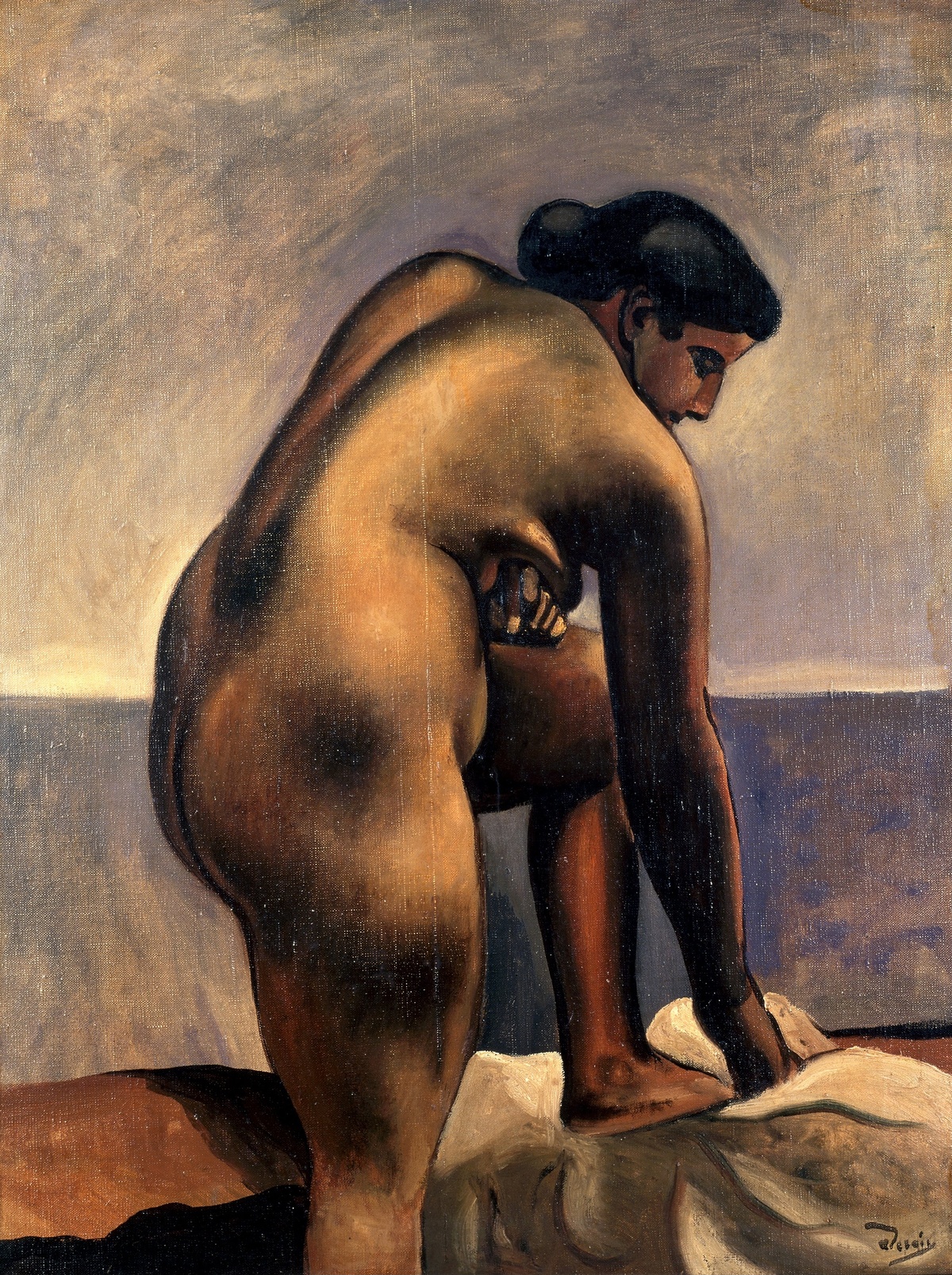
The turn is sometimes called Derain’s “Gothic period” — a retreat from the wildness of Fauvism into a darker, more earth-bound register. Yet even in this later work, the nude retains its centrality. Derain never stopped believing that the human body was the most important thing a painter could grapple with. He just changed how he wrestled.
What Derain Understood About the Nude
The history of the nude in Western art is, in large part, the history of permission — who gets to paint bodies, how they must be framed, which stories they’re allowed to tell. The Greeks had their gods. The Renaissance had its biblical and mythological alibis. Even Manet’s Olympia needed the scandal to make its point.
Derain and the Fauves cut through all of that. They said: this is a body. Here is its color. Look at it. That act — stripping the nude of its narrative armor — was itself revolutionary. It’s the same impulse that drives the contemporary revival of figure drawing and live-model sessions: the body doesn’t need to mean something beyond itself. Its presence is enough.
André Derain died in 1954 at the age of 73. He left behind a body of work that spanned Fauvism, Cubism, classicism, and an uncategorizable late style that looked backward and forward at once. But his most lasting contribution may be the simplest: he proved that color could carry the full weight of the human form. No myth required.
At Nude Art LA, we believe in the same principle. The body doesn’t need permission. It doesn’t need a story about Venus or a scandal to justify its existence on canvas. It just needs to be seen, honestly, for what it is — pigment, flesh, and presence. Join us in keeping that tradition alive.